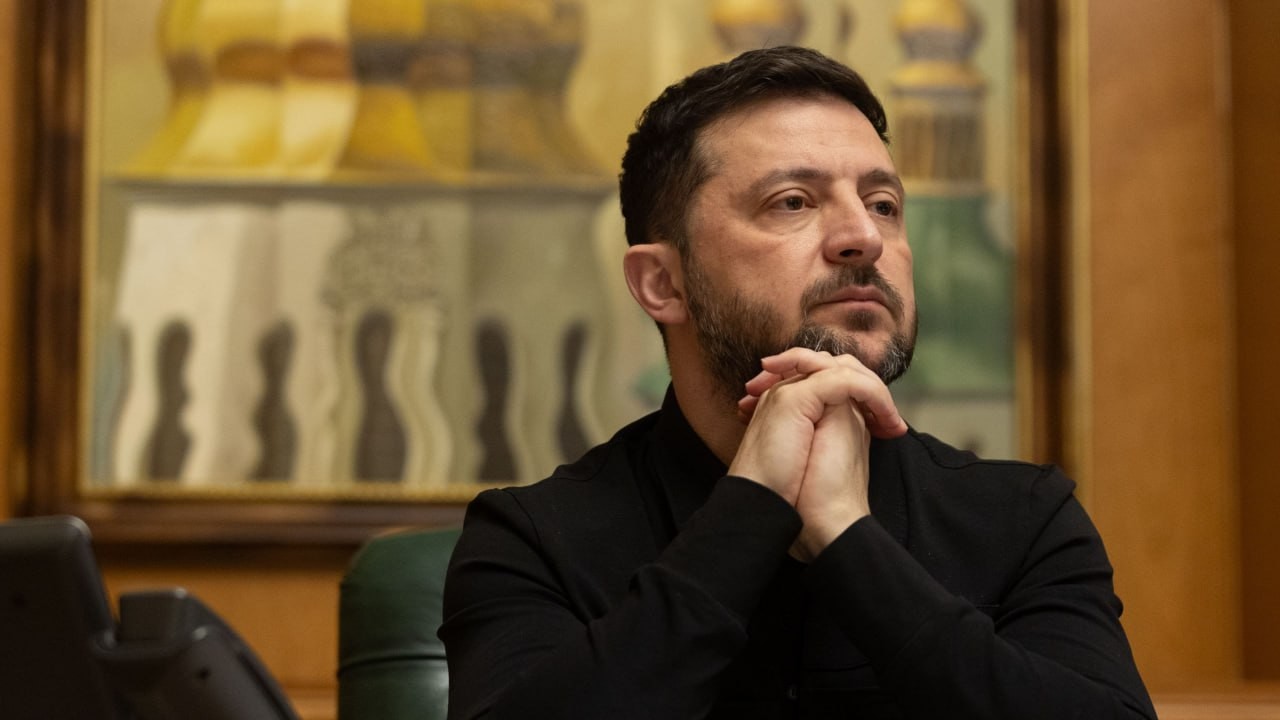
The president’s position: a date as a security guarantee
President Volodymyr Zelensky at a briefing on 6 February (LIGA.net correspondent) said that Ukraine could technically be ready to join the EU as early as 2027. However, in his view, without a specific date in the peace plan there is a risk that Moscow will try to stop integration not directly, but through third parties.
"I have already said that we will technically be ready [to join the EU] by 2027... And you must understand us. You are talking about the end of the war and simultaneous security guarantees. And the EU for us is security guarantees."
— Volodymyr Zelensky, President of Ukraine
Why a date is needed
According to Zelensky, a political declaration by itself risks being insufficient: a clear commitment is needed in the peace plan, signed by all parties. In Washington, he said, they believe Russia will not oppose Ukraine’s European integration — this is enshrined in a 20-point peace plan. But the president emphasizes: he does not believe that opposition will not occur, because in practice the risk is realized through other actors.
Geopolitical obstacles
The key obstacle within the EU is the resistance of individual countries. The text mentions Hungary and its prime minister Viktor Orbán, whose position periodically blocks the process. Bloomberg in August 2025 wrote that the American leader phoned Orbán after talks with Zelensky and European leaders to discuss the blocking. An additional complication is the domestic political context in the United States: on 5 February 2026 Donald Trump expressed support for Orbán in upcoming elections. German Chancellor Friedrich Merz said on 29 January that accelerated accession of Ukraine to the EU is not possible — another signal that the issue will require intensive diplomacy.
What this means for Ukraine and its partners
Zelensky’s framing is to turn European integration from a symbolic goal into a legally enshrined element of a peace plan that would oblige signatories to politically counter blockades. That changes the game: instead of only long negotiations about standards, it becomes a matter of international political responsibility. In the president’s logic, the U.S. must work with individual EU members to reduce the risk of a veto; this is political work that often happens behind the scenes but determines the outcome.
Summary
Ukraine is proposing concrete terms — a date as an element of security. That does not automatically guarantee accession, but it creates international obligations against sabotage. Now the key question is whether partners will agree to legalize that date in the peace plan and whether they will have the political will to confront internal and external blocks.
"And I, as President of Ukraine, say that I don't believe Russia won't try to stop our movement into the EU... because there is a practice of not doing it with one's own hands but through other actors — and we all understand which actors those are."
— Volodymyr Zelensky, President of Ukraine
Sources: LIGA.net (Zelensky briefing, 6 February), Bloomberg (reference to phone contacts, August 2025), public statements of Friedrich Merz (29 January) and media reports on leaders' positions.





