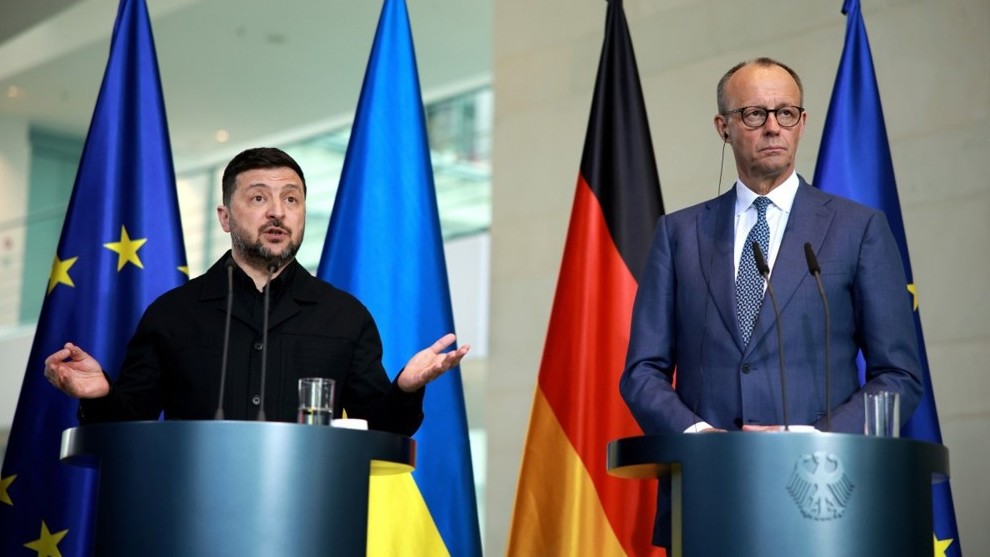
Reuters published a letter from President of Ukraine Volodymyr Zelenskyy to European Union leaders, sent Friday evening. A source in the government confirmed to LIGA.net: the document is authentic. It contains two ideas that hold tension between them.
What Zelenskyy wrote and why
The letter is a response to an initiative by Chancellor Friedrich Merz. He proposed granting Ukraine the status of "associated member": participation in EU summits and ministerial meetings, but without voting rights. According to the plan, this was supposed to accelerate integration while giving Berlin leverage in peace negotiations.
"It is unfair for Ukraine to be present in the European Union but remain voiceless"
Volodymyr Zelenskyy, from his letter to EU leaders (per Reuters)
Zelenskyy's response is not simply a refusal. The President used the same letter to change the frame: the defeat of Viktor Orbán in Hungarian elections, according to him, removed the main structural blocker and opened a window for real progress in negotiations about full membership.
What stands behind Merz's proposal
The chancellor's letter, which reached the media on May 21, proposes a phased integration scheme: access to EU funds and participation in forums first, formal membership at the end of the process. Merz also proposed a "snap-back mechanism": the status could be revoked if Ukraine deviates from democratic standards.
The European Commission confirmed receipt of the letter and delegated the matter to the level of the European Council—effectively passing the ball back to the capitals. The reaction turned out to be mixed:
- Slovakia. Prime Minister Robert Fico spoke against it—"either we accept someone or we don't," no exceptions to the procedure.
- Czech Republic. President Petr Pavel supported the idea of acceleration, but insisted: any steps must fit within existing rules; deviating from them could hurt Ukraine itself.
- Brussels. The European Commission itself previously promoted a "reverse" model—membership first, then gradual acquisition of benefits. Most capitals rejected this option too as too risky.
Kyiv: discussion exists, position unchanged
Foreign Minister Andriy Sybiga clarified: Ukraine is aware of all initiatives—both public and non-public. According to him, Kyiv's position has not changed.
"Fine, let these discussions take place, but they cannot substitute for our strategic position—and that is full, equal membership in the European Union"
Andriy Sybiga, Minister of Foreign Affairs of Ukraine
The Vice Prime Minister, in turn, emphasized that Merz's letter does not create an alternative to full accession—on the contrary, it confirms the course toward opening all negotiating clusters.
Where the real conflict lies
The dispute is not between Berlin and Kyiv. Merz and Zelenskyy both want membership: the question is about the pace and who determines the interim conditions. Berlin is trying to offer Brussels a compromise that could unblock the process and give Germany the role of architect of a new Europe. For Kyiv, associated status without a voice is not a springboard but a potential trap: the status could become entrenched and turn into a ceiling rather than a floor.
The real solution depends on whether Hungary's new government will allow Budapest to open the negotiating clusters that were blocked under Orbán. If the clusters open before the EU summit in June—the argument for an "associated" format will weaken significantly: Zelenskyy will have concrete progress in the standard procedure instead of a symbolic status without leverage.





