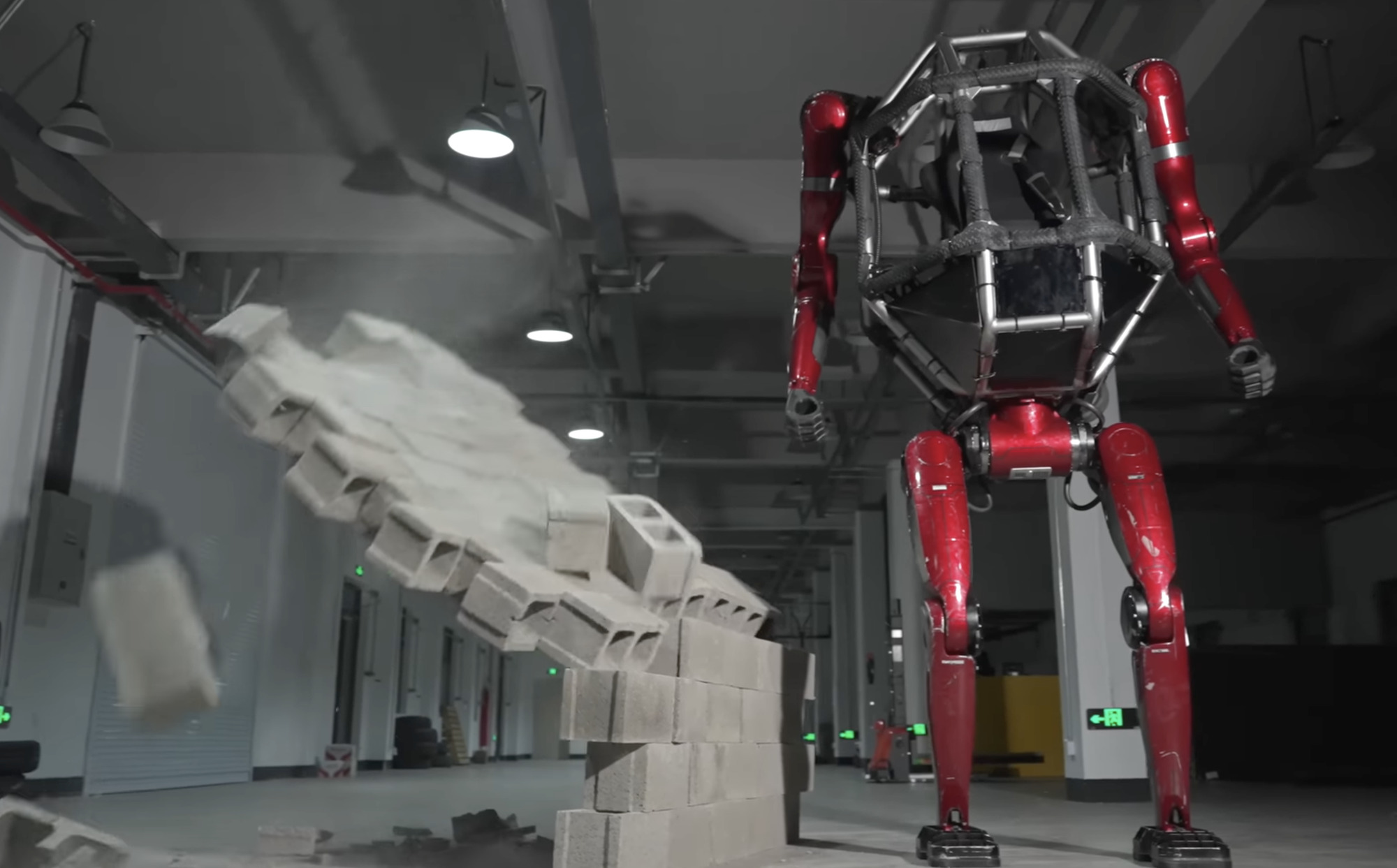
Unitree Robotics, a Chinese company that once slashed prices on robotic dogs to make them accessible to university laboratories, is now selling something fundamentally different. The GD01 is a three-meter-tall biped robot with a cockpit cabin in the torso designed for a live pilot. The starting price is 3.9 million yuan, or approximately $574,000.
The company's logic is straightforward: if you need a machine to transport people or cargo in environments where wheels don't work, here's the solution. In official videos, the GD01 walks on flat surfaces, breaks through walls with mechanical arms, and a crash dummy in a racing suit sits in the cabin instead of a live pilot. Unitree's CEO personally tested the machine—the video went viral.
What it can do—and what they don't show
The main technical feature of the GD01 is the ability to switch between two movement modes. If the robot loses balance on two legs, it automatically drops onto all four limbs. This isn't a show trick: stabilization through kinematic changes is a real engineering solution for robots of this weight (approximately half a ton).
However, Unitree deliberately limits information. As Heise notes, the company demonstrates the GD01 exclusively on level surfaces and does not disclose most technical specifications. The robot is currently controlled remotely—full piloting from inside remains a claimed but unconfirmed function. The GD01 has yet to appear on Unitree's website.
"It is absolutely unclear when the GD01 will be released as a product"
Heise Online
Who will buy it and why
Unitree positions the GD01 as a civilian product—and this itself is an unprecedented step. As Wired writes, the company has become one of the first to attempt bringing piloted mech-robots to the consumer market, rather than limiting them to industrial or military applications.
- Transporting people in hard-to-reach zones—the officially stated goal
- Developers and enthusiasts with access to large platforms—the real audience at $574k
- Content and demonstrations—what the machine is definitely suited for, judging by the CEO's videos
For comparison: the Bayraktar TB2 combat drone costs around $5 million. A Robinson R44 helicopter—$350,000. The GD01 occupies a strange niche between an expensive toy and a niche industrial tool—without a clear answer to the question of what task it solves better than existing alternatives.
What's missing for a serious discussion
Unitree has no answers to basic questions: what actual payload can the GD01 carry together with a pilot, what is its autonomous operating time, how does the machine behave on uneven terrain. The company has already announced the price—but has not confirmed the manufacturing date or published specifications.
This is a typical presentation strategy in Chinese robotics: first—resonance, then—details. It worked with robotic dogs. Whether it will work with a 500 kg machine that needs to be certified for transporting people is an open question.
If Unitree demonstrates the GD01 on uneven terrain with a live pilot within a year and publishes a technical datasheet, the conversation about a new category of transport will become substantive. Until then, it's the most expensive video featuring a crash dummy in a racing suit.







