About the event
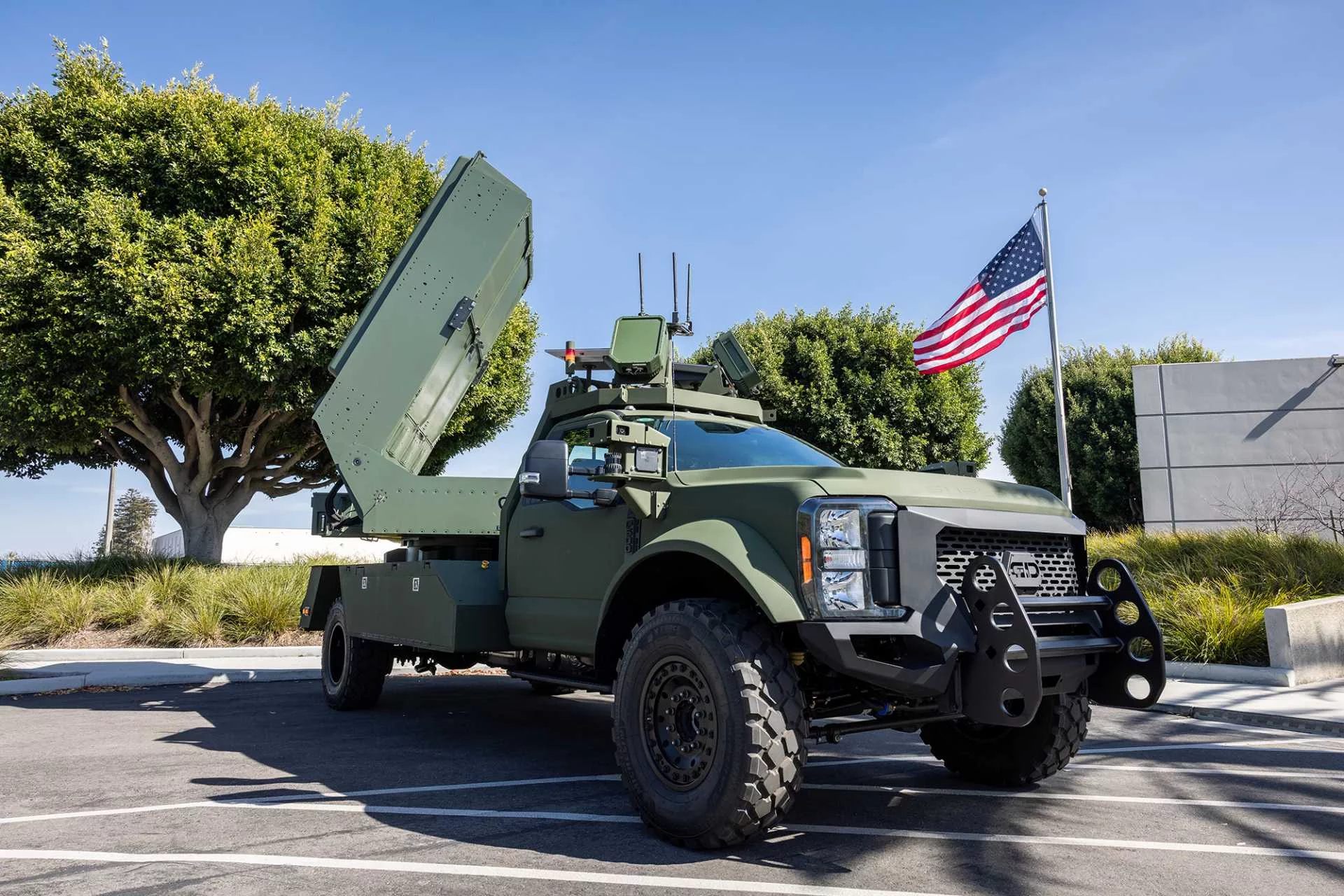
On March 24, at the AUSA Global Force Symposium 2026 in Huntsville (Alabama), a prototype of the Leonidas AGV — an autonomous system for neutralizing swarms of drones — was presented. The information was published by Kodiak AI; the project involved Epirus, General Dynamics Land Systems and Kodiak AI, and the platform is based on a Ford F-600 chassis.
"In the United States they showed a new autonomous system for countering drones — the Leonidas AGV, which is capable of neutralizing a drone swarm in seconds using microwave weapons."
— Kodiak AI
How the Leonidas AGV works
The key element is high‑power microwave radiation, which generates pulses that disable drone electronics: antenna circuits, control systems and power supplies are subjected to overload. The system combines this effect with an autonomous control module, so the vehicle can operate without a driver or under remote operator control. The mobile chassis allows for rapid repositioning and coverage of critical infrastructure in the close‑in defense zone.
What this means for Ukraine
For Ukraine, where mass attacks by cheap drones have become a regular threat, such systems are not theoretical but a practical necessity. First, the Leonidas AGV demonstrates a "layered" approach: instead of costly missiles, technological defeat of electronics makes intercepting cheap attacks more economically viable. Second, mobility and autonomy enable rapid coverage of vulnerable sites — airfields, logistics hubs, rear bases.
This is also part of a broader trend: it is already known that microwave weapons against drones are being tested in Ukraine, and the United Kingdom has conducted its own trials of similar technologies. Thus, the technology is moving from laboratories into practical use in several allied countries simultaneously.
Limitations and risks
Despite obvious advantages, it is important to understand the limits of effectiveness. Microwave effects depend on power, range, angle of incidence and line of sight; a multi‑target attack by large swarms may require several units or a different damage‑system architecture. There are risks of collateral electromagnetic effects on friendly systems, civilian electronics and personnel, raising questions about operating rules and safety procedures.
In addition, autonomy raises legal and operational questions about rules for use of force, human control in the decision‑making loop, and potential countermeasures — hardened firmware, shielding, or distributed drone control systems.
Expert view
Analysts and defense experts point out that such complexes are most useful as part of a multi‑layered air defense: they cover the close‑in zone against cheap mass threats, but do not replace missiles or radar for larger targets.
Conclusion
The Leonidas AGV confirms that the technological response to drone‑swarm attacks is developing rapidly. For Ukraine this is both an opportunity and a challenge: can such systems be integrated quickly, taking into account safety and compatibility with existing assets? The answer will depend on tests, technology transfer and the speed of decision‑making by partners.