What is known
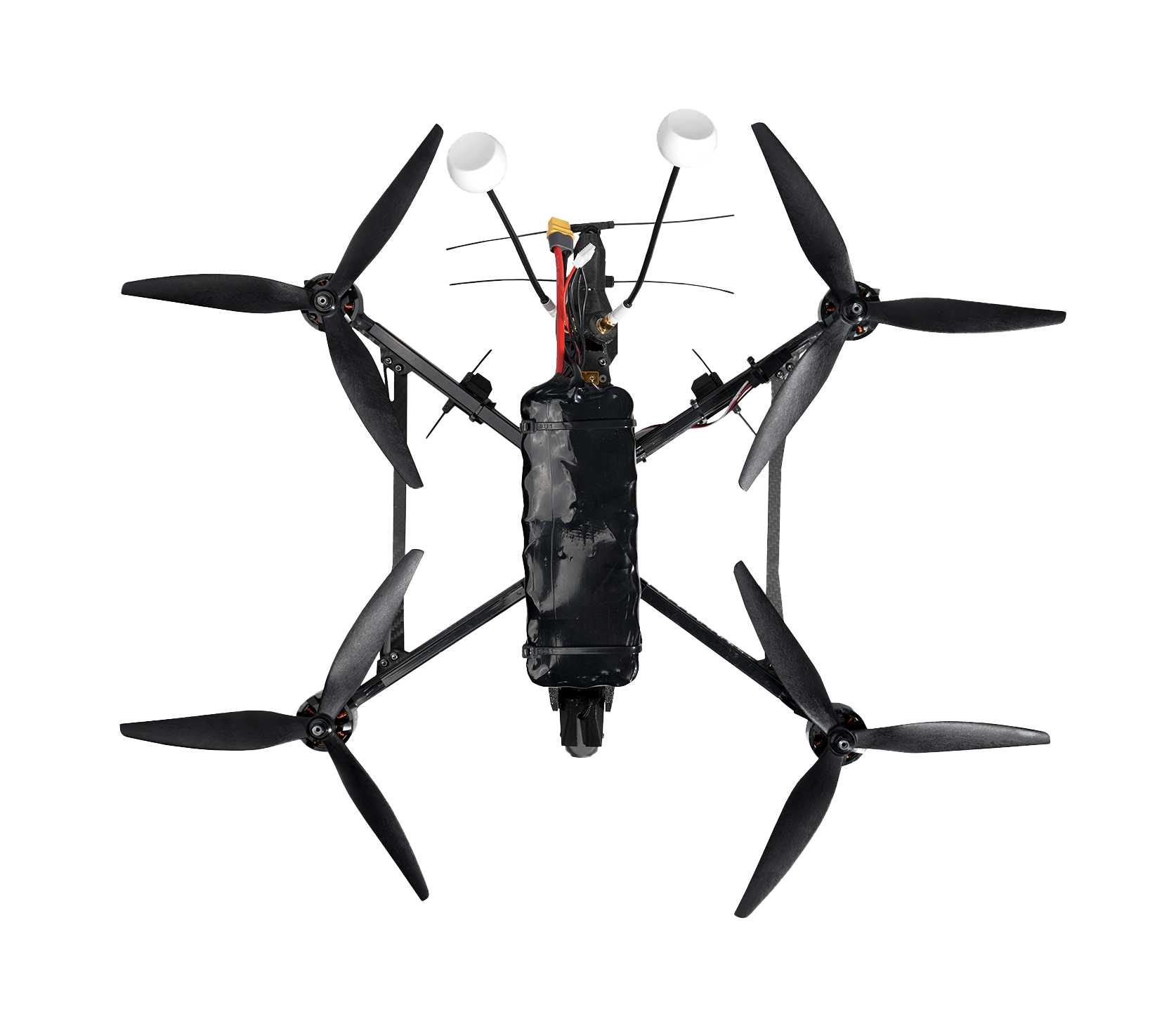
TAF Industries has presented on its website a prototype interceptor drone, TAF-I10, which is currently undergoing testing. The company positions the model as a high-speed UAV for engaging aerial targets — with a claimed top speed of >200 km/h, a tactical radius of up to 15 km, a flight duration of up to 25 minutes and a maximum operating altitude of up to 3,000 m. Payload is 0.5 kg; variants with a daytime, night or digital camera are provided.
Technical markers
The specifications state resilience to electronic warfare (EW) measures, the presence of a coded initiation board and a secure communications channel with encrypted MilELRS keys. Control is currently manual. At the same time, TAF is preparing Octopus for serial production — an interceptor certified by the Ministry of Defense and equipped with an automatic re-targeting module.
"The TAF-I10 was developed as a tool to counter small air threats — from reconnaissance drones to light attack complexes"
— TAF Industries, press service
Why it matters
The war has shown that cheap drones and kamikaze drones have become an everyday threat to defense and infrastructure. TAF-I10 addresses precisely this niche — rapid interceptions at short and medium ranges. Resilience to EW and modern communication protocols increase the chances of deploying the system on the battlefield, where the adversary actively uses hybrid means of strike.
Industrial and strategic implications
First, the local development will likely accelerate production ramp-up to supply units operating with short response windows. Second, the mention of joint ventures in Germany and serial production of "loitering" drones indicates an intent by Ukrainian manufacturers to scale products and enter partner markets — a marker of trust and potential financial reinforcement for the defense industry.
What’s next
Next steps — completion of testing, integration with existing command systems and, possibly, automation of target acquisition. Defense industry analysts note: a rapid transition from prototype to series production and Ministry of Defense certification for Octopus will be key for operational use at the front.
Conclusion
TAF-I10 is not a magic panacea, but a practical tool within the suite of counter-drone measures. If test results confirm the claimed specifications, it will strengthen the tactical flexibility of our units and add another element to the defensive chain. Whether serial production and international partnership can turn the prototype into a real resource for the front is a matter of time and speed of decision-making.