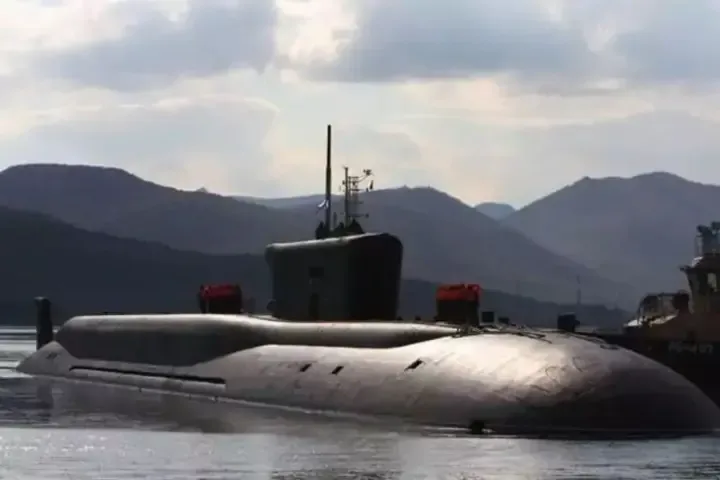
Nikolai Patrushev — an aide to Putin and head of Russia's Maritime Board — gave an interview to the propaganda agency RIA Novosti, in which he stated that Russia's naval strategic nuclear forces are in full combat readiness. This is not an operational report on a change of status — it is rhetoric embedded in a broader concept of developing the Russian fleet until 2050.
What exactly Patrushev said
According to Patrushev, the Russian Navy "protects national interests not only near borders, but also in various areas of the World Ocean." All "threats from potential adversaries," according to him, are incorporated into the Strategy for the Development of the Navy until 2050 and into a draft shipbuilding program for the same period.
"Our naval strategic nuclear forces are in full combat readiness."
Nikolai Patrushev, RIA Novosti interview
Among the specific "threats," Patrushev identified two:
- Military-naval alliance of Northern European countries and Ukraine — Patrushev stated that it "must be taken into account in the list of military threats to Russia."
- The AUKUS bloc (USA, Great Britain, Australia) — in particular, the expansion of Australian Navy capabilities to control shipping in the Pacific and Indian Oceans.
Context: money, drones, doctrine
Patrushev's statement fits into a series of steps underway since the beginning of 2025. In April, Putin held a meeting on fleet development where he announced plans to invest 8.4 trillion rubles in the Navy over the next ten years. At the same time, strategic nuclear forces were called a "guarantee of security."
On July 3, just days before this interview, Patrushev chaired a meeting of the Council for Strategic Development of the Navy, where a Defense Ministry project was considered regarding the expansion of naval strategic forces — both nuclear and non-nuclear — and priority development of naval drones.
How to read this
It is important to distinguish between two levels of the signal. Patrushev did not announce a change in the operational status of the fleet — he described it as already being in a state of readiness, and used this as an argument in doctrinal discussion. There have been no confirmations from independent sources, the ISW, or NATO intelligence regarding actual changes in the deployment of nuclear forces so far.
The inclusion of Ukraine in the list of "maritime threats" is a new rhetorical construct. Despite the fact that Ukraine does not have its own submarines, its potential integration with the fleets of Finland, Sweden, and the Baltic states is viewed by Moscow as a strategic shift in the balance of power in the Baltic and Black Seas.
If Russia truly accelerates its naval drone program and continues to expand its presence in the World Ocean, the real indicator of change will not be Patrushev's rhetoric, but the number of Borey-class submarine deployments on combat patrol — a figure that the West monitors and which it does not currently assess as anomalous.







