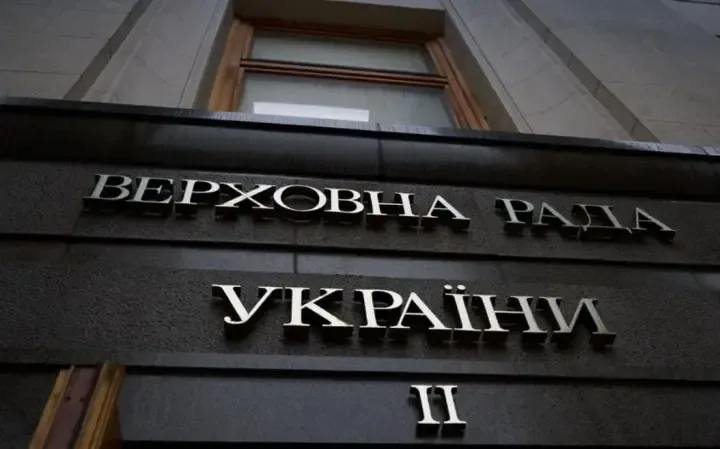
On the evening of July 15, the Supreme Rada voted to appoint Mykhailo Fedorov as defense minister — 277 votes in favor. Earlier that morning, MP from the Voice party Yaroslav Zheleznyak warned: the decision had not yet been made, and "unrealistic versions" were deliberately circulating in the media to confuse everyone. He was right in his diagnosis — but not in his forecast.
Fedorov: from "Diya" to the military
Zelenskyy announced Fedorov's candidacy on January 10, but did not personally come to the Rada to present him — an atypical protocol for such an appointment. In his first statement as minister, Fedorov himself emphasized not strategy, but specifics:
"I am taking the position of defense minister not as a minister who built a digital state, but as a person whose team has worked on the war extensively since 2022".
Mykhailo Fedorov, newly appointed defense minister
Behind him are Starlink, Drone Army, Brave1, UNITED24. That is, the bet is not on general's experience, but on technological and logistical transformation of procurement. That is where the greatest corruption vulnerability of the Ministry of Defense lies, and that is where Fedorov has documented results.
MES: a quieter, but symptomatic reshuffle
Parallel to the loud intrigue around the Ministry of Defense, there is a less resonant but indicative rotation in education. According to Zheleznyak, Oksen Lisovyy — minister of education since March 2023 — is "definitely" leaving. The main candidate for replacement is Andrii Butenko, head of NAZYAVO, a candidate of historical sciences and a specialized expert on higher education quality. His candidacy was independently confirmed by both the publication "Mezha" and MP from the European Solidarity party Oleksii Honcharenko.
The logic of the appointment is pragmatic: NAZYAVO under Butenko is a body that directly evaluates universities. Moving its head to the MES means betting on a person who knows the system from the inside, not from the outside. But it's also a risk: a reformer of the accreditation body and a minister who must lobby the interests of the same universities — different roles.
- Lisovyy — leaves his position without public explanation of dismissal reasons
- Butenko — candidate agreed upon, but the decision has not yet been formally approved as of the time of publication
- Fedorov — voted in, but without Zelenskyy's personal presence in the Rada
What lies behind this
Both replacements — both in the Ministry of Defense and in the MES — are united by one logic: technocrats instead of apparatchiks. Fedorov is a person without a military background who proved the ability to build systems under pressure. Butenko is a narrow specialist, not a political figure. If this model works, the next test will be the defense budget for 2026 and the enrollment campaign amid a demographic crisis.
If Butenko truly becomes minister of education — will he be able to maintain the independence of the MES from the university lobby that he himself recently controlled as a regulator?







