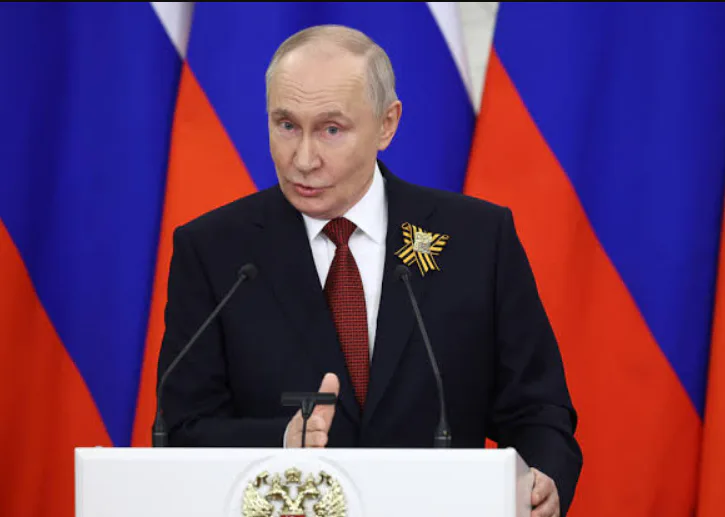
When Putin states that Russian troops are "10 kilometers from Sumy," this is not a numerical error — it is a deliberate signal to the domestic audience. This is the view of political analyst Oleg Lisny, who analyzed recent public statements by the Russian president and concluded that the Kremlin's rhetoric is increasingly detaching itself from verified battlefield data.
A Front That Doesn't Exist in These Numbers
According to Lisny, the actual advancement of Russian forces in the Sumy direction does not correspond to what Putin announces. Open data from OSINT communities and satellite imagery record much more modest changes in the line of contact. The expert believes the purpose of such statements is to create an image of inevitable victory for Russian society, which for the third year has been receiving coffins instead of the promised "week."
This is a classic substitution: when real successes are lacking, they are replaced with declarative ones. The domestic audience is deprived of independent verification, so there is simply no way to check the numbers.
Anchorage: Negotiations That Never Really Happened
The meeting in the "Spirit of Anchorage" format was supposed to become a symbol of restored diplomatic channels between Moscow and Washington. Lisny notes: no concrete agreements emerged after this format, and the term itself has essentially fallen out of use in the official rhetoric of both sides. What was presented as a breakthrough turned out to be negotiations for the sake of negotiations — without a verification mechanism and without clearly documented commitments from the parties.
Gasoline as a Domestic Barometer
The third indicator is the fuel crisis within Russia. According to data cited by Lisny, fuel shortages in certain regions have become a systemic rather than localized phenomenon. This directly contradicts the narrative about an "impenetrable" war economy. The logic is simple: a country that is effectively conducting a war does not have queues at gas stations and supply disruptions for diesel fuel for agricultural machinery.
The combination of these three signals — exaggeration of frontline successes, failure of the diplomatic framework, and domestic resource deficits — indicates, in the expert's view, not the strength of the Kremlin's position, but rather the need to constantly maintain the illusion of this strength.
Not a Rhetorical Question
If the domestic audience in Russia begins to sense the gap between the official picture and another empty fuel canister — is this gap sufficient to change public tolerance for the war, or will the repressive apparatus neutralize any signal of discontent before it reaches critical mass?







