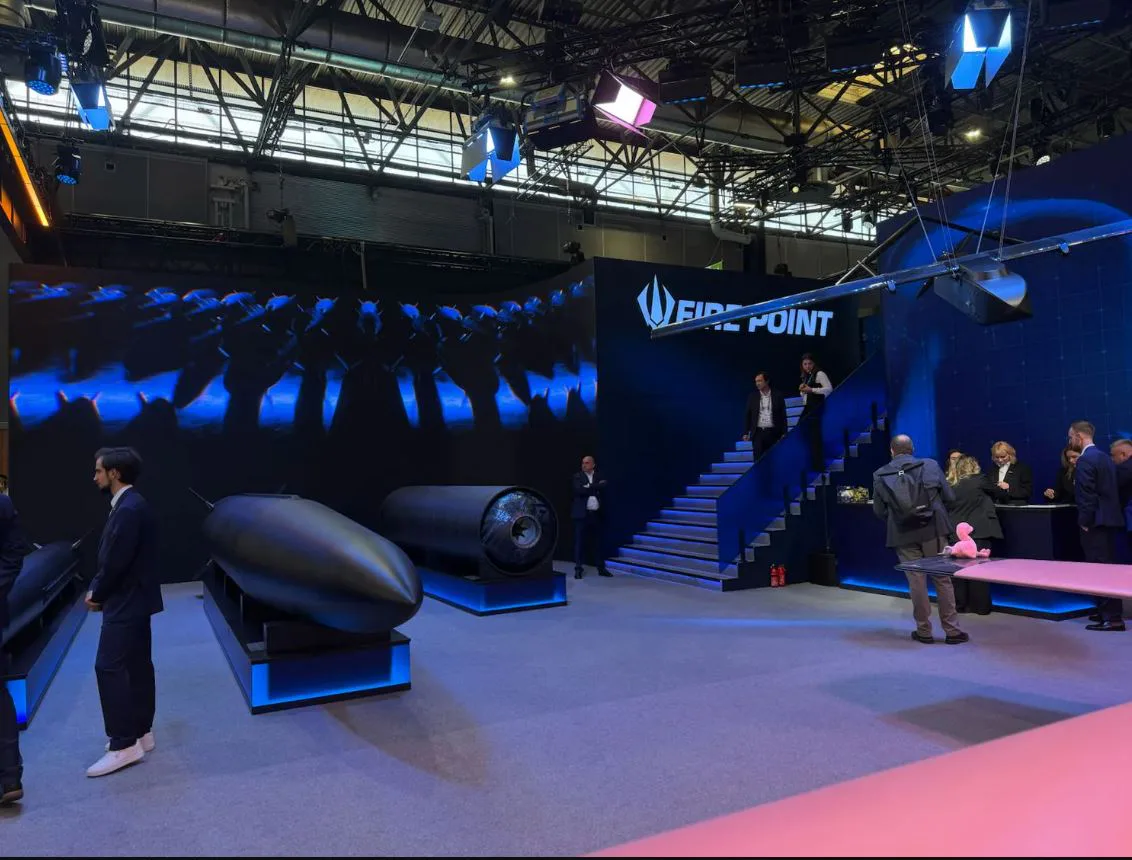
On February 27, 2026, Fire Point conducted the first flight tests of the FP-7 ballistic missile. The range is up to 200 km, warhead mass is up to 150 kg. Structurally, it is an adaptation of the Soviet 48N6 missile with modernized electronics, fuel, and hull. Denis Shtilerman himself, the chief designer and co-founder of the company, called the FP-7 a "clone" of the Soviet model — at least in terms of aerodynamic layout.
Tests are not yet weapons. For the FP-7 to reach the Armed Forces of Ukraine, it must pass certification and codification by the Ministry of Defense: without an assigned NATO code, the army cannot officially accept equipment on its balance sheet, purchase it, or account for it. Fire Point plans to complete this procedure for the FP-7 by the end of 2025–2026 — only then will serial deliveries begin.
In parallel — a bigger bet
While the FP-7 goes through the bureaucratic process, the company is already moving toward a fundamentally different class of weapon. The FP-9 is a ballistic missile with a declared range of 855 km and a warhead of up to 800 kg. If these figures are confirmed in practice, the missile will cover Moscow and St. Petersburg.
Currently, the FP-9 is completing ground tests of a solid-fuel engine — the only component that, according to Shtilerman, remains unready. Field flight tests are expected in autumn 2026, as Reuters reported citing the designer himself. For serial use, Shtilerman named the minimum salvo: 20–30 missiles simultaneously — this is how, according to him, Russian air defense systems can be overcome.
"It is difficult for them to intercept such missiles. It's generally complicated — even for systems like Patriot".
Denis Shtilerman, co-founder of Fire Point, in an interview with GORDON publication
Codification: a bottleneck on the path to the front
A separate dimension is the weapons approval procedure itself. In March 2026, the Ministry of Defense reformed the codification system: manufacturers now independently approve technical specifications, and duplication of demonstration tests has been eliminated. For drones and tactical-level electronic warfare means, a quality certificate from the manufacturer is sufficient — state control does not apply.
But ballistic missiles are not drones. They do not fall under the simplified regime, and the full cycle of standard tests remains mandatory. Experts familiar with the procedure note that even after submitting the documentation package, the process is accompanied by additional approvals, which in practice extends the timeline.
According to the Ministry of Defense, during 2024, more than 1,300 samples of weapons and military equipment were codified, approximately 75% of which are new domestic developments. This indicates that the system is moving forward — but ballistics have not yet appeared in this list.
Third vector: FP-7 becomes an interceptor
In parallel with the strike version, Fire Point is developing the FP-7.x air defense missile based on the FP-7 for the FREYJA antiballistic complex. The interceptor accelerates to 1,500–2,000 m/s, has a length of 7.25 m, and, according to the developers, costs approximately $700,000 compared to $3.8 million for a PAC-3 missile. Serial production of the FP-7.x may begin in August 2026 — provided that an infrared seeker is supplied by German Diehl Defence.
The Ukrainian Air Force, familiar with the test results, confirmed its interest in completing development as quickly as possible. The completion of the full test cycle is planned for the end of 2026, after which the missile is transferred for state testing.
The conclusion is simple: Ukraine has its own ballistics that are already flying. The question is not about technology — the question is whether the stated codification timelines for the FP-7 will be met and whether the FP-9 engine will confirm its characteristics in field tests in autumn. If both points align — by the end of 2026, the Armed Forces of Ukraine will receive their own strike ballistic potential for the first time since the beginning of the war.







