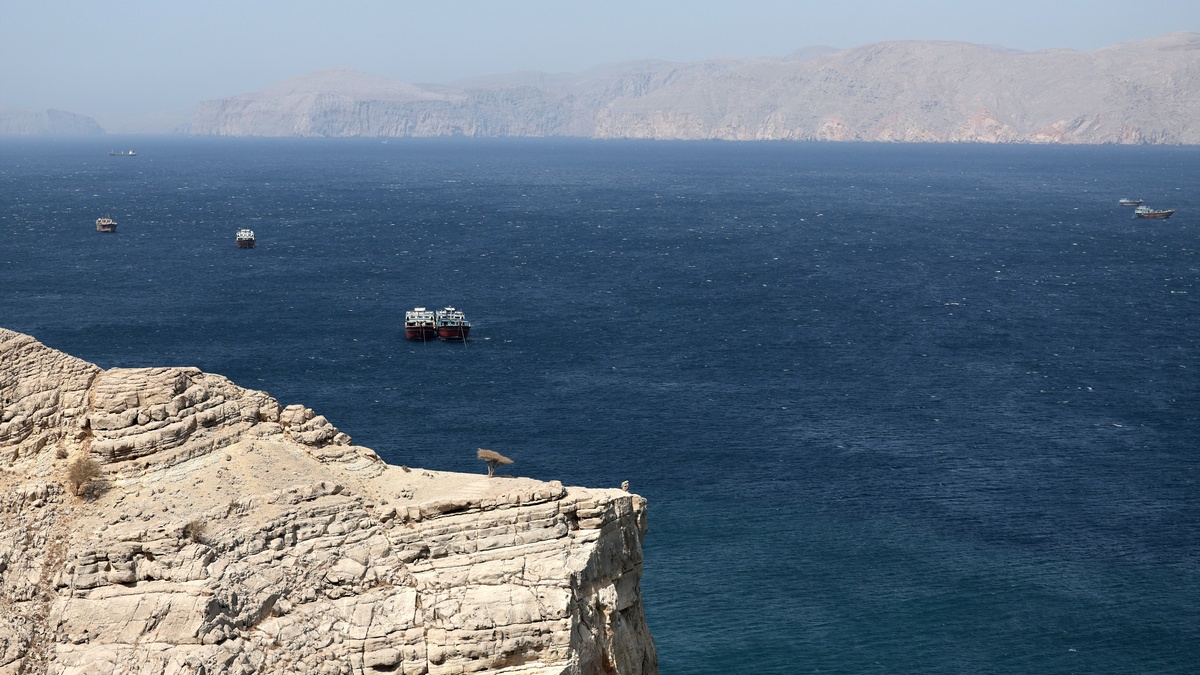
Saturday in the Persian Gulf began with two events simultaneously: the IRGC attacked Bahrain with Iranian drones, and another tanker was hit in the Strait of Hormuz. Both incidents occurred less than a day after American airstrikes on Iran — and less than a week after Tehran and Washington signed a memorandum of understanding.
What happened: a chain of strikes
The escalation began on Thursday, June 25. CENTCOM confirmed that the IRGC struck the Singaporean cargo ship M/V Ever Lovely with a single-use attack drone while the vessel was exiting the strait along the Omani coast. In response, the US struck Iranian positions on Friday. American strikes targeted Iranian missile and drone storage facilities, as well as coastal radar installations — CENTCOM reported this in a post on X.
On Saturday, the IRGC responded with an attack on Bahrain. Bahrain's Foreign Ministry stated that "several Iranian drones" attacked the country, calling it a "blatant threat to the security of citizens and residents." The Iranian Revolutionary Guard, in turn, stated through state agency IRNA that it struck "several targets of the US terrorist army in the region," without specifying the targets.
In parallel, another tanker was attacked in the strait. The British maritime trade center UKMTO reported that it received a report of a tanker hit by an "unidentified projectile" in the Strait of Hormuz. The ship's captain documented bridge damage; the entire crew remained alive.
Memorandum exists — interpretations differ
The memorandum signed a week ago provided for the resumption of navigation through the strait. But even at the level of details, the sides have no agreement. Article 5 of the memorandum only stipulates that Iran and Oman will "discuss future management" of the strait. Oman, together with the UN IMO, established two temporary shipping corridors — Iran rejected this scheme, agreeing only to a single route along its coast.
"The Strait of Hormuz is under Iranian management. Respect the rules"
Ebrahim Azizi, head of the Iranian parliament's national security committee — before the latest round of strikes began
After announcing the memorandum, Vance stated that "the strait should be open duty-free on a long-term basis." But Iran does not recognize the strait as international waters. The US and Arab Gulf states reject Iranian claims — the strait is considered an international shipping lane despite technically passing through the territorial waters of Iran and Oman.
Reaction: accusations from both sides
Trump called the Iranian attack "absurd ceasefire violation" on Friday; he did not publicly respond to Saturday's strikes. Vance wrote on X on Friday: "Iran signed a ceasefire agreement. We complied with it. If there are differences regarding the application of MOV — you can pick up the phone. But violence will be met with violence."
Tehran chose symmetrical rhetoric. Mohsen Rezaei, former IRGC commander and current state official, stated that the US violated the agreement through support for Israel, and warned: "The response to any violation of any article of the memorandum will be swift and decisive."
Context for shipping
A critical share of global oil exports still passes through the strait. The memorandum provides for the strait to resume operations, but before the current escalation began, it carried about 20% of global oil traffic. The situation is now more complex: UKMTO warned that the threat to vessels is "substantial," and sailors should expect the presence of warships during demining operations — mines have been detected in the strait.
Iran and the US established a direct communication line to prevent new incidents — Iranian state television Press TV reported this on Friday. But the very next morning, drones were flying over Bahrain again.
The real question is not whether the current ceasefire will withstand another strike. The question is whether the sides are able to reach an agreement on the status of the strait before another damaged tanker makes negotiations impossible — and who will be the first to hang up in favor of missiles.







