What happened
Turkey has reached a preliminary agreement with six international institutions to provide $6.75 billion for the construction of the Istanbul Northern Peripheral Railway, the press service of the Ministry of Transport and Infrastructure reported. Among the lenders are the World Bank, the Asian Infrastructure Investment Bank (AIIB), the Asian Development Bank, the Islamic Development Bank, the OPEC Fund for International Development (OFID) and the EBRD.
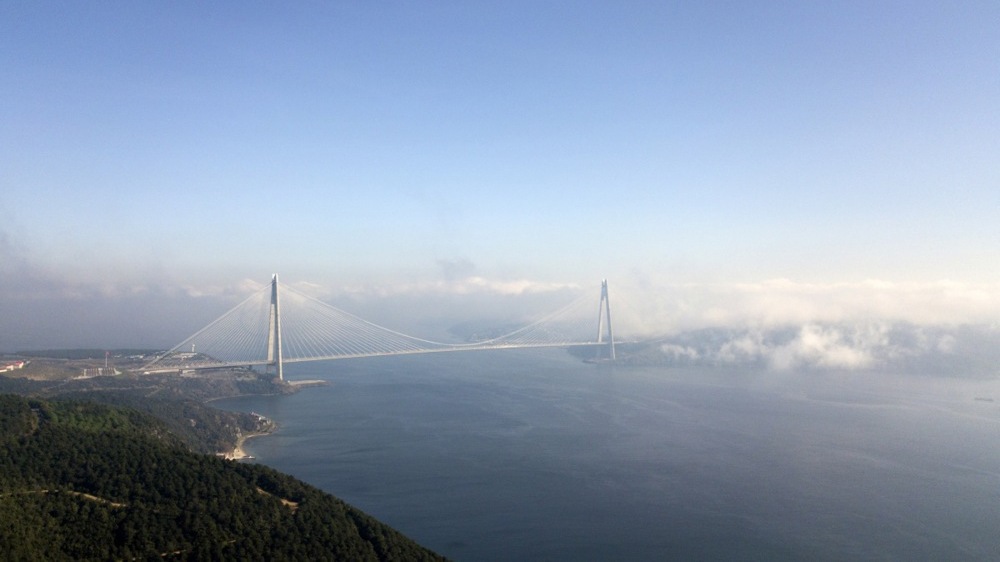
Route: Gebze industrial zone (Asian side) — Sabiha Gökçen Airport — Yavuz Sultan Selim Bridge — Istanbul Airport — Halkalı (European side). The line length is 125 km; the project includes 44 tunnels (59.1 km) and 42 bridges (22.4 km). According to Minister Abdulkadir Uraloglu, they plan to complete the tender process this year and start work after the site handover.
"We plan to complete the tender process this year and begin work after the construction site is handed over."
— Abdulkadir Uraloglu, Turkey's Minister of Transport and Infrastructure
What this line will change
The project is positioned as an attempt to relieve pressure on existing corridors — notably Marmaray — and to directly link the two major airports. According to official estimates, the new line will be able to carry 33 million passengers and 30 million tons of freight per year, making it a significant player in intercontinental logistics.
For the region this means stronger rail corridors between Asia and Europe, reduced transit bottlenecks, and competitive pressure on existing routes. For Ukraine and Ukrainian exporters, it represents a new logistics node near the Black Sea, which can create both additional opportunities (alternative routes) and competition for transit flows.
"A new era in logistics will begin. After completion, the line will be able to carry 33 million passengers and 30 million tons of freight per year."
— Abdulkadir Uraloglu, Turkey's Minister of Transport and Infrastructure
Why international banks trust this
Financing of such projects by major institutions typically signals two things: first, confidence in the country's financial and technical capacity; second, a strategic interest in establishing resilient trade and transport routes. In Istanbul's case, this aligns with long-term logistics between Europe and Asia — while also reinforcing Turkey's role as a transport hub.
Risks and open questions
The project is large and capital-intensive — therefore the risks are traditional: cost overruns, schedule delays, and environmental and social issues during the construction of tunnels and bridges. Attention should also be paid to the geopolitical context: Turkey's parallel financial ties (for example, Russian investments in the Akkuyu nuclear power plant) show that Ankara will be balancing between different external players, and this may affect the implementation of major infrastructure projects.
Conclusion
The investment in the Northern Peripheral Railway is a signal: international institutions see value in Istanbul's large transport corridors. For Ukraine, the key question is how to use these shifts in the interests of its own logistics and exports: seek new opportunities while monitoring risks to transit routes. Now it is up to logistics operators and governments — whether these loans will turn into real flows of goods and people, or remain declarations on paper.







