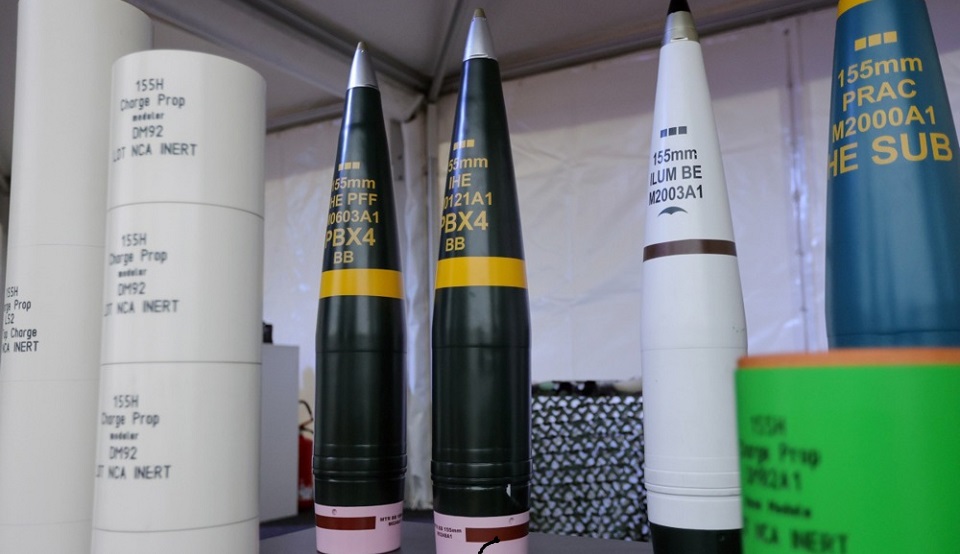
The Defense Procurement Agency DOT of the Ministry of Defense announced a new competitive tender for the purchase of 155-mm artillery rounds of extended range. This is not the first tender of this type — it is an attempt to make an exception the rule.
What the first procurement has already proven
In May 2026, the DOT AOZ completed what it called the largest procurement in its history: contracts for long-range 155-mm shells were signed with six manufacturers. Competition between them yielded concrete results.
"Competition and transparent conditions allowed us to save 16% from the initial amount — that's billions of hryvnias. As a result, we were able to additionally contract tens of thousands of additional rounds"
Mykhailo Fedorov, Minister of Defense of Ukraine
The arithmetic is simple: 16% of a large contract is not a line in a report, but real ammunition on the front line that would not have existed if purchased from a single supplier at a fixed price.
Why the model is closed, but competitive
The new tender, like the previous one, will take place in a closed environment — for security reasons: data on manufacturers and volumes are not disclosed. At the same time, participation is open to all manufacturers and suppliers whose products meet technical requirements. In other words, there is competition, but its details remain outside the public sphere — and this is a fundamental difference from classical tenders on ProZorro.
From January 1, 2026, all procurement for the military is centralized in the DOT AOZ. Before that, defense agencies purchased independently, which complicated both control and competition.
Where the reform is heading next
According to Fedorov, 155-mm shells are only the first platform for testing the model. Next in line are FPV drones, mid-strike and deep-strike unmanned systems. The Ministry of Defense has also announced the first competitive tenders for drone-bombers and midstrike systems, citing the same precedent of savings exceeding 16% on ammunition.
"On the instructions of the President, we are systematically scaling competitive procurement in defense to make weapons supply to the front faster, more transparent and more efficient"
Mykhailo Fedorov
At the same time, critics of the system — in particular, analysts in the field of public procurement — point out a contradiction: closed procedures make independent audit of results impossible. The savings of 16% are verified only by the agency itself, without external verification. This does not mean the figure is false — but it does mean that trust in it rests solely on the institutional reputation of the AOZ.
- First tender: record batch of 155-mm rounds, six winning manufacturers, signed contracts
- Savings: over 16% of the initial cost — billions of hryvnias directed toward additional ammunition
- Second tender: announced now, similar procedure, open to all eligible manufacturers
- Next stage: competitive tenders for FPV, mid-strike and deep-strike drones
If the AOZ truly transitions to competitive tenders in all procurement categories by the end of summer 2026 — the next test will be whether the cost-saving effect persists in the drone market, where there are significantly fewer manufacturers than in the classical ammunition segment.







