The verdict and its significance
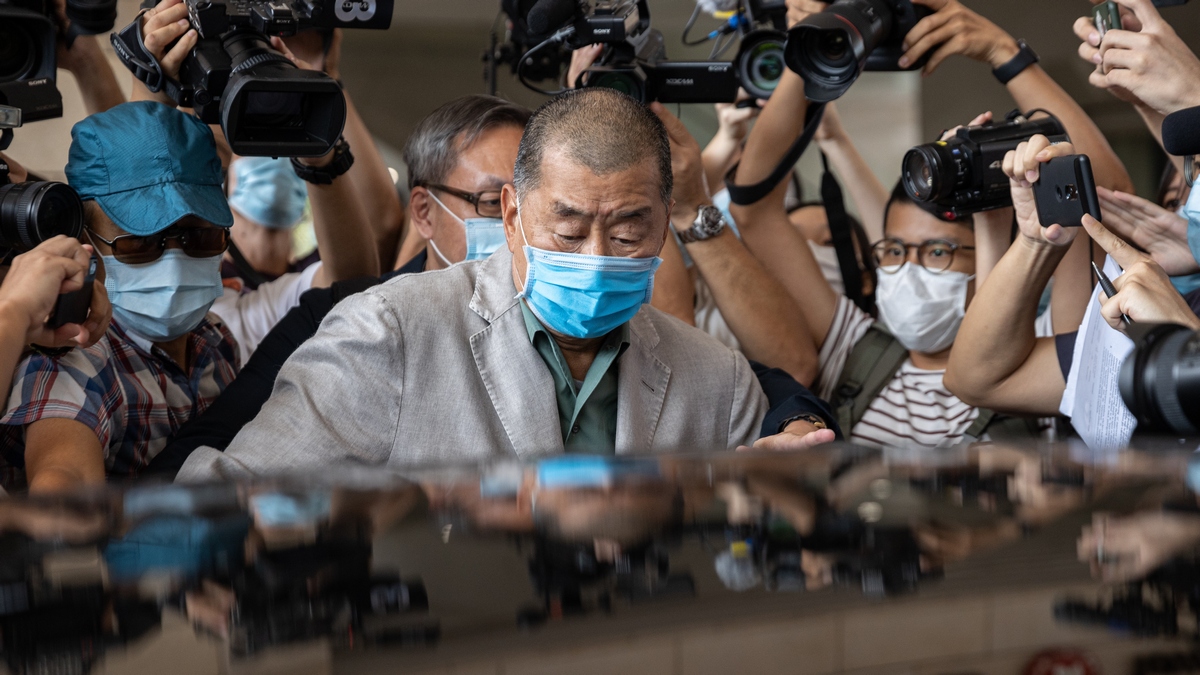
A Beijing-controlled court in Hong Kong on Monday, Feb. 9, sentenced former media magnate Jimmy Lai to 20 years in prison, Reuters reported. Lai was found guilty of conspiring to collude with foreign forces and of publishing materials the court classified as subversive — the sentence is the harshest handed down under the national security law.
Judges justified the lengthy term by saying that, in their view, Lai was allegedly the “brain center” and driving force behind actions aimed at pressure and sanctions from the United States and other countries. At the same time, six other former top executives of Apple Daily received prison sentences ranging from six to ten years.
Context and key figures
The founder of the independent newspaper Apple Daily was arrested in August 2020. Lai, now 78 and holding British citizenship, rejects the charges and calls the case political persecution. Britain has already announced its intention to step up further action in the matter.
International reaction
"This is effectively a life sentence"
— Yvette Cooper, United Kingdom's Foreign Secretary
London says the sentence will have a humanitarian dimension in its diplomatic steps. Meanwhile, human rights and media communities view the decision as a signal of tightening control over independent media in Hong Kong and a possible precedent for other jurisdictions close to Beijing.
Additional context is provided by a statement from The Committee for Freedom in Hong Kong (CFHK Foundation) in 2024: the organization claims that Hong Kong increasingly acts as an intermediary in attempts to circumvent international sanctions, notably those against Russia. This underscores that the consequences of the verdict extend beyond domestic politics and affect the geoeconomic sphere.
What this means — a brief analysis
First, the sentence confirms that the national security law in Hong Kong is being applied more harshly and consistently — a consequence of a systemic policy of information control. Second, it is a reminder to democratic countries: diplomatic statements must be complemented by actions if the aim is to protect journalists and independent media. Analysts note that without clear coordination of international measures, repressions become less risky for those who carry them out.
Conclusion
This is not only a sentence for one person. It is a signal — about how the field for independent journalism is changing and which tools remain available to the international community. Whether current declarations will turn into concrete steps — sanctions, institutional support for media, legal assistance — will determine whether a free press in the region remains a possibility rather than a marker of risk.