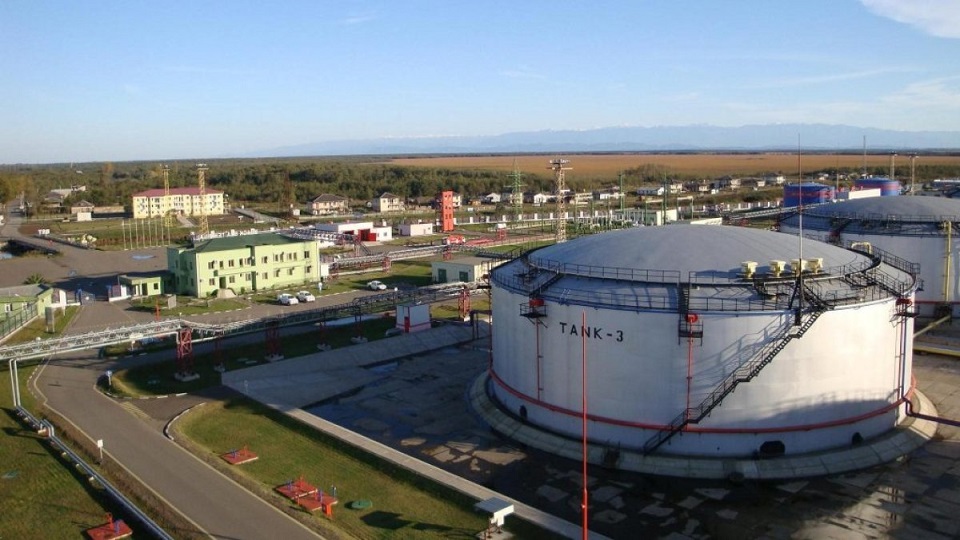
EU position and what exactly is being proposed
The European Union has for the first time proposed including ports of third countries on its sanctions list — notably Georgia's Kulevi and Indonesia's Karimun, which take part in the transshipment of Russian oil. The initiative was presented by the EU's diplomatic service (EEAS) and the European Commission on February 9 and is intended to become part of the 20th sanctions package over Russia's war against Ukraine. Final adoption requires the unanimous approval of all EU member states.
"The European Union has for the first time proposed including ports in third countries – Georgia's Kulevi and Indonesia's Karimun, which handle Russian oil."
— Reuters
The package includes not only targeted measures against ports. The EU proposes moving from the G7 price cap to a complete ban on at-sea services for tankers carrying Russian oil, and also to ban imports of a number of metals (nickel, iron ore, copper, aluminium, etc.). The sanctions list is also proposed to add 30 individuals and 64 companies, among them Bashneft and eight oil refineries (including in Tuapse and Syzran).
"The package was jointly prepared by the EU's diplomatic service (EEAS) and the European Commission and was presented to EU countries on Monday, February 9."
— EEAS / European Commission
Context: why this matters for Ukraine
First, including ports of third countries means tighter control over routes used to evade sanctions. Kulevi on the Black Sea coast, operated by Azerbaijan's SOCAR and with a throughput capacity of about 10 million tonnes, is a notable node in regional logistics. Limiting its role in receiving and transiting Russian oil reduces the number of available routes for sanctions evasion.
Second, the shift in approach — from a price cap to a ban on maritime services — complicates operations for tankers carrying oil and raises risks for those providing technical and insurance services. For Ukraine, this means additional pressure on Russian revenues and reduced opportunities for market maneuvering.
"On February 2 Bloomberg reported that the EU is considering banning imports from Russia of iridium, rhodium, platinum and copper in the 20th sanctions package."
— Bloomberg
Risks, limitations and who will be affected
The decision requires unanimity — this leaves room for bargaining and diplomatic pressure from third countries. A counter-effect is also possible: Russia may redirect flows using other ports or overland routes, and transit countries may object if their interests are harmed.
Another test is enforcement: the ban concerns not only physical transshipment but also accompanying services (insurance, repairs, escort), which requires coordination among regulators, port operators and international companies.
Brief conclusion and outlook
If the 20th package is adopted as proposed, it would be an important step in narrowing routes for sanctions evasion and raising the cost for those who risk dealing with Russia-linked oil. At the same time, its effectiveness will depend on the EU and its partners' ability to control transit chains and withstand diplomatic pressure from third countries. The question that remains open: can the EU combine political will with practical enforcement mechanisms so that these measures do not remain only on paper?







