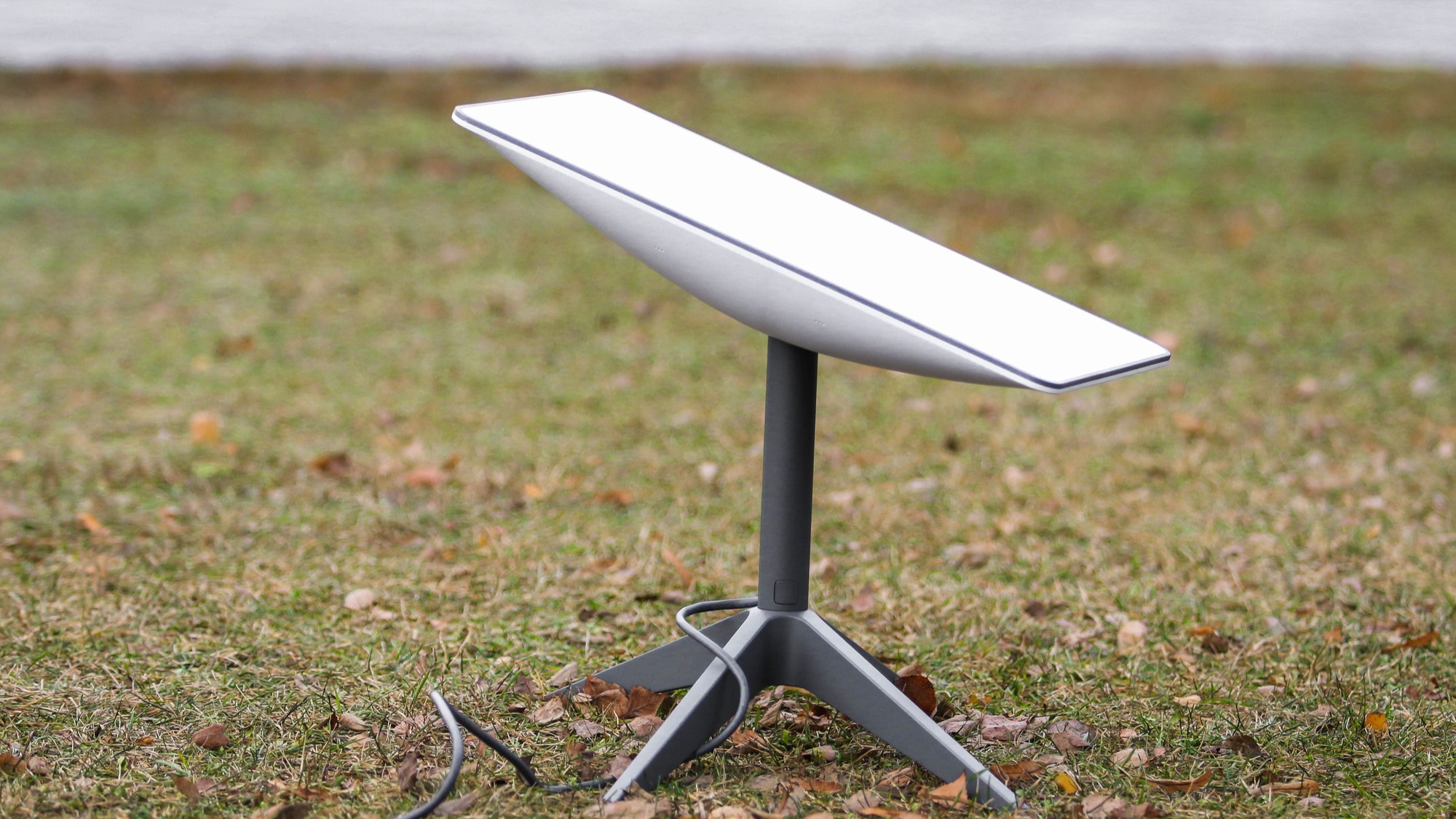
Quiet swaps on the front line
According to adviser to the Minister of Defense and consultant on military radio technologies Serhiy (Flash) Beskrestnov, Russian units are receiving alternative satellite Internet terminals — not Starlink, but equipment that operates via the Yamal and Express satellites. This confirms that after blocking unregistered Starlink terminals, the enemy is looking for other communication channels.
How to recognize these terminals
Flash highlights a number of visual and technical signs that help identify these systems at the front:
- antennas look like satellite satellite dishes for TV, about 60–120 cm in diameter;
- orientation — to the southeast or south (azimuth approximately 110–180°);
- the dish is usually exposed (without a protective cover/radome), because that would interfere with operation on these frequencies;
- equipment may be deployed behind the front and connected to the forward line via a Wi‑Fi bridge.
"There are several high‑speed satellite Internet providers in Russia based on the Yamal and Express satellites"
— Serhiy (Flash) Beskrestnov, adviser to the Minister of Defense, consultant on military radio technologies
Why it matters
Blocking unregistered Starlink terminals has shown a practical effect: according to reports from the General Staff (via LIGA.net) and specialists, the occupiers in some areas indeed had these terminals "stop working" — and this affected command and the conduct of assault operations. At the same time, the enemy did not remain without options and began urgently reconfiguring communications to satellite networks available in the Russian Federation.
"White lists are updated once a day, so if a terminal has already been submitted for registration but is not yet working — it's worth waiting"
— Fedorov, Minister of Defense
Consequences and risk assessment
Switching to other satellites has two key characteristics: first, such terminals are often more conspicuous (large exposed dishes); second, they allow the enemy to restore command and reconnaissance channels, albeit with different technical limitations. The Ukrainian Starlink verification system and the blocking of unregistered terminals have shown that control over critical communication channels has a practical effect. But the adversary adapts — and this underscores the need for constant monitoring, satellite reconnaissance, and coordination with partners.
What’s next
In the short term — it is important to detect and document such dishes by the signs named by the expert, and to coordinate the actions of reconnaissance and artillery. In the medium and long term — strengthening cyber and radio‑technical work, working with partners on more sophisticated verification tools and means to restrict the enemy’s communication channels. Experts agree: control over communication channels remains one of the key factors determining the tempo and quality of combat operations.
In short: blocking Starlink exposed the enemy’s vulnerability, but does not eliminate it completely — satellite alternatives are already on the front, and their appearance forces us to adapt quickly.





