Briefly — and why this matters
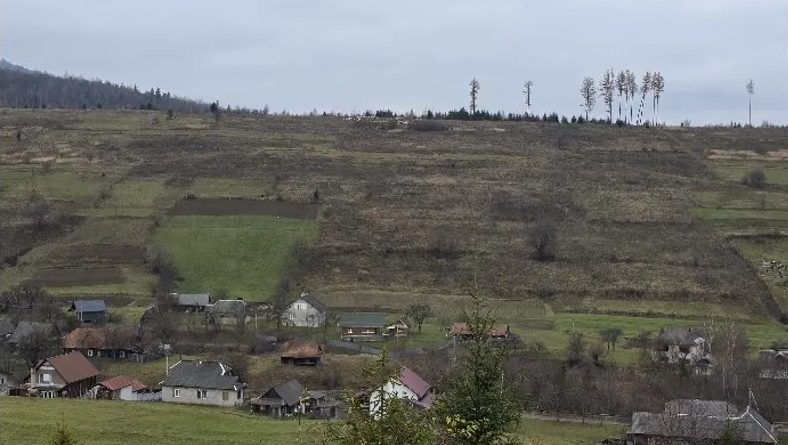
The National Agency for the Search and Management of Assets (ARMA) on January 8 held hybrid Dutch auctions and sold land plots in the Carpathians with a total area of more than 460 ha. In total 494 plots were sold at the auctions, the average price being UAH 1,947 per sotka (100 sq. m). This transaction is important not only because of the sums involved — it raises questions about the transparency of procedures, the impartiality of market mechanisms, and the interests behind the buyers.
What was sold and for how much
The starting amount across the three lots was UAH 173.95 million; the actual receipts were UAH 89.57 million. Each of the auctions had only one bidder, which automatically undermines competition and depresses the final price.
Selected results:
- 26.74 ha (41 plots, Khust and Mukachevo districts) sold for UAH 5.43 million (starting price — UAH 10.45 million). Winner: Andriy Vinhranovskyi.
- 199.15 ha (including lower and upper stations of a ski lift: 93 plots of LLC "Taurus Property" — 100.45 ha and 115 plots of LLC "Taurus Land" — 98.69 ha) sold for UAH 39.1 million against a start of UAH 75.2 million. Winner — the same Vinhranovskyi.
- 234.79 ha (145 plots of LLC "Borzhava Development", 56 plots of LLC "Borzhava Invest", 42 plots of LLC "Borzhava Land", 2 plots of LLC "Dumka") were bought by Ihor Vlasiuk for UAH 45.03 million with a starting price of UAH 88.3 million.
Who stands behind the buyers — links and risks
According to Opendatabot, Andriy Vinhranovskyi is connected to LLC "Ombri Investment", which is part of the corporate group of the Lyovochkin family. He is also listed as the husband of Yuliia Lyovochkina. In turn, Vlasiuk is the founder of LLC "Borzhava Eset", whose ultimate beneficial owners are named as Vinhranovskyi and Renata Huseynova (who, according to reports, is the common-law partner of Vladyslav Kaskiv).
"Former head of the State Investment Project Vladyslav Kaskiv, with the support of MP Serhii Lyovochkin, is hatching plans to build an all-season resort 'Borzhava' near the village of Pylypets."
— Bihus.Info (investigation, August 2025)
Context: court, investigation and expectations of ARMA
In July 2024 the High Anti-Corruption Court approved a plea agreement in the case of six defendants accused of embezzling UAH 259.2 million from the State Investment Project while it was headed by Vladyslav Kaskiv. Under the agreement, the state recovered both the funds and the land that were the subject of the case, but the harshest penalty for the defendants was a suspended sentence.
In November 2024 ARMA expected to receive more than UAH 1 billion from the sale of these lands. The actual receipts — less than UAH 90 million — raise questions about the methodology of the sale, the conditions for participant involvement, and the protection of state interests.
"According to Opendatabot, Vinhranovskyi is the owner of LLC 'Ombri Investment', which belongs to the corporate group of the Lyovochkin family."
— Opendatabot
Why this matters for Ukraine
There are several layers of significance. The first is economic: the lands were valued at more than a billion, while actual proceeds are several times lower. For the state budget and infrastructure recovery, this is not insignificant. The second is political and institutional: when an auction features only one buyer, it signals a lack of competition or non-transparent preconditions for the sale. The third is environmental and regional: large-scale development projects in the Carpathians require clear environmental and urban-planning guarantees.
What’s next — possible developments
Near-term steps to watch:
- local and central authorities should publish information on permitting procedures and environmental assessments for the potential resort;
- anti-corruption bodies and parliament may initiate reviews of the auction mechanics and the justification of the starting prices;
- communities in Zakarpattia must be given a full picture of the project's impact on the environment and the region's economy.
This decision has already reshaped the geography of ownership in the Carpathians — the question is whether it will form the basis for a transparent investment project or merely another story of state assets being sold far below their potential value. The ball is now in the court of regional authorities, anti-corruption bodies and the community: will declarations of support turn into concrete, controlled investments — without harm to nature and without losses to the state?







