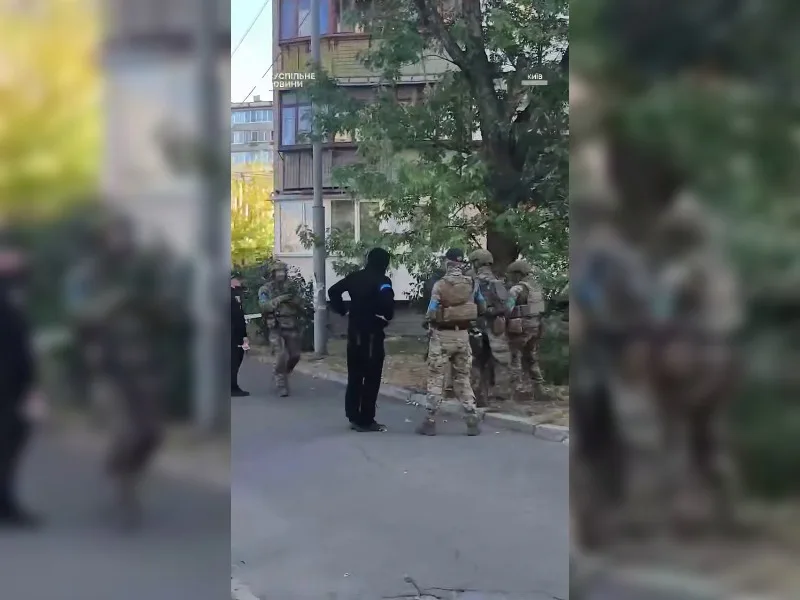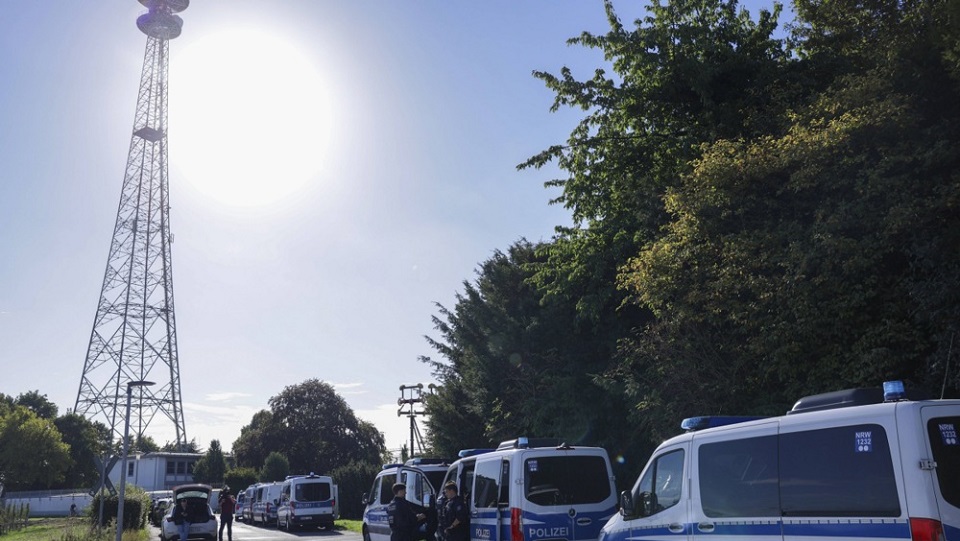
Six pyrotechnic devices in a field near Cologne — this is not about arson, but about engineering calculation. According to the investigation, wire was supposedly thrown onto power lines to cause a short circuit. A simple physical trick that disabled five power units with a total capacity of 4,200 MW for several days — approximately what a large city consumes.
Here lies an unexpected angle: to shut down a modern energy system, you don't need drones or hackers. It's enough to know where exactly a key substation is located and have access to an open field nearby. The vulnerability is not in protective technologies, but in the geography of infrastructure that was built for efficiency rather than defense.
Why now and why this way
Herbert Reul, Interior Minister of North Rhine-Westphalia, called it an attack on the country, and the investigation is considering two versions — a sabotage directed by a foreign state or left-wing extremists. Both versions essentially describe one problem: Germany's critical infrastructure is protected from technical failures, but not from a person with motivation and basic knowledge of electrical networks.
"Whoever interferes with this is attacking our country," – Herbert Reul, Interior Minister of North Rhine-Westphalia.
The timing coincidence with an attack on a substation in Brandenburg the same day eliminates the possibility of coincidence. Investigators are already coordinating both investigations, and the state's energy minister Mona Neubauer directly called the situation a matter of national security — terminology usually reserved for military threats rather than utility failures.
A pattern forming over months
German security agencies warned of increasing attacks on critical infrastructure several weeks ago, specifically highlighting the energy sector as a priority target. To this are added August incidents with drones and explosives near Leipzig/Halle Airport and official accusations against Russia for an attempted attack, for which the investigation has already identified suspects — citizens with Belarusian, Latvian, and Russian passports.
- Sabotage at substations near Cologne and Brandenburg occurred within 24 hours.
- In August, drones with explosives were found twice near Leipzig/Halle Airport.
- Berlin officially linked the attempted attack to Russian hybrid operations in Europe.
Households this time were not left without electricity — power units began returning to operation within days. But therein lies the practical conclusion: if the goal of attacks is not a one-time blackout but testing the system's resilience and response speed, next time the target may be chosen more precisely. The question that remains open: will Germany manage to protect open fields around power lines faster than someone finds the next gap.