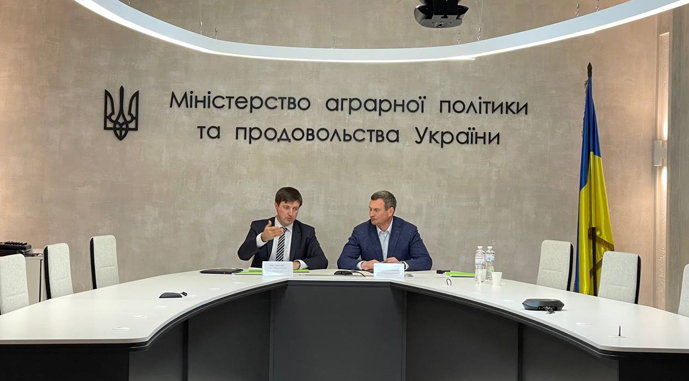
Memorandum and its significance
The Ministry of Economy, Environment and Agriculture together with the Ukrainian Federation of Food Banks (UFBP) signed a memorandum of cooperation, report AgroPortal and Ukrinform. The document launches work on a bill intended to create a national network of food banks — a mechanism to transfer edible products from producers and retail chains to charitable organizations instead of disposing of them.
Why it matters: numbers and consequences
Current imbalance: more than 2.7 million tonnes of food are disposed of annually in Ukraine, while about 12.7 million people need humanitarian assistance. Retail chains spend roughly 3,500 UAH per tonne on disposal — costs that are built into product prices. Establishing a legal mechanism could reduce these costs, cut waste and more quickly provide food assistance to vulnerable groups.
How it works in practice
Food banks usually do not distribute food directly: they coordinate logistics and pass products through a network of partner charitable organizations. The UFBP already unites five regional units, focused mainly on frontline territories. The organization is an associate member of the European Food Banks Federation, and its donors include businesses, international partners and foundations.
"The less waste we have, the more we care for the environment. The long-term ambitious goal is to use 100% of products currently being disposed of; a medium-term goal is to reach 50%."
— Taras Vysotsky, Deputy Minister of Economy, Environment and Agriculture
The federation proposes changing legislation so that donating products to charity is more advantageous than destroying them. Proposed tools include tax incentives and other benefits for producers and retailers, as well as accountability mechanisms, including fines for disposing of food that could have been donated to people.
"This is a worldwide practice that allows us to save products that are still safe to eat but can no longer sit on store shelves."
— Dmytro Shkrabatovskyi, Chairman of the Board of the Ukrainian Federation of Food Banks
Risks and practical challenges
The initiative has obvious benefits but requires a systemic approach: logistics to preserve product quality, food safety standards, transparent accounting and control mechanisms, and funding for regional operations. Without this infrastructure, there is a risk that the number of ineffective initiatives or abuses will grow.
Timeline and next steps
According to the Ministry of Economy, relevant departments will draft the bill and put it up for discussion with stakeholders in early April. If the provisions make transfers more advantageous, this will quickly change retail and production business practices, reduce environmental pressure and increase the social protection of the most vulnerable groups.
Conclusion
This is not only a social initiative — it is an economic and environmental solution. The question now is less about the idea and more about implementation: whether the state, business and the charitable sector can agree on clear, transparent rules that will make food donation the norm rather than the exception. For a country rebuilding amid war, the effective use of every resource becomes a matter of national strategy.







