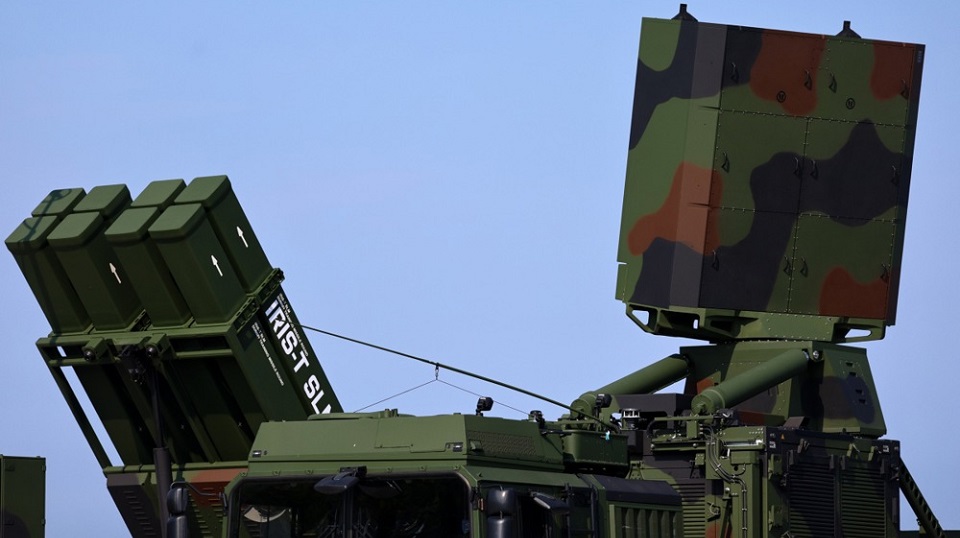
The German government introduced a temporary export simplification — fast, but for a time
In high diplomacy, quiet agreements matter more than loud statements. On 20 March the German government published a decision on a temporary general license that allows companies to export certain types of defense products without obtaining individual permits for each shipment. The mechanism will be in effect until 15 September 2026 and covers air defense equipment and naval defense assets, including those for countering sea mines (official statement — website of the federal government of Germany).
Who it concerns
The list of countries covered by the decision includes Ukraine and several Persian Gulf states: Saudi Arabia, the United Arab Emirates, Qatar, Kuwait, Bahrain and Oman. According to the German government, the step responds to partners' needs for faster reinforcement of defense capabilities, primarily in the area of air defence.
"Iran's massive strikes on countries in the Persian Gulf have led to an acute need for armaments, above all for air defence"
— Kateryna Raykhe, Federal Minister for Economic Affairs of Germany
How the mechanism works
This is not an uncontrolled flow of weapons: exporting companies must register and regularly report on deliveries. However, the requirement to obtain an individual license for each shipment is removed, which reduces time barriers in logistics and allows faster delivery of critical systems.
"World stocks of air defence systems are virtually exhausted"
— Armin Papperger, CEO of Rheinmetall
What this means for Ukraine
First, the simplification could shorten delivery times for components and systems for air defence, which is currently a priority for protecting critical infrastructure. Second, the inclusion of naval defence signals attention to mine-countermeasure security in the Black Sea. However, the effect will depend on companies' production capacities and order backlogs: as Rheinmetall representatives note, production stocks are tightly limited, and demand from the Persian Gulf region further strains the market.
Risks and limitations
The mechanism is temporary and regulated: the simplification does not mean an unlimited flow of equipment. First, deliveries must be tracked through a registry and reporting. Second, the actual volume of assistance for Ukraine will depend on available stock and the prioritization of orders. Third, warnings about depleted reserves mean that speeding up logistics does not solve the production problem — investments to scale up capacity are needed.
Context and conclusion
Germany confirms its status as an important supplier — in 2021–2025 the country was the fourth-largest exporter of arms, and a significant share of deliveries was destined for Ukraine (SIPRI data). However, the simplified general license is more of an administrative step to reduce delays than an instant solution to the arms shortage.
Now it is up to partners to turn these administrative easings into real deliveries and investments in production. Declarations are important, but at the front what counts are not words but systematic deliveries of equipment, training and combat capability. Whether this can be achieved within six months will depend on production capacities and political priorities in Berlin and among industrial partners.
Sources: official statement of the federal government of Germany, statements by Rheinmetall, SIPRI data, LIGA.net material (analysis of the escalation's impact on the regions).







