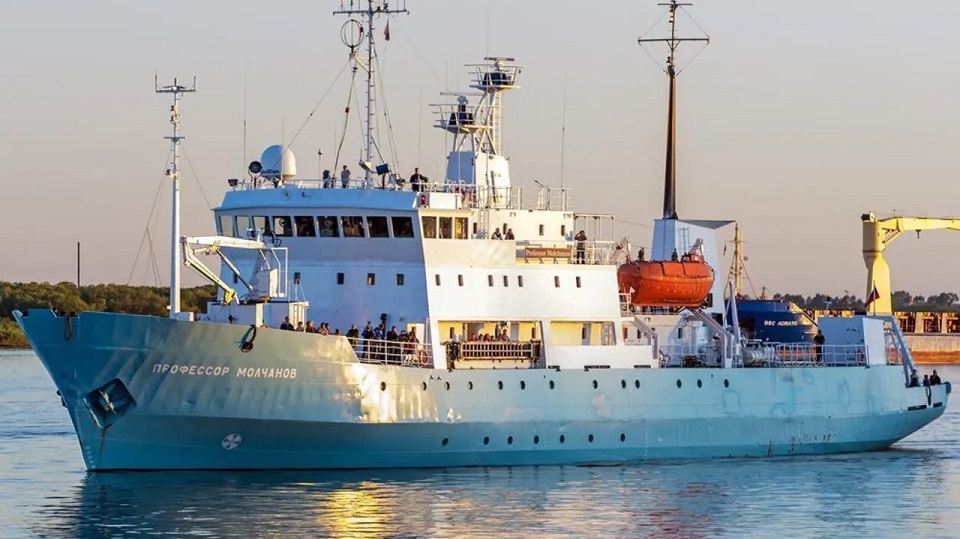
Following a claim by the Naftogaz Group in Norway, the vessel "Professor Molchanov," which belongs to the Russian Federation and is used for commercial expedition cruises, has been arrested. This was reported by Naftogaz's press service.
The decision was made by the District Court of Noor-Troms and Senia on August 31, 2026. The arrest is intended to ensure compliance with an arbitration ruling on collecting approximately $4.22 billion from Russia, as well as interest and costs, for the illegal seizure of Naftogaz Group assets in annexed Crimea.
"This is another important step toward restoring justice. We will continue to search for Russian assets worldwide until the compensation awarded to Naftogaz and other Group companies is paid," emphasized Serhiy Fedorenko, acting chairman of Naftogaz's board of directors.
According to the court's decision, the vessel cannot leave its current location—the port of Barentsburg on Svalbard. The issue regarding passengers on board will be resolved by Norwegian authorities.
Naftogaz's interests in Norway are represented by the law firm Wikborg Rein and international legal counsel Covington & Burling LLP.
The hunt for assets continues for years
In 2023, arbitration in The Hague awarded Naftogaz more than $5 billion for the expropriation of assets in Crimea, and in 2025, a French court recognized and approved the enforcement of this decision. The company has already registered liens on Russian state assets in France valued at more than 120 million euros.
In 2024, a court in Helsinki imposed arrests on Russian assets in Finland worth tens of millions of dollars.
Each such decision on its own does not cover the multi-billion dollar debt—it concerns a vessel, real estate, or accounts worth tens of millions. But together they form a network of legal pressure: Russia loses access to part of its state and commercial property in jurisdictions where international arbitration decisions are enforced.
The question is whether Naftogaz will be able to convert the arrest of the vessel into actual funds, or whether this will remain a symbolic gesture—since the sale of a seized asset to cover a debt requires a separate court process, which Russia traditionally contests at every stage.