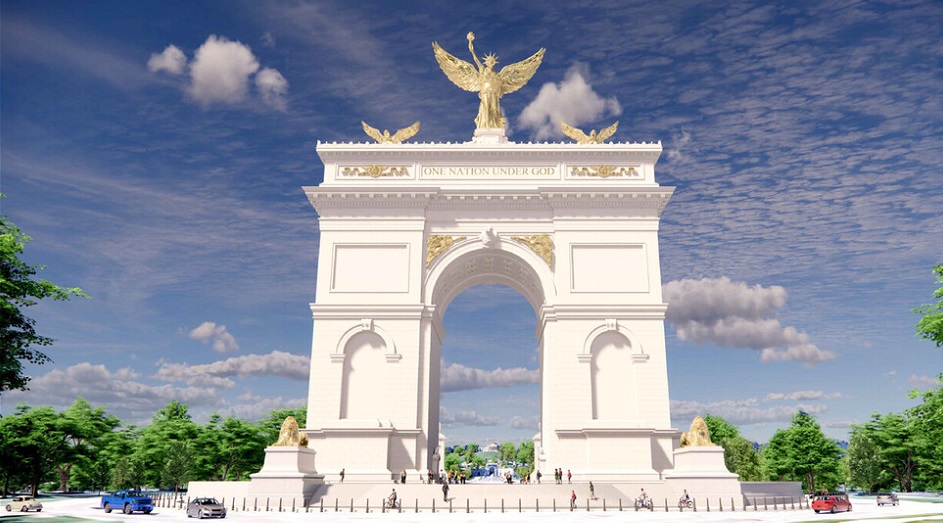
The White House has released a visualization of what the Trump administration has already called the "grandest and most beautiful arch in the world." The official name is the "Arch of Independence." The first public review of the project will take place on April 16 at a meeting of the Commission of Fine Arts of the United States — a federal body that oversees architecture and design in Washington.
The published images show a massive triumphal arch in classical style, which aesthetically resembles French and Roman examples. The location, exact scale, and cost estimate have not been officially announced.
Project or Statement?
The fact of the presentation itself is neither approval nor funding. The Commission of Fine Arts has an advisory status: it can recommend changes or reject the concept, but the final decision remains with the executive branch. The construction budget, sources of funding, and implementation timelines have not been announced — the White House presented an image, not a plan.
This is an important nuance. The Trump administration has already announced several large-scale infrastructure and architectural initiatives multiple times, which either stalled at the concept stage or required additional legislative approval from Congress to allocate funds.
Context: Architecture as Politics
During his first presidency, Trump signed an executive order to return to classical architecture in federal construction — effectively canceling the modernist approach that dominated U.S. government construction for decades. The "Arch of Independence" fits this logic: monumental classicism as the visual language of national greatness.
Critics then and now point to something else: such projects cost billions of taxpayer dollars at a moment when the administration is simultaneously cutting spending on social programs and the civil service.
What's Next
The Commission meeting on April 16 will show how technically ready the project is and whether it has real institutional support — or if it will remain a pretty picture for the media. If the Commission approves the concept, the next step will be the funding question: whether the administration will go through Congress or seek other mechanisms.
It is telling that the White House chose this moment — amid budget cuts — to present a structure without a declared price. Whether the arch becomes a real object or remains a symbolic gesture will become clear when the answer to a simple question emerges: who specifically will sign off on the cost estimate and where will the money come from?







