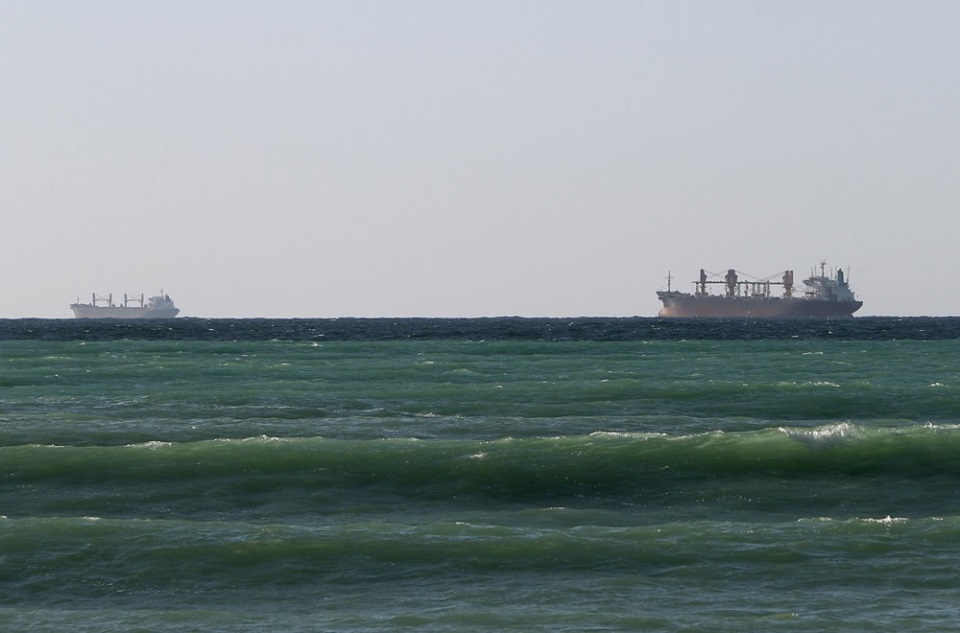
On February 28, 2026, the United States and Israel launched airstrikes against Iran. In response, Tehran mined the Strait of Hormuz — a narrow waterway between the Persian Gulf and the Gulf of Oman, through which approximately 20% of the world's oil and gas supply passes. The operation was carried out by small IRGC boats. Quickly, but chaotically.
Mines Yes — Maps No
According to The New York Times, citing American officials, Iran laid mines haphazardly — unsystematically, without clear coordinate documentation. Some mines were secured in a way that allowed them to drift. This means that even where coordinates were recorded, the position of the object could have already changed.
"The Iranians laid mines chaotically. It's unclear whether they recorded the location of each mine. And even if they did — some mines were installed in such a way that they could move."
— American officials, cited by The New York Times
The consequence: On April 8, Iran signed a two-week ceasefire with Pakistan as mediator and committed to opening the strait. But as of April 9, according to Sultan Al Jaber, CEO of Abu Dhabi National Oil Company, the strait remained blocked — 230 loaded oil tankers are queued inside the gulf.
The Problem Is Not Just Finding — But Also Clearing
A sea mine is not a projectile that you simply pick up. Like land mines, sea mines are far easier to lay than to remove. Demining requires specialized minesweeper ships or underwater vehicles. According to the NYT, neither Iran nor the United States currently has the necessary equipment directly in the strait: American minesweeper ships — specialized Littoral Combat Ships — are absent from the region, and Tehran has no means for rapid clearance whatsoever.
- Iran: no fixed map of mines, no minesweepers, some mines are drifting
- United States: specialized minesweeper ships are not in the Hormuz zone
- IMO: The International Maritime Organization is already developing a "safe transit mechanism," priority — evacuation of 20,000 sailors trapped on vessels in the Persian Gulf
What This Means for Negotiations in Islamabad
Trump demanded "full, immediate, and safe opening" of the strait as a precondition for negotiations as early as Tuesday. On Friday, he called the blockade a "short-term extortion in the world" and added: "If we don't reach a deal — we'll finish it another way." The US delegation at negotiations in Pakistan is headed by Vice President JD Vance, Steve Witkoff, and Jared Kushner.
The Iranian side, for its part, insists that the ceasefire extends to Israeli invasion of Lebanon — which the United States does not recognize. The negotiating framework has not yet been agreed upon, and the physical state of the strait makes any rapid fulfillment of obligations impossible even with Tehran's goodwill.
The blockade has already pushed Brent crude oil prices up 10–13%. In California, gasoline crossed the $5 per gallon mark in March. Foreign ministries and agencies are recording the rerouting of some vessels to the Panama Canal.
If the United States does not deploy minesweepers to the region — or does not engage allies with appropriate fleets — Iran will be physically unable to fulfill the condition demanded of it, even if it wants to. Whether the American side has a demining plan independent of Iranian cooperation has not been publicly confirmed.







