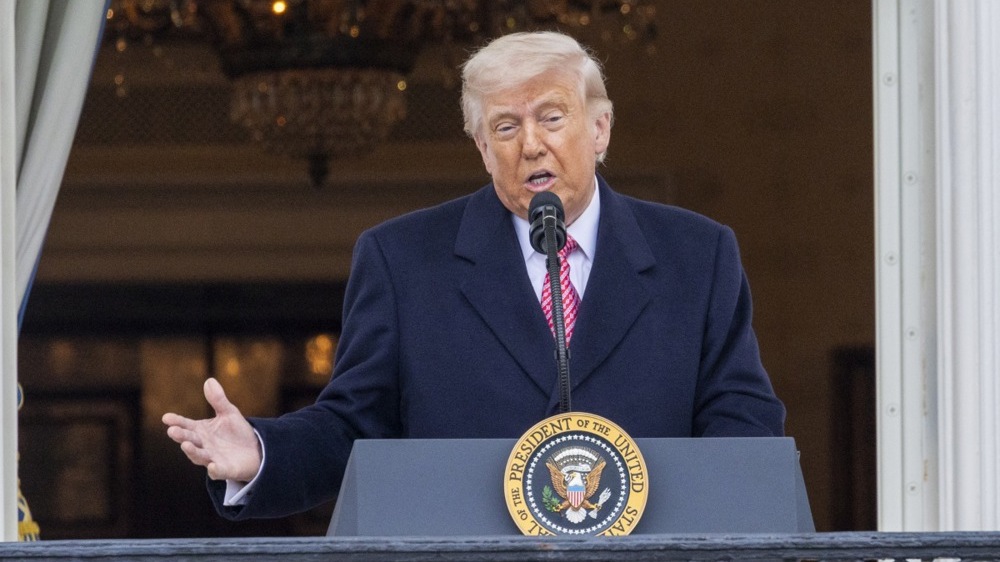
Donald Trump, on his social network Truth Social, threatened to destroy Iranian power plants, oil wells and Kharg Island in the Persian Gulf — a key hub of Iran’s oil exports. The condition: if Tehran does not sign a deal and does not open the Strait of Hormuz.
Notably, the threat came in the same post where Trump spoke of “significant progress” in talks with a “new and smarter” Iranian regime. Both messages are a direct channel to a single audience: the Iranian negotiators.
Kharg Island is not just a geographic point. Most of Iran’s oil exports pass through it. A strike on it would mean not only a military escalation but also the blocking of the main source of foreign-currency revenues for the Islamic Republic. To the list, Trump added “possibly all desalination plants” — infrastructure on which the drinking water of millions of Iranians depends.
The Strait of Hormuz — the narrow chokepoint between the Gulf of Oman and the Persian Gulf — handles about 20% of global oil trade each year. Iran regularly threatens to close it in response to U.S. pressure. This time the threat was voiced in the opposite direction.
Trump did not specify what he meant by “opening” the strait: Iran has not officially announced that it has closed it. This is either a diplomatic preemption — pressure before the situation escalates — or a signal that Washington knows of Tehran’s plans that have not yet been publicly declared.
If the negotiations are truly in their final stage — to what extent are these threats a tool of leverage rather than a symptom of their actual collapse?







