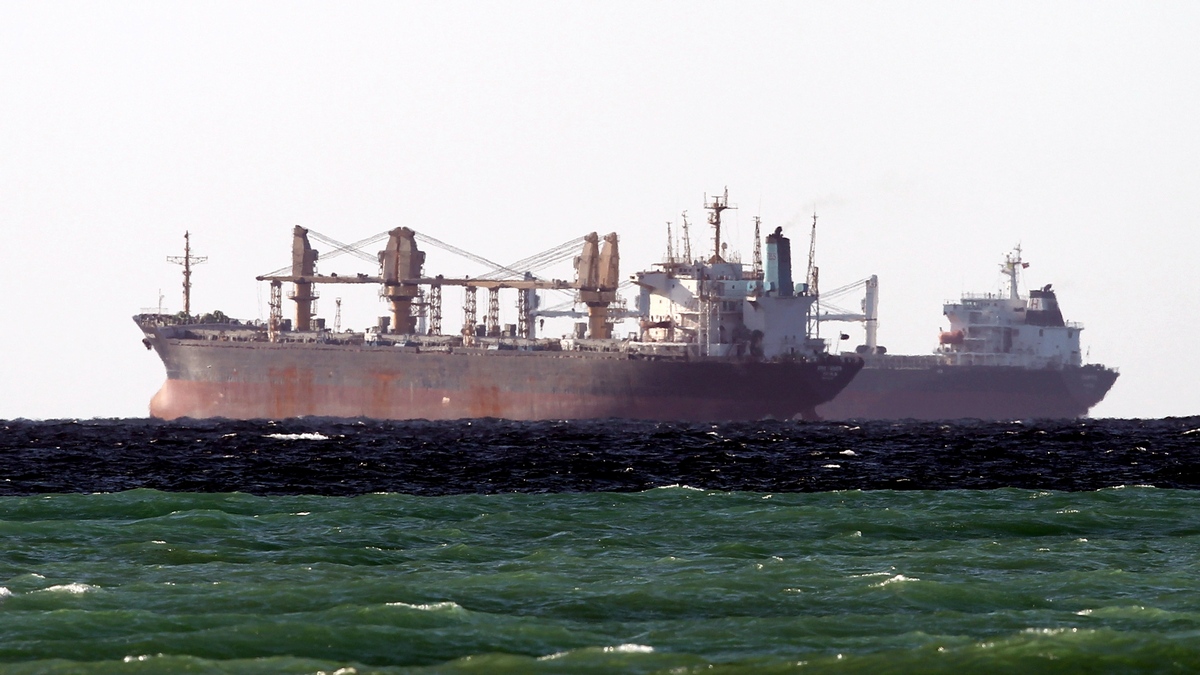
When on February 28 the United States and Israel launched missile strikes on Iran and Ayatollah Khamenei was killed, Tehran did what everyone had feared for decades — it closed the Strait of Hormuz. Through this 54-kilometer passage between Iran and Oman a fifth of the world’s oil and a significant share of liquefied natural gas trade pass every day. Maritime traffic there has now fallen by roughly 90%.
Shock formula: +10% oil = −0.2% global GDP
IMF Managing Director Kristalina Georgieva put numbers on the dependence: every 10% rise in oil prices, if sustained for most of the year, pushes global inflation up by 0.4 percentage points and cuts global GDP by 0.2%. From February to peak levels in early March Brent rose from under $70 to almost $120 per barrel — an increase of more than 70%. Prices have since stabilized around $90.
In its blog the IMF called the situation a “global asymmetric shock” and set out a strict hierarchy of vulnerability:
- Energy importers — under greater pressure than exporters
- Poorer countries — more vulnerable than richer ones: smaller buffers, a larger share of household budgets spent on energy
- Countries with tiny buffers — pushed to the brink with no room for error
“While the war can affect the global economy in different ways, all paths lead to higher prices and slower growth.”
IMF Blog, March 2026
Oil is not everything. There are fertilizers
Up to 30% of global fertilizer exports pass through the Strait of Hormuz — urea, ammonia, phosphates, sulfur. According to the International Food Policy Research Institute (IFPRI), the blockade has already disrupted fertilizer shipments, which directly hits farmers’ costs — and will inevitably be reflected in retail prices.
Maurice Obstfeld, former IMF chief economist and now senior fellow at the Peterson Institute for International Economics, did not mince words:
“For a long time the closure of the Strait of Hormuz was the nightmare scenario that deterred the U.S. from striking Iran. Now we are in that nightmare scenario.”
Maurice Obstfeld, Peterson Institute for International Economics
He says the most destructive effect will be for poor countries with already weakened agricultural productivity: “Add this price component — and you face the prospect of a serious food shortfall.” 2024 Nobel laureate in economics Simon Johnson of MIT put it bluntly: “The Strait of Hormuz must be reopened. Some 20 million barrels per day pass through it. There are no alternative capacities anywhere in the world.”
Central banks in a trap
The conflict has boxed in monetary policy: higher energy prices simultaneously drive inflation and slow the economy — a stagflationary mix for which central banks have no easy tools. The European Central Bank has already postponed a planned rate cut, raised its inflation forecast and lowered its GDP growth outlook. For the United Kingdom, analysts expect inflation to break past 5% in 2026.
The IMF promised to publish a full analysis of the consequences in the World Economic Outlook on April 14 during the IMF and World Bank spring meetings in Washington.
Ukraine: double vulnerability
For Ukraine the situation has a specific dimension. Fuel is embedded in the cost of any product — through production, logistics, and electricity. The head of the Verkhovna Rada budget committee, Danylo Hetmantsev, openly acknowledges that rising fuel prices due to the Iranian conflict are already affecting food prices, and that predicting their upper bound is impossible — it depends on the duration of the blockade. At the same time, Ukraine needs about $50 billion in external financing in 2026: some donors base their support on an IMF program, and any instability at the Fund reverberates through the chain of support.
If the Strait of Hormuz remains blocked for more than three months, independent analysts estimate global GDP losses of over $3.5 trillion — more than 3% of the world economy. The question is not whether there are winners in this crisis: there are none so far. The question is whether central banks and governments can soften the blow before fertilizer prices wipe out next season’s harvest.