For a military family waiting for a new batch of interceptor drones, or a teacher who received her salary from the budget on time, these 3.47 billion euros look like just another line in the news. In fact, behind this figure lies a concrete mechanism that keeps both the front and state payments afloat simultaneously.
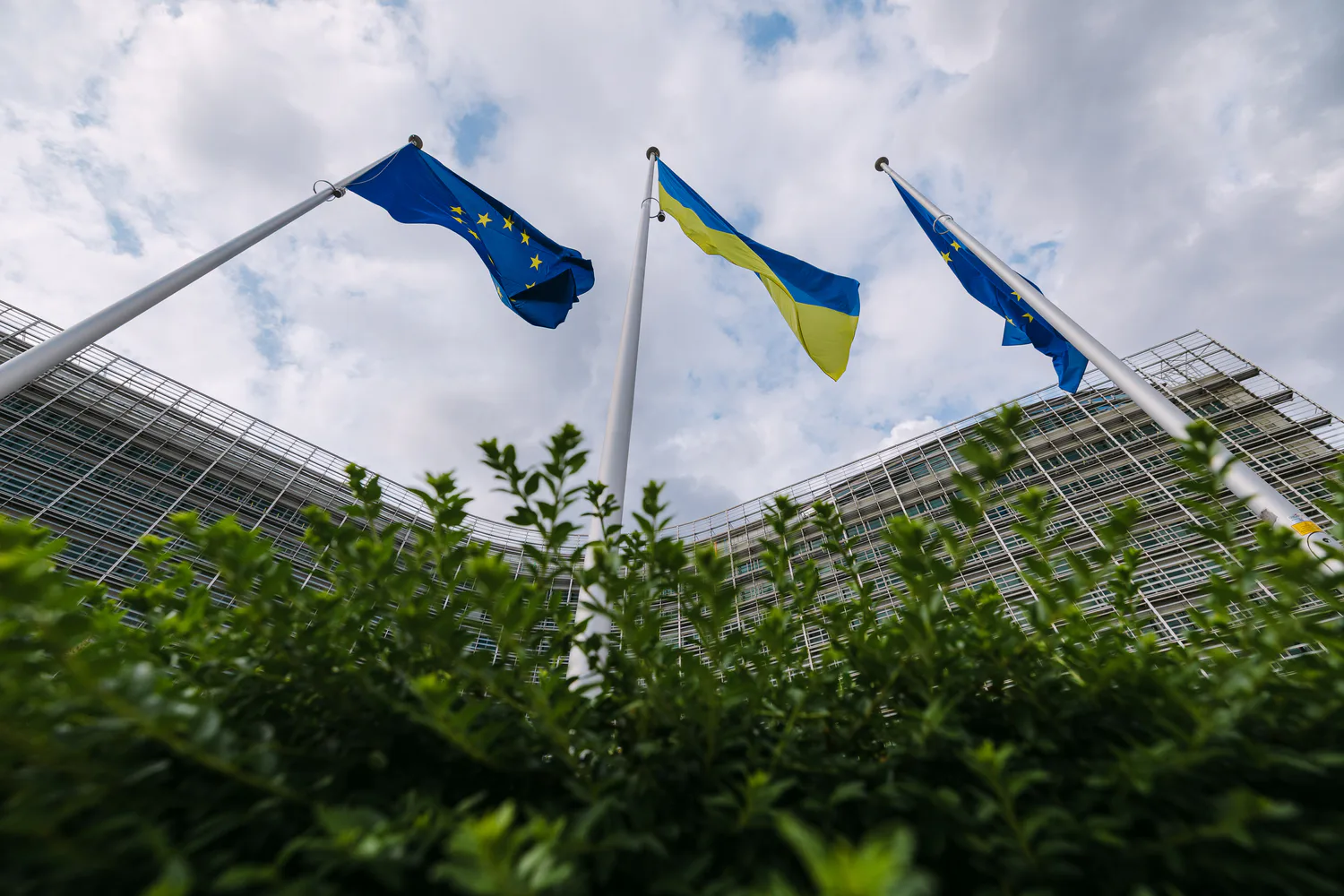
Prime Minister Serhiy Koretskyi announced that Ukraine received another tranche of 3.47 billion euros from the EU under the Ukraine Support Loan. These funds will be directed towards strengthening defense and financing priority needs.
We received another tranche of 3.47 billion euros from the EU under the Ukraine Support Loan. These funds will be directed towards strengthening defense and financing priority needs
How much has been received and how much is still to come
This is not one-time assistance, but part of a pre-agreed schedule. In total, 45 billion euros are planned for Ukraine in 2026 under this mechanism. From this amount, the defense component for 2026 provides 28.3 billion euros, with the rest going to budget needs.
So far, less than one-third of the annual limit has been drawn: as of today, 11.6 billion has been attracted: 3.2 billion for budget needs and 8.4 billion for defense. In simple terms—this is not "Ukraine received 45 billion," but rather "Ukraine is allowed to borrow up to 45 billion if it continues to meet the conditions."
This is a loan, not a gift
The program's very name—Ukraine Support Loan—directly indicates the nature of these funds. Ukraine Support Loan is a new EU credit mechanism for 90 billion euros, designed for 2026–2027, and it provides for financing both Ukraine's defense needs and state budget support. In other words, this is a loan that Ukraine will repay later—not non-repayable assistance, although in daily headlines the difference between "received" and "borrowed" often gets lost.
Notably, access to the money is tied to fulfilling obligations. On the same day the tranche was announced, the EU Council approved changes to Ukraine's Plan, opening the way for attracting over 8 billion euros in additional financing in 2026 under the Ukraine Support Loan mechanism. According to Koretskyi, "Ukraine's Plan is the foundation of our reform agenda," and it reflects the country's progress towards strengthening the rule of law, improving the quality of public administration, fighting corruption, and building a modern, resilient economy on the path to EU membership.
What this means for the state treasury
Formally, money is credited in tranches rather than as a single transfer, precisely because the EU regularly checks reform progress—this is both insurance for donors and leverage on Kyiv to ensure that budgetary processes and defense purchases remain transparent. For the average Ukrainian, this means: salaries of budget employees, pensions, and military funding this quarter depend not only on tax revenues, but also on whether the government adheres to the reform schedule agreed with Brussels.
The question for the coming months is simple: will Ukraine manage to draw the remaining 45 billion euros of the annual limit by year's end, and will the process be slowed by another round of negotiations over the conditions of the reform Plan—because every delay here directly affects defense and budget financing, and does not remain an abstract figure in Brussels reports.