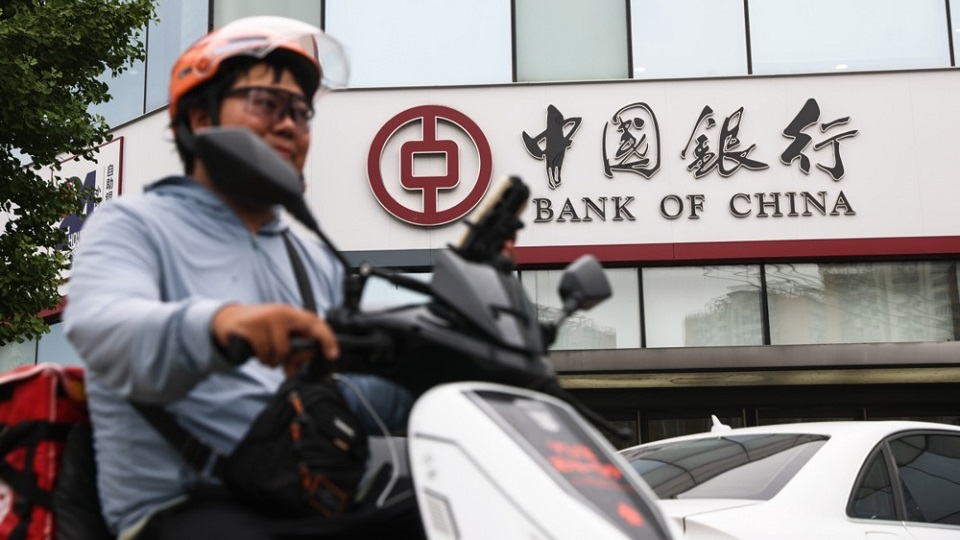
When the government injects 300 billion yuan into banks and calls it "planned policy over the past two years," it's worth reading between the lines. Plans that need to be implemented with such sums precisely now—against the backdrop of China's weakest GDP growth in three years—is no longer prevention, but patching specific holes.
Who Really Pays for Local Government Debt
Formally, Beijing is recapitalizing ICBC, Agricultural Bank of China, and six other institutions through special Treasury bonds. But the practical mechanism is simple: the state assumes the risks that banks have accumulated by lending to local governments and the construction sector. In recent years, regional authorities in China have financed infrastructure projects through debt, while developers like Evergrande or Country Garden have accumulated obligations for years that banks simply could not write off.
Now this is coming back as a boomerang: so that banks can meet regulatory capital standards and continue lending to a slowing economy, an external buffer is needed. This buffer is taxpayers' money, disguised as bonds.
Market Reacts More Cautiously Than Expected
Notably, ICBC and Agricultural Bank shares fell less than a percent after the news—this is not panic, but a sign that investors have already built similar interventions into their expectations. ICBC, the world's largest bank by assets, has risen more than 20% since the beginning of the year, so the market is more inclined to view recapitalization as insurance rather than a warning signal.
"Recapitalization of major state financial institutions has been part of policy over the past two years, rather than an emergency measure," says Huayuan Securities analyst Liao Zhimin.
The problem is that the "planned" nature of the measure does not make it any less eloquent. If policy involves regular injections of billions into the country's largest banks—it means the structural debt problem is not being solved, but merely stretched over time.
What This Means for Ordinary Business
The practical effect for entrepreneurs and consumers in China is the preservation of access to credit even as the economy slows. The government is simultaneously considering subsidizing credit rates, meaning the discussion is not only about saving banks, but about supporting demand from below. This is different from the 2008-2009 approach, when the focus was purely on the banking sector.
Meanwhile, the World Bank announced in July a gradual reduction in lending to China for 2026-2031—a signal that even international partners are beginning to view the world's second-largest economy as less dependent on external support, but also less predictable.
Questions for the Coming Months
The main question is whether this recapitalization will be the last major one in this cycle, or whether Beijing is laying the groundwork for regular annual injections as a buffer against the slow but sustained slide of the real estate sector into crisis. If China's GDP continues to slow at the rate seen in the second quarter, the next recapitalization could turn out to be not $45 billion, but a significantly larger amount.