Why it matters
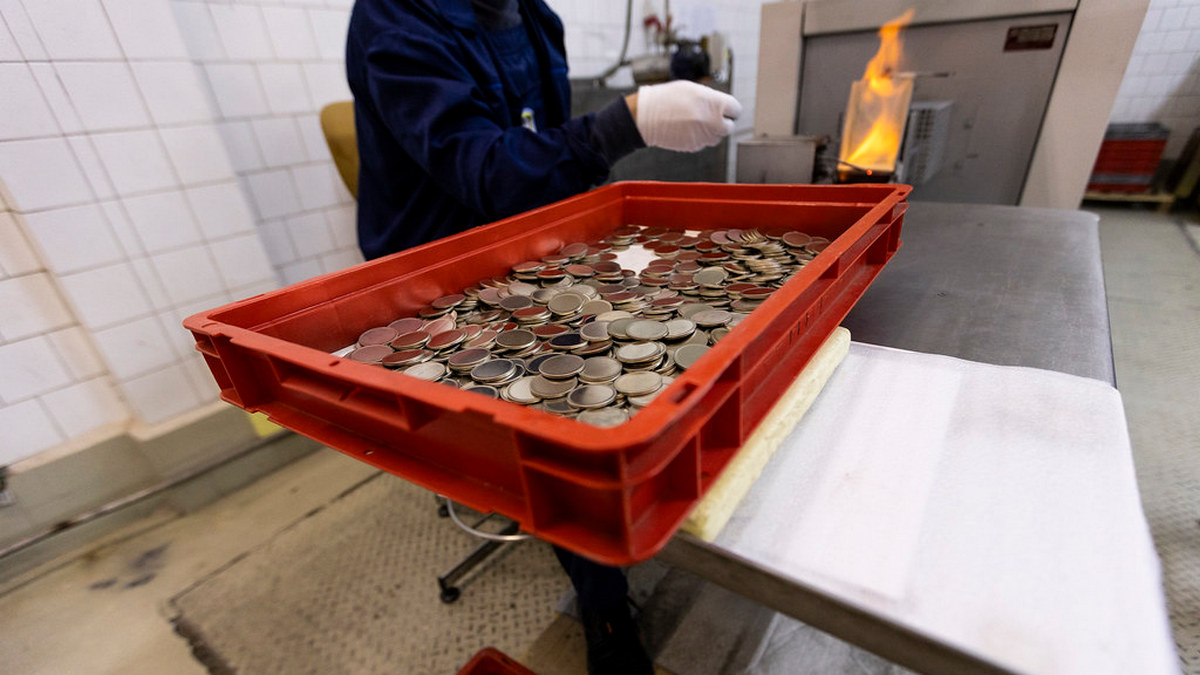
The National Bank of Ukraine (NBU) has accumulated about 800 tonnes of coins of denominations 1, 2, 5 and 25 kopecks, which have been withdrawn from circulation since 2019. In recent months this mass has been added to by an initiative to gradually withdraw 10-kopeck coins — some 3.1 million pieces have already been collected. According to the regulator's estimates, taking into account a 5–6% return rate of such coins, the total volume for disposal could exceed 1,200 tonnes. This is not just an operational task — it is a resource that can be converted into budget revenues and free up production capacity.
What they're buying and who won
The winner of the tender held in December 2025 was the Slovak company Monea Coin Technology. The NBU plans to purchase a specialized machine for shredding and processing coins — replacing the current outdated equipment of the Banknote and Coin Works, which has a throughput of 100–185 kg/hour.
"At that throughput, destroying the accumulated coins would take more than nine years. The new equipment can double the speed and complete the job in about four years."
— Press Service of the National Bank of Ukraine
Economic rationale: how much it costs and how much it will yield
The cost of the equipment is around €252,300 (approximately UAH 12.6 million). The NBU forecasts up to UAH 153 million in revenue from the sale of scrap metal from the destroyed coins over the next 2–3 years. Even preliminary estimates indicate: revenues could exceed the purchase cost of the machine several times — so this is not only a technical solution but also a pragmatic investment.
"The winner of the tender in December 2025 was the Slovak company Monea Coin Technology"
— LIGA.net
Context during the war
The process of withdrawing small denominations continues during martial law: the NBU has postponed the completion of the operation until the end of martial law plus 90 days. This is a logistically complex task — coins arrive sporadically from across the country, and without specialized machinery the disposal timeline would stretch over years. Thus, the decision has both a defense and an economic dimension: less strain on state capacities, faster conversion of metal into a financial resource.
A nuance about renaming the kopeck
The procurement coincided with a vote in the Verkhovna Rada on renaming the kopeck to "shag", but the NBU emphasizes that the decision to purchase the equipment was planned back in 2024 and there is no direct link between the events. In this context it is important to focus on the fact: the disposal operation is technical and economic, not symbolic.
Conclusion: what will change
The new machine will reduce the disposal time from more than nine years to roughly four — even if coin inflows continue. For the state budget this is a way to turn small metal into significant revenues. Despite the technical nature of the topic, the bottom line is simple: this is an example of efficient resource management in a difficult time — when every hryvnia and every kilogram matters.
Now the question is for the implementers: how quickly they will organize the logistics for collecting the coins, and how the proceeds will be allocated. The answers will determine whether this operation becomes an example of rational economic policy.