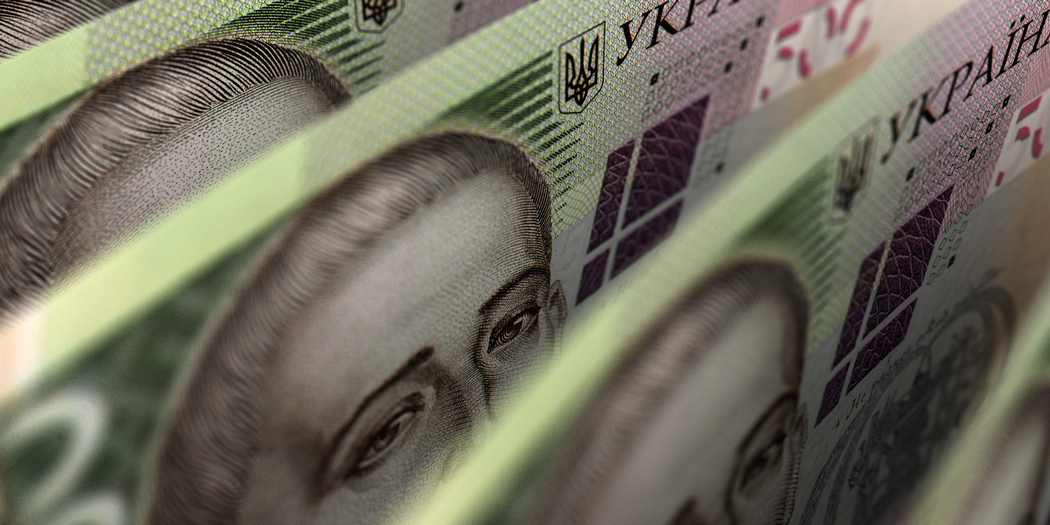
A cashier at a supermarket, a minibus driver, a logistics company manager — hardly any of them felt the "economic growth" over the past three months. Yet formally it exists: according to the State Statistics Service's preliminary estimate, Ukraine's real GDP in the second quarter of 2026 increased by 0.6% compared to the same period in 2025. This is a rare case where statistics and everyday people's experience diverge almost completely — because 0.6% is not wage or job growth, but merely a signal that the decline has stopped.
In quarterly terms, that is compared to the first three months of this year, accounting for seasonality, the economy added 0.4%. The figure is small, but important in itself: the previous quarter showed a decline, so the second half of the year started weakly, but in the positive territory.
Why the figure is not guaranteed
The State Statistics Service separately reminded that this is only a preliminary, operational estimate based on initial data on production by type of economic activity. Final figures for the second quarter will appear in September — and may differ. There is a precedent: the first quarter was initially estimated as a decline of 0.5%, and later revised to minus 0.6%. In quarterly terms, GDP fell 0.7% at that time.
That is, the economy is not just growing slowly — it is balancing on the edge between weak growth and technical recession, and the direction will be clarified only in a few weeks.
Forecasts that constantly worsen
The most telling detail in this story — not the figure of 0.6% itself, but how expectations of all key institutions have changed over a year.
- The Cabinet of Ministers laid 2.4% growth into the 2026 budget, then lowered the forecast to 1.6%.
- The National Bank holds a more optimistic assessment — 1.8% for the year's results.
- The IMF has traveled the longest path down: in April's World Economic Outlook, the fund expected 2% growth, and by summer "GDP growth will slow to 1.0-1.6% in 2026 due to the consequences of Russia's prolonged war in Ukraine and the impact of war in the Middle East, with risks remaining exceptionally high".
As recently as spring, the IMF oriented itself toward a range of 1.8-2.5% — "The IMF estimates that in 2026 Ukraine's economic growth will slow to 1-1.6%, while the summer forecast predicted GDP growth of 1.8-2.5%". Over a year, the forecast fell by nearly half — and this is not a technical correction, but a reflection that the war is dragging on, and with it — uncertainty for business, investments and state finances.
What this means for an ordinary family
Growth of 0.6-1.6% per year — this is a pace at which the economy barely manages to compensate for inflation and demographic losses, let alone recover pre-war income levels. For a family, this means: real wages will grow slowly or not at all, the labor market skills deficit will not go away, and the budget will remain critically dependent on external financing — the same financing that the IMF calls a key condition for maintaining the country's financial stability.
At the same time, the Fund sees light at the end of the tunnel: in its assessment, in the medium term, with a gradual end to the active phase of hostilities, growth rates could accelerate to significantly higher levels — but this is already a scenario, not a fact of the second quarter.
The question for the coming months is simple: will September's revision of State Statistics Service data be another upward adjustment, as happens in stable economies, or will it repeat the history of the first quarter, when the preliminary figure turned out worse than initially estimated?