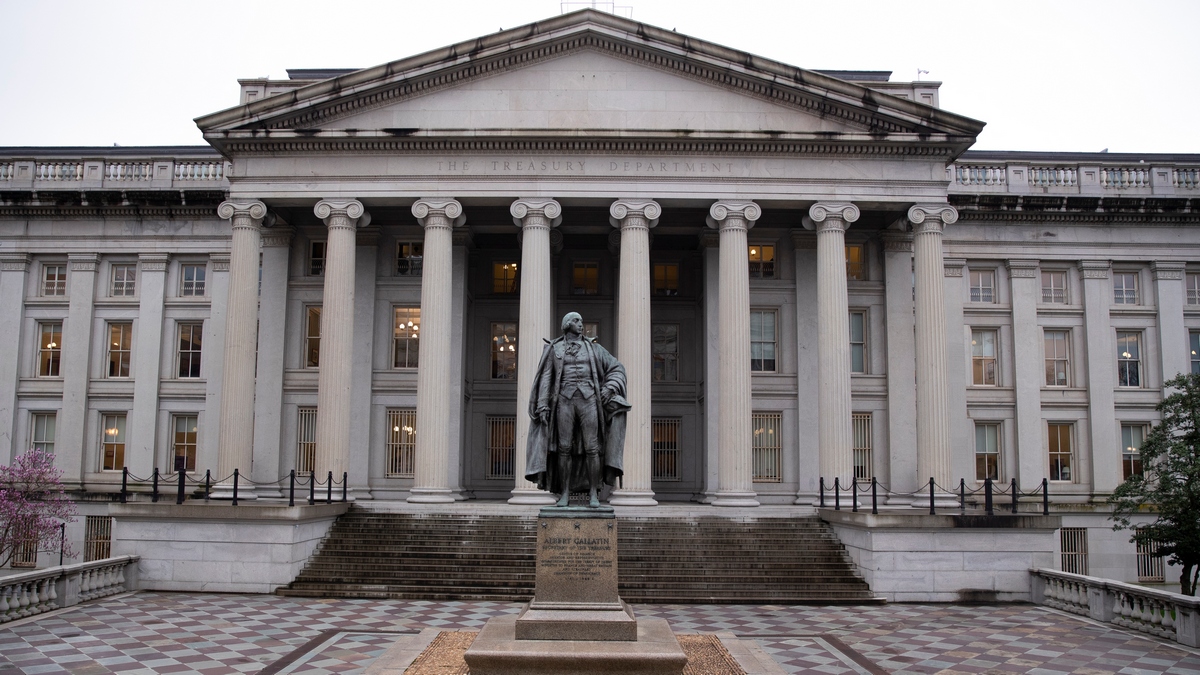
Formally, only one foreign branch fell under US pressure — the office of Banque Misr in the United Arab Emirates. But the consequences of this decision extend far beyond a single subsidiary: it demonstrates how Washington has learned to strike not at entire countries or large banks, but at specific nodes in the sanctions evasion network, leaving the parent structure formally untouched — while simultaneously damaging its reputation.
Surgical strike instead of carpet bombing
Banque Misr is Egypt's second-largest bank, a state-owned institution with millions of clients within the country. The sanctions will not affect its operations in Cairo or other foreign branches. The punishment applies exclusively to the Dubai office, and therein lies the practical sense of the American approach: why block an entire bank if you can shut down a specific channel through which, according to the US Treasury's assessment, money from sanctioned entities flowed?
According to the American department's assessment, $1.8 billion passed through this branch between January 2024 and June 2026 for 103 companies connected to Iranian shadow banking networks. Among the clients are shell companies that, Washington claims, were used by Iran's Ministry of Defense, the Islamic Revolutionary Guards Corps, and even to launder funds for Iran's Supreme Leader Ayatollah Khamenei.
Why the UAE is the main hub
The Emirati office of the Egyptian bank came under scrutiny not by chance. The UAE has remained a transit point for Iranian money seeking access to the global financial system despite sanctions for years. Companies are registered there, open accounts in banks from various countries — and this very geographic and jurisdictional diversity complicates tracing the chains.
US Treasury Secretary Scott Bessent explained the logic directly: "We have warned that those who facilitate Iran's activities can no longer continue to use access to the US dollar and the global financial system." This is not an isolated case — last week, the Treasury already imposed sanctions against nearly 60 individuals and legal entities involved in Iranian oil sales, weapons purchases, and cyberoperations.
What happens technically
The punishment mechanism is not classical sanctions in the conventional sense, but a decision by the Financial Crimes Enforcement Network (FinCEN) to strip the branch of access to correspondent banking services from US institutions. In simple terms: no American bank will be able to conduct dollar settlements for it, and without such access, the international branch is effectively cut off from global dollar-based trade.
The decision will take effect 30 days after the end of the public comment period — a standard procedure that gives the bank a formal opportunity to provide an explanation. Banque Misr has already stated that it "treats these measures with maximum seriousness" and is reviewing the Treasury's notification.
A signal for other regional banks
The real purpose of such a targeted strike is not so much to punish one branch, but to show other financial institutions in the region that similar operations could cost them access to the dollar. For banks in the Persian Gulf and North Africa, which are balancing between business with Iran and maintaining ties with the American financial system, this case is an unambiguous warning.
Trump stated on August 20 about "unprecedented" restrictions against Iran, and a few days later Bessent named five sectors of Iran's economy with expanded sanctions risk: digital assets, technology, gold, aviation, and shipping.
The question is whether this targeted approach will force other branches of international banks to voluntarily wind down cooperation with Iranian shadow networks — or whether Washington will have to demonstrably "cut off" several more such nodes in the coming months before the signal is truly heard.