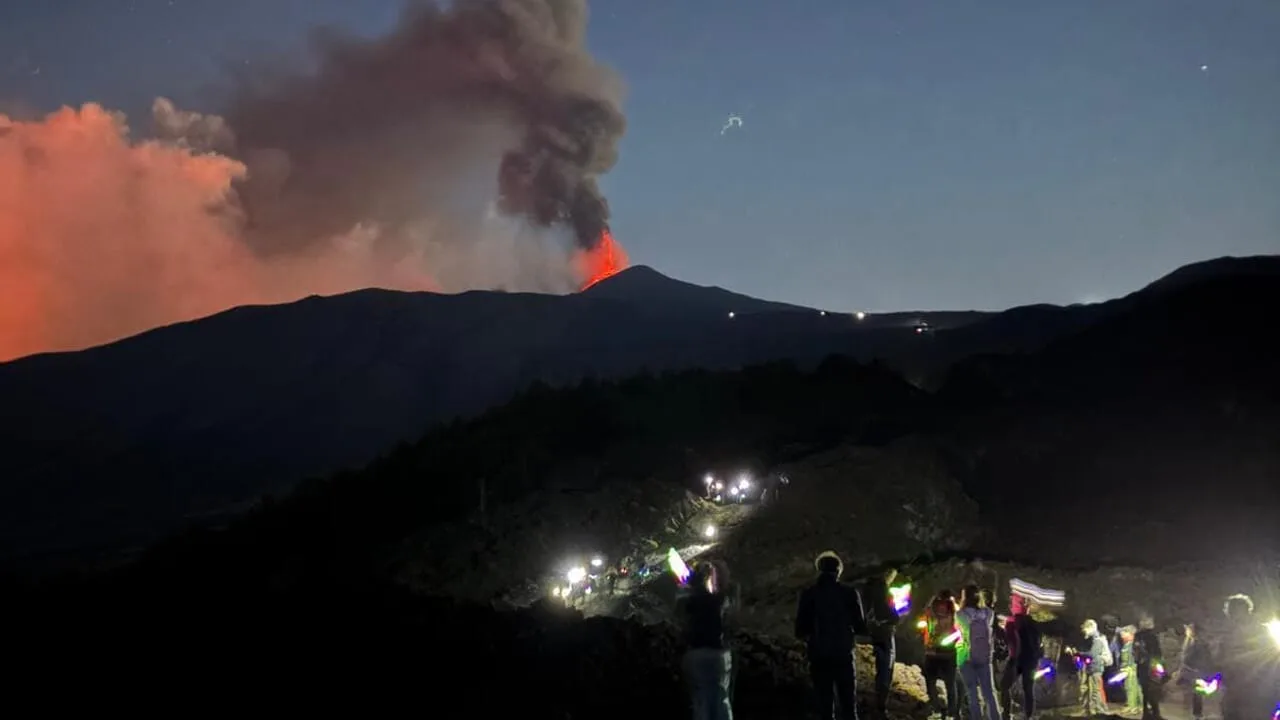
Catania Airport in Sicily has once again suspended operations due to Mount Etna's eruption — arrivals and departures are banned until 2:00 AM on Saturday local time, according to airport operator SAC. Earlier on Thursday, the ban had already been extended until Friday morning. During peak tourist season, thousands of tourists found themselves dependent on wind direction.
Why you can't just wait
The logic is straightforward: rain or fog aren't dangerous for aircraft, but volcanic ash is. Fine particles of glass and minerals, when they enter a jet engine at temperatures exceeding 1,000°C, melt and settle on turbine blades, altering their aerodynamics. There are known cases where engines have stalled in flight precisely because of this. Therefore, decisions to close the airport are made not based on the beauty of the ash cloud in the sky, but on data about particle concentration and wind forecasts — sometimes these change hourly.
This is why SAC doesn't announce a specific date for resuming flights: everything depends on where the wind carries the ash next.
Scale against a 20-year backdrop
Within a week of the eruption's onset, hundreds of flights have been cancelled, delayed, or redirected. The airport operator directly describes this as the strongest impact on infrastructure in two decades — meaning the situation goes beyond the usual seasonal volcanic disturbances that Sicily is accustomed to and that local aviation is typically adapted to.
Travelers were advised not to travel to the airport without first checking the status of their flight with the respective airline.
What this means for those who have already bought tickets
Practical advice is more important than dramatization here: checking your flight status online now saves hours waiting in queues at the check-in desk, rather than the other way around. Airlines in such unstable circumstances typically allow free rebooking — but only if you contact them in advance, not after the cancellation takes effect.
The question that remains open: if volcanic activity continues for another week or two, will SAC begin operating on a reduced schedule with predetermined windows, or will it continue announcing daily bans, leaving tourists in uncertainty?