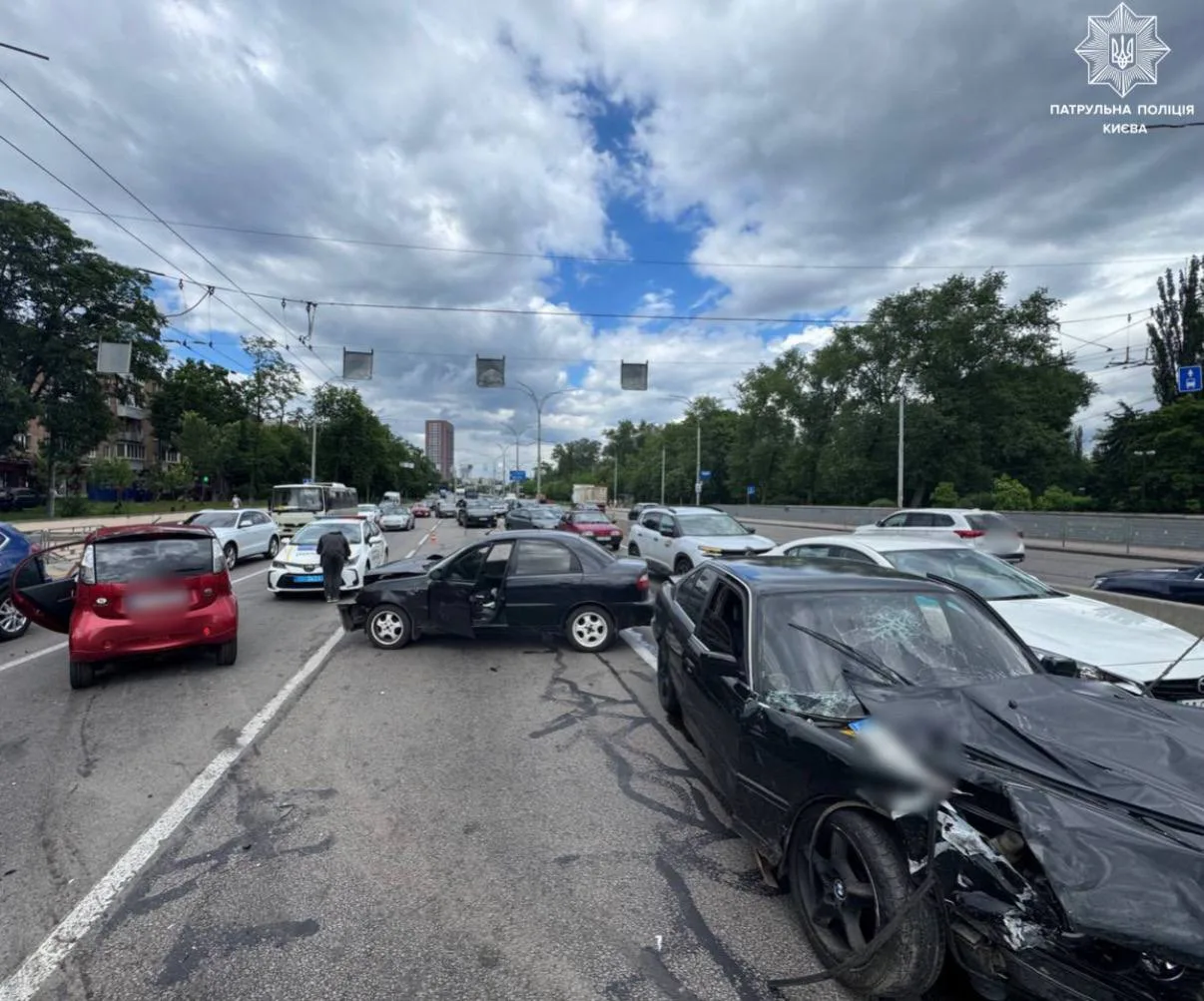
On Saturday, August 23, a minibus collided with a bus on Olena Teligi Street — two people were injured and hospitalized. On September 8, at the same location, a military unit sergeant major lost control and drove into oncoming traffic: two people killed, including a police officer. And again — a traffic accident involving at least three vehicles, and again complicated traffic movement towards Oleksandr Dovzhenko Street.
One address — three accidents in a row
Kyiv patrol police reported a new collision on Teligi using standard language: "take this into account when planning your route". But behind this bureaucratic formulation lies a question that deserves a direct answer: is Olena Teligi Street a structural accident trap, rather than simply a place where human errors occur?
"Attention road users. Due to a traffic accident on Olena Teligi Street, traffic is complicated in the direction of Oleksandr Dovzhenko Street. Take this information into account when planning your route!"
— Kyiv Patrol Police
What is known about accident rates on this section
According to open sources, Olena Teligi Street in Shevchenko District combines heavy traffic flow with public transport stops and narrowed roadways. This combination — high speed, dense traffic, minibus stops — is a typical recipe for chain collisions.
- August 23, 2025: A minibus failed to maintain distance and collided with a bus at a stop — two people hospitalized.
- September 8, 2025: A military serviceman caused a skid and drove into oncoming traffic — two people killed, including a patrol police officer.
- New accident (date to be clarified): At least three vehicles involved, traffic complicated, details being established.
Three different drivers, three different vehicles, different circumstances — but the same stretch of road. According to TSN's analysis of Kyiv traffic accidents, the chances of dying in a traffic accident in the capital are now approaching the statistics of casualties from enemy shelling — and even high-profile deaths are not stopping violators.
The advice to "change your route" is not an answer
Police repeatedly ask drivers to "plan routes in advance" — and this is practically the only response to repeated accidents at the same location. Meanwhile, standard international practice provides for something different: after two or three accidents on the same road section, the municipality is obliged to conduct a safety audit — to check markings, signs, visibility, and speed limits.
The Kyiv City Administration has not publicly commented on accident rates on Teligi Street as a systemic problem. The KMDA has not disclosed data on safety audits for this section.
If more accidents happen here during the autumn-winter season — when conditions become more difficult — the question will no longer be about individual drivers: it will be about who in the Kyiv City Council is responsible for the decision to change nothing.