Postal shipment that drew the attention of customs
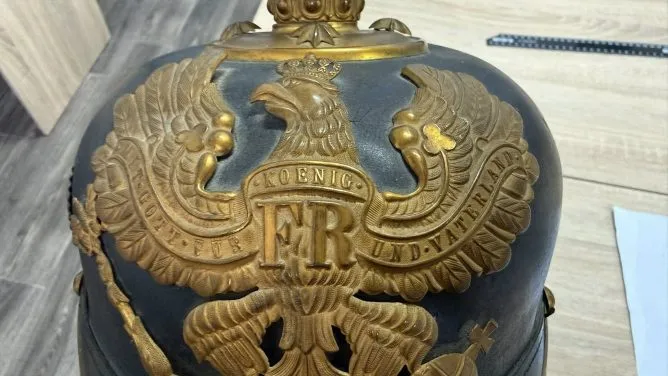
At Kyiv Customs a postal shipment from Rivne region was detained — a military helmet of the German Empire's army, dated 1915, was found in the box. A resident of the region attempted to send it to the United States without the appropriate permit.
The find was sent for examination to the National Museum of the History of Ukraine, and customs officers drew up a protocol for violation of customs rules. The helmet was seized pending a court decision.
“Museum experts determined that this is a Pickelhaube (Pickelhelm) — a protective helmet of a Prussian officer from 1915. All metal components are made of a copper-based alloy and gilded, which is characteristic of the officer corps of the German Empire's army.”
— Kyiv Customs
“Inside, the dome is lined with laika-type leather bearing a regimental stamp. Both the stamp and the inscription were recognized by experts as original. According to their conclusions, the helmet likely belonged to a veterinary physician of a Jäger regiment of the Armed Forces of the German Empire.”
— Kyiv Customs
Why this item is important
Experts estimate that such helmets are rare on European antique markets — therefore the item has not only material but also historical and cultural value. The presence of a brass emblem of the Kingdom of Prussia and stamps reinforces its authenticity and makes it important for studies of early 20th-century military history.
From a legal standpoint, exporting such artifacts abroad requires an appropriate certificate from the Ministry of Culture of Ukraine. The absence of this document was the reason for detaining the shipment.
Context and consequences
This story is an example of how customs inspections perform the function of preserving national heritage. At a time when the country defends not only its territory but also its memory, control over the movement of cultural valuables acquires additional weight. The rarity of the item on European markets increases the risks of illicit export and illegal trade.
In the near future the case will likely be decided in court. If it is confirmed that there were no export documents, the helmet will remain in Ukraine or be transferred for safekeeping to a museum institution in accordance with the law.
Conclusion
This case is a reminder to senders: historical items require not only careful packing but, above all, legal documentation. For society, it is an opportunity to preserve rare artifacts for scholarly study and public access. Next — the court and the experts: whether the helmet will join museum collections or be returned to the owner after the paperwork is completed.