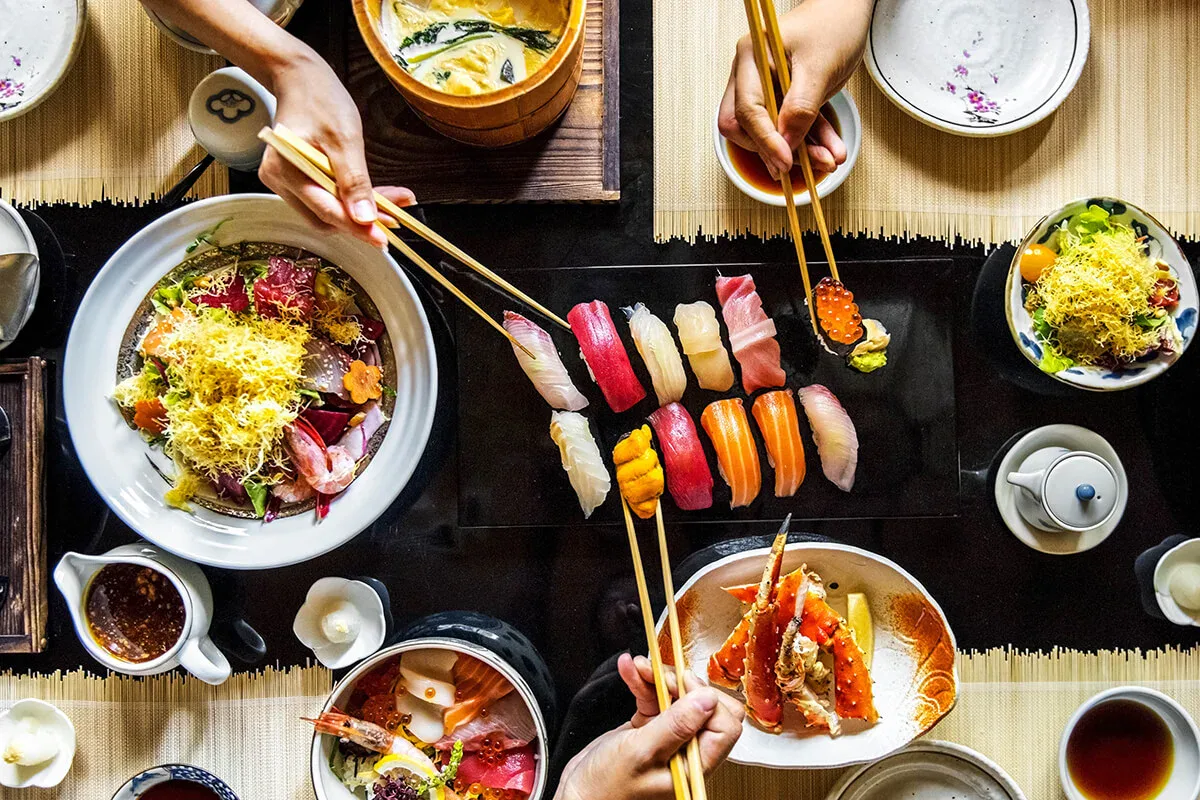
Sushi, ramen and miso soup are just the visible part. Behind them stands a culinary philosophy that took shape over two millennia and ultimately forced world science to rewrite basic textbooks on taste.
From acorns to rice: how island geography determined the menu
The first inhabitants of the Japanese islands ate what nature provided: nuts, fish, shellfish, wild animal meat. The real turning point came in the 3rd century BCE — with the spread of irrigated rice cultivation. Rice quickly became not just food, but a unit of the economy: it was used to pay taxes, measure wealth, and determine the status of a samurai clan.
The subsequent direction of development was set by China: tea, chopsticks, tofu, and various types of noodles came to Japan through it. And the spread of Buddhism in the country left an even deeper imprint — for several centuries, the Japanese almost completely gave up meat, focusing on fish, vegetables, and fermented products. This forced asceticism, as it turned out, formed the key advantage of Japanese cuisine: the ability to extract maximum flavor from a minimum of ingredients.
Tea ceremony as culinary constitution
From the 13th century onwards, the tea ceremony became the center of gastronomic aesthetics. It was around it that the principles were formed that today describe all of Japanese cuisine: seasonality of ingredients, minimalism in presentation, harmony between the dish and the tableware. Kaiseki — a multi-course menu served at tea gatherings — became the highest form of Japanese culinary art. Its logic is opposite to the European approach: not to impress the guest with complexity, but to let them taste the flavor of a specific season on a specific day.
"Any Japanese dish should be beautiful, but with a simple and moderate beauty, not one that catches the eye and is imposed."
Wikipedia, article "Japanese Cuisine"
The fifth taste that officially didn't exist
In 1908, Japanese chemist Kikunae Ikeda isolated a specific taste substance from kombu seaweed — sodium glutamate — and named the sensation it produces umami (旨味, "pleasant taste"). He claimed this was a fifth basic taste alongside sweet, sour, salty, and bitter. The West ignored this idea for almost a hundred years. Only in 2002 did American scientists discover receptors on the human tongue specific to glutamate — and umami officially entered scientific textbooks.
This is not just an academic detail. Umami explains why Japanese cuisine tastes different even in its minimalist execution: dashi (broth from kombu and tuna), miso, soy sauce — they all concentrate precisely this taste. The Japanese didn't "season" their dishes — they enhanced the natural flavor of the product through umami long before science provided an explanation.
What they actually eat — and what escaped tourists' attention
- Washoku (和食) — the general name for traditional Japanese cuisine, included by UNESCO on the List of Intangible Cultural Heritage in 2013. It includes not only dishes, but also serving principles, seasonality, and communal meals.
- Kaiseki — a multi-course menu with 7–14 dishes; each course reflects the season and region. The art of presentation here is no less important than taste.
- Fugu — fish containing tetrodotoxin, lethal in doses less than 1 mg. Only chefs with special licenses after several years of training are permitted to prepare it.
- Natto — fermented soybeans with a sharp smell that most foreigners cannot eat, but which is a daily breakfast for millions of Japanese.
- Shun (旬) — the concept of seasonality: each product has only about 10 days per year when it is at its peak nutritional value and flavor. Japanese chefs build their menus around this rhythm.
Minimalism as precision, not poverty
Japanese cuisine is almost devoid of spices in the conventional sense. Soy sauce, wasabi, ginger, and lemon — not to "improve" the dish, but to emphasize what is already there. Dishes are prepared immediately before serving, often in front of the guest. Food is served in small portions, and the sense of fullness is formed through variety, not volume.
This logic proved more powerful than any marketing: Japanese cuisine became the most widespread "ethnic" cuisine in the world — not because of exoticism, but because its principles resonate with how humans physiologically perceive food.
The question that remains open: if globalized "Japanese" fast food — salmon rolls, sweet soy sauce, supermarket sushi — has almost nothing in common with washoku, will authentic Japanese cuisine preserve its identity when Japan finally opens its restaurant market to foreign chains?