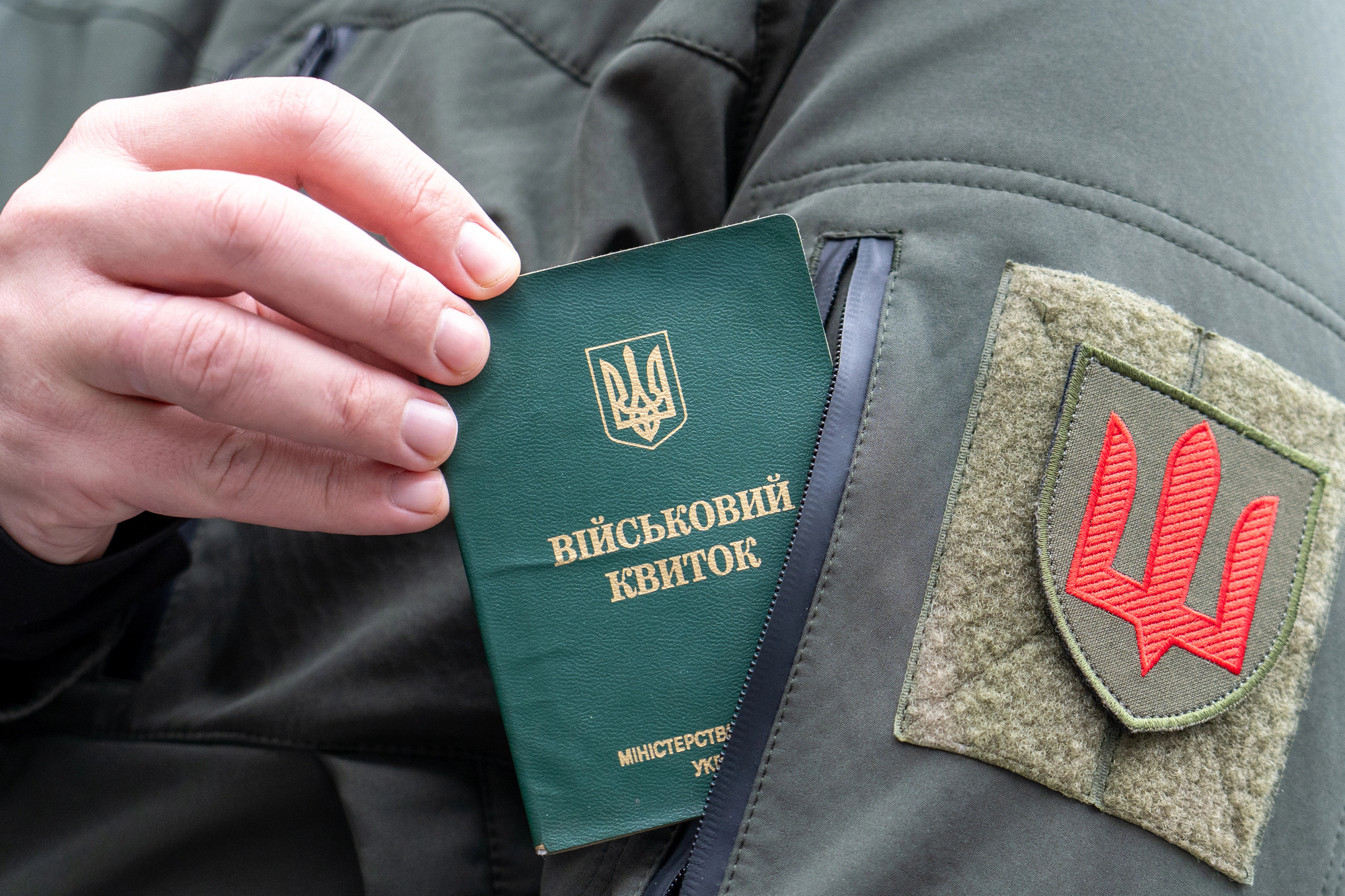
From February 24, 2022 to April 12, 2026, Ukraine recorded 620 attacks on representatives of territorial recruitment centers. The figure was released by the National Police in response to a LIGA.net request. Behind it lies not just statistics, but a curve of social tension: five cases in 2022, and 341 in 2025 alone.
Where the most attacks occur
The geography of attacks correlates with population density and mobilization pressure. Kharkiv Oblast leads with 69 recorded cases, followed by Kyiv (53) and Dnipropetrovsk Oblast (45). Kharkiv is a frontline city with elevated conscription pressure and simultaneously one of the centers where judicial practice in cases against recruitment centers has already developed.
What happens after an attack
According to the Ground Forces of the Armed Forces of Ukraine, as of December 2025, four military personnel were killed as a result of attacks — in Odesa and Poltava oblasts and in Lviv. Criminal cases have been opened for each incident. But opening a case does not mean proving it in court.
Mykolaiv Oblast is a telling example: 31 recorded attacks over the entire period, and only two cases reached court. The rest are at the pre-trial investigation stage. A similar picture is characteristic of most regions.
"The nature of recorded incidents varies and is not limited to verbal conflicts or threats. In a number of cases, military personnel sustained bodily injuries — bruises, abrasions, chemical burns, fractures, cut wounds, stab wounds."
Mykolaiv Recruitment Center and Military Prosecutor's Office
Suspended sentences as the norm
Where cases do reach court, sentences are predominantly suspended — this is confirmed by an analysis of judicial practice for 2024–2025. Exceptions are cases where the investigation establishes a link to foreign intelligence services: then courts impose actual sentences — up to 15 years imprisonment. But such cases are rare.
For comparison: posting the location of a recruitment center on social networks is classified by courts as a threat to the mobilization plan and is punished with imprisonment — more severely than a physical assault on an officer.
What the numbers represent
The increase in attacks is not just criminal statistics. It is an indicator of how legitimate an institution authorized to provide the army with personnel is perceived by part of society. In 2022, five attacks per year could be explained as excesses. 341 attacks in 2025 is already a systemic response to a systemic problem.
However, the state is currently responding primarily at the level of registration: recording incidents, opening cases, rarely bringing them to verdict. No public program to protect recruitment center employees — neither body armor for notification groups nor mandatory security escorts — has been officially announced.
If the number of cases reaching actual sentencing remains at current levels, the increase in attacks in 2026 will continue — because there is effectively no deterrent effect from punishment. A turning point may come when courts massively transition from suspended to actual sentences in cases without a spy component: that is when it will become clear whether the legal lever will work where public persuasion has not.





