From 07:00 on April 15 to 07:00 on April 16, Russia deployed 703 weapons: 44 missiles and 659 drones. Ukraine's Air Force confirmed the figures and composition of the strike.
What Was Launched and What Was Shot Down
Ballistic missiles formed the core of the attack: 19 Iskander-M and S-400 rockets. Only eight of them were destroyed — less than half. Cruise missiles — 20 Kh-101s and five Iskander-K — were countered much more effectively by air defense. Out of 659 drones, the vast majority were shot down, although some still reached their targets.
"Threat of ballistic weapons deployment"
— warning from the Air Force on the night of April 16, according to Ukrainian Pravda
The difference in interception rates between ballistic and cruise missiles is not coincidental. According to CSIS estimates, from 2022 to 2024, Russia launched over 11,000 missiles with an average interception rate of 83.5%. However, ballistic missiles remain a separate category: their speed and trajectory make them fundamentally more challenging targets for existing air defense systems.
Where Strikes Hit
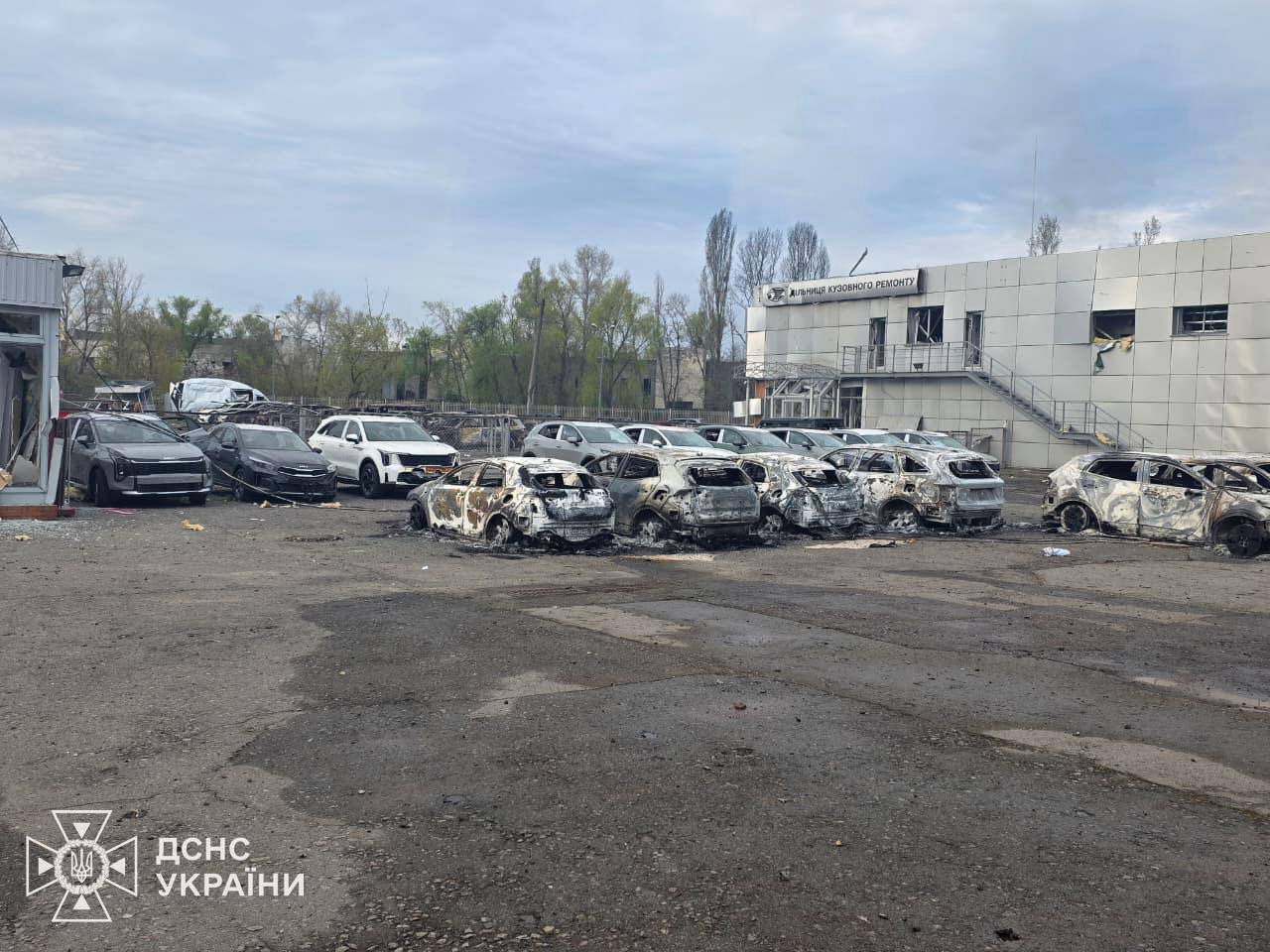
The heaviest consequences were in Kyiv: ballistic missiles struck the Podil, Obolon, and Shevchenko districts. Residential buildings were damaged. A child and a woman were killed, and among the wounded were medics who responded to calls. In Kharkiv — several fires and injuries. In Dnipro — a five-story building and an administrative building were damaged, with casualties including two children aged 1.5 and 3 years old. In Odesa, one person was killed and five wounded as a result of the drone attack.
Tactical Context
This was already the second major strike in a day: the previous night, on April 15, Russia deployed 327 weapons — three ballistic missiles and 324 UAVs. Air defense neutralized 309 targets then. Two consecutive mass strikes within one day is a tactic to deplete interceptor stocks faster than they can be replenished.
- According to CSIS analysts, in the third quarter of 2025, an average of 42 ballistic missiles per month penetrated air defenses — roughly 1.5 per day. The April strike significantly exceeded this figure.
- The Kh-101 and Iskander-K were launched from the Caspian Sea and Rostov region — standard geography to avoid interception zones over land.
- 659 drones per day is an attrition strike: it forces air defense to operate continuously and "spend" interceptors on cheaper targets.
If Russia maintains the pace of two mass strikes per day, the key question is not how many drones air defense shoots down, but whether allies can replenish supplies of anti-missile systems capable of intercepting ballistic missiles — Patriot and SAMP/T — before the next such strike.





