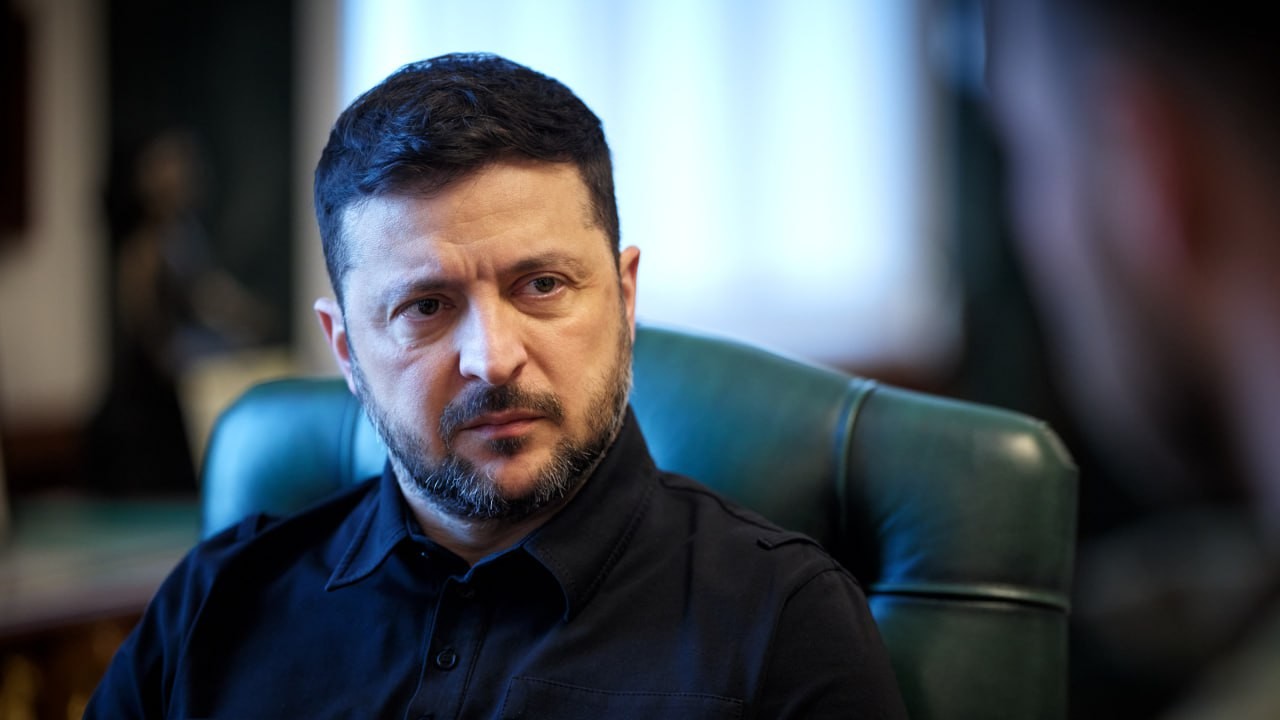
In six days — four facilities in the Leningrad and Yaroslavl regions, fires at major processing units and the shutdown of Russia’s second-largest oil refinery by capacity. President Zelensky on March 28 named the reason for the effectiveness: improved long-range drones and rocket-drones.
What burned and where
The chain of strikes began on the night of March 22–23: the Defense Forces struck the oil terminal “Transneft — Port Primorsk” in the Leningrad region. According to confirmation from the General Staff, the tank farm and oil-loading infrastructure were damaged. About 60 million tonnes of oil pass through Port Primorsk each year — revenues from its sale finance the war against Ukraine.
On the night of March 25 the Ust‑Luga port complex was hit — an oil terminal caught fire, and a combat icebreaker in the port of Vyborg was also struck. On March 26 — the fifth strike on the KirishiNefteorgsintez refinery: according to the General Staff, the main primary oil-processing units and two tanks caught fire. Reuters reported that the plant stopped operations. On the night of March 28 — a strike on the Yaroslavl refinery, which supplies fuel for the needs of the Russian army.
Estonian intelligence confirmed: the ports Primorsk and Ust‑Luga together provide 40–50% of Russia’s maritime oil exports. According to Reuters’ calculations, as of March 25 about 2 million barrels per day were taken out of service — roughly 40% of sea shipments.
"Strikes on refineries and port infrastructure are breaking this chain. Less processing, more complicated logistics — and, as a result, overload of other nodes."
Ukrainian Unmanned Systems Forces (USF)
Why they can hit so far
The Kirishi refinery is located more than 800 kilometers from Ukraine’s border. A year ago such a route for most domestic strike UAVs was at the limit or beyond their range. Zelensky on March 28 explained the change directly: Ukraine is using improved long-range UAVs and rocket-drones. He did not disclose details about specific platforms. According to Deputy Defense Minister Serhiy Boyev, in 2026 Ukraine will manufacture more than 7 million drones — twice as many as in 2024.
The strike on the Primorsk terminal was confirmed by the Security Service of Ukraine: the operation was carried out by the SBU special unit "Alpha".
There is a ceasefire. There is no control mechanism
Strikes continue against the backdrop of a declared ceasefire on strikes against energy infrastructure — an agreement reached after talks in Riyadh. However, as the Kyiv Post found, the parties agreed to a ban in principle, but without an implementation mechanism. The Kremlin unilaterally announced that the moratorium has been in effect since March 18 — the day of the telephone call between Putin and Trump. Kyiv and Washington agreed on a list of protected facilities, but it differs from Moscow’s list: Russia refused to include Ukrainian oil and gas facilities in it.
The ISW records that Russia continues to strike Ukraine’s critical infrastructure under the cover of the ceasefire — which contradicts the declared aim of the Trump administration regarding sustainable peace. Zelensky on March 28 said that Defense Minister Rustem Umerov, during his upcoming trip to the United States, will hand over to the American side evidence of violations by Russia.
Kyiv’s position remains specific: Zelensky said that Ukraine is ready to stop strikes on Russia’s oil infrastructure — if Russia stops attacking Ukrainian energy. Moscow, for its part, announced a ban on gasoline exports from April 1 — officially to cover domestic demand.
J.D. Vance on March 28 said that the energy ceasefire was "obviously achieved", and the maritime one "almost agreed". However, no tripartite signed document with a list of protected facilities and a verification procedure has been made public.
If Umerov hands over verified evidence of violations and the U.S. publicly recognizes it as credible — the question of whether Washington will remain a mediator between Kyiv and Moscow or become a party applying pressure only on Ukraine will receive a definitive answer.





