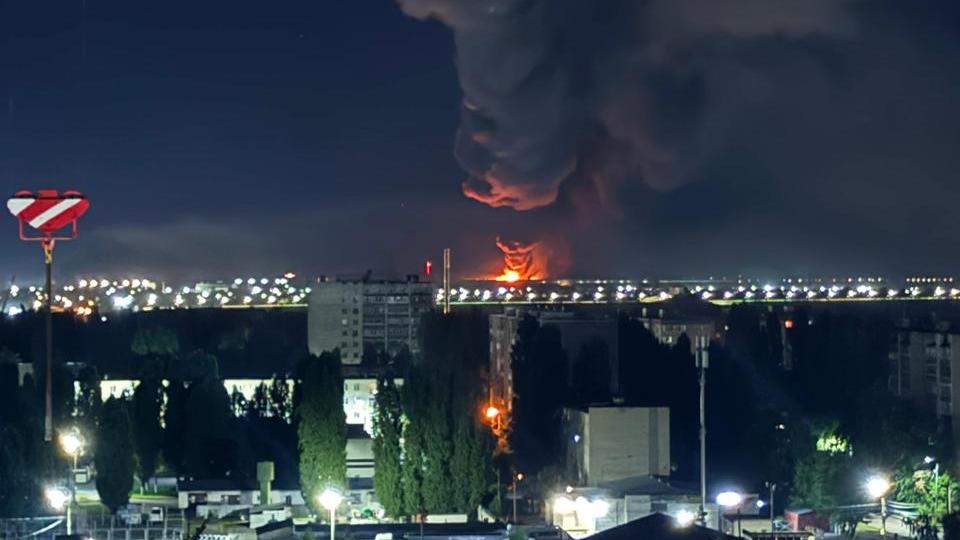
Another Wildberries warehouse in Russia is burning following a drone attack — this time near Voronezh. This is already the second such strike in a week: on August 7, a logistics center of the company in Yekaterinburg was ablaze. Simultaneously, on the night of August 11, fires were reported at oil refineries in Khabarovsk Krai and Orsk in Orenburg Oblast.
Why exactly marketplace warehouses
The Wildberries logistics complex near Voronezh is not a random target. It only opened in November 2025, covers an area exceeding 150,000 square meters, and cost approximately $133 million to build. According to the company, it could store over 90 million product items.
Formally, this is civilian infrastructure. However, large logistics hubs in Russia increasingly combine commercial functions with processing cargo for the military — and this very duality makes them a target, not a random victim.
Oil refining as a separate line of strikes
Parallel to the attack on the warehouse near Voronezh, Ukrainian drones hit the refinery in Komsomolsk-on-Amur (a Rosneft structure with capacity up to 8 million tons of oil per year) and the "Orsknefteodrgsintez" plant in Orenburg Oblast (one of the largest in Russia, 6 million tons per year). Both enterprises are key fuel suppliers for the Far East, the Urals, and the Volga region.
This continues a series: earlier, a petrochemical complex in Tobolsk was hit, and on the night of August 10 — a refinery in Tatarstan. The geography of attacks covers virtually all of Russian territory — from the European part to the Far East.
In the summer of 2026, strikes deep into Russian territory have significantly intensified — and these are no longer isolated actions, but a regular campaign against fuel and logistics infrastructure.
What does this mean in practical terms
For an ordinary Russian, the result of such strikes is not abstract geopolitics, but quite tangible things: fuel shortages in regions, rising prices for petroleum products, delays in marketplace deliveries. The Orsk refinery supplies fuel to an entire industrial region; its shutdown for even a few days affects logistics and prices.
In Voronezh, the governor confirmed a fire covering an area of up to 20,000 square meters at one of the warehouses and one person killed by debris from downed drones. In Moscow, they reported 13 unmanned aerial vehicles shot down, in Rostov Oblast — over 60.
What's next
If the frequency of strikes on refineries remains at the current level — once every few days on different objects in different regions — Russia will have to redistribute fuel between military and civilian needs already this autumn. The question is rather whether Russia's repair base can withstand such a load, or whether fuel shortages will become noticeable for the aggressor country's economy sooner than the Kremlin expects.