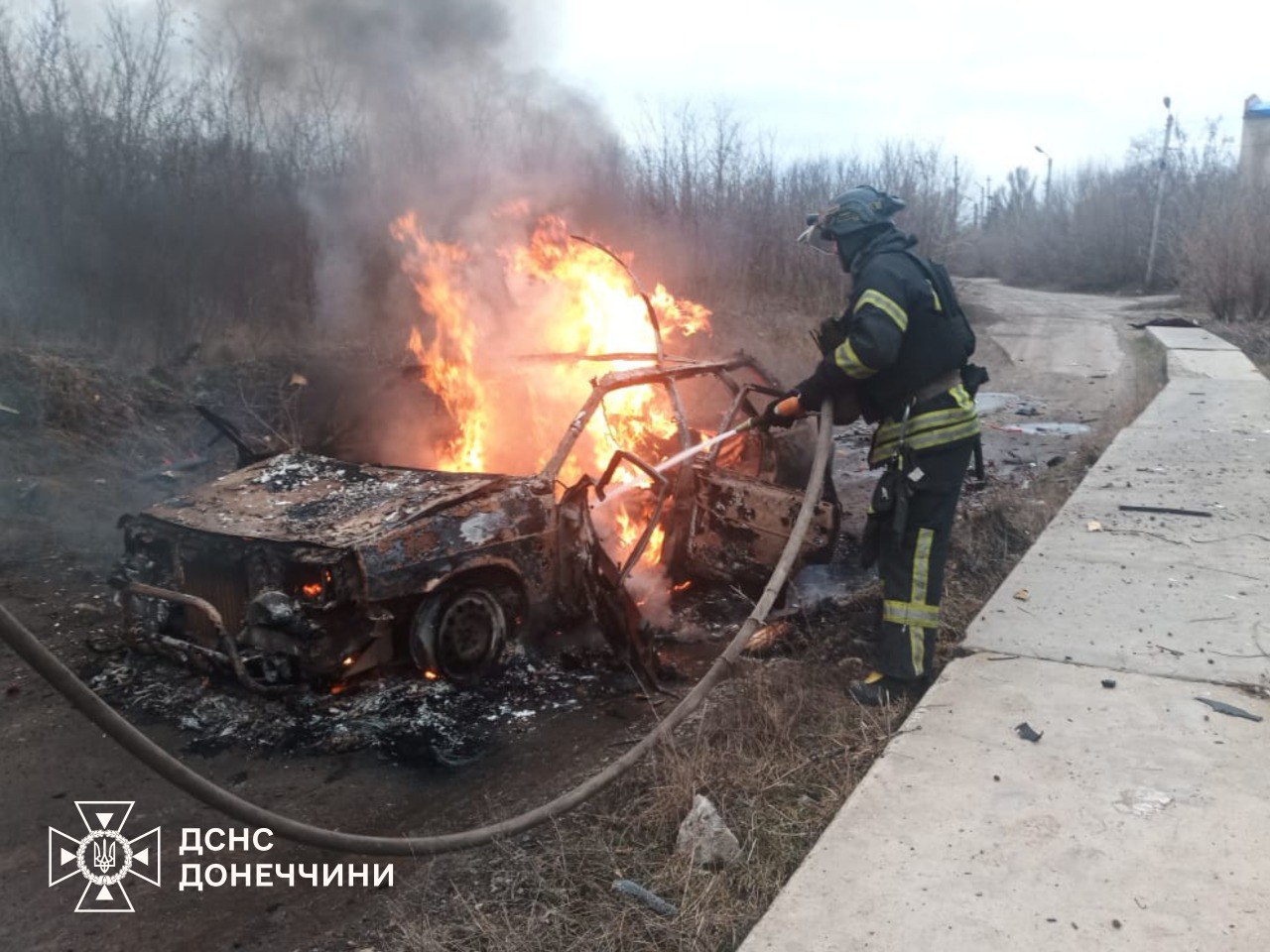
What happened
Early on February 17, as a result of an attack by a Russian FPV drone in Mykolaivka, Kramatorsk district, three employees of the Slovyansk thermal power plant were killed and another was wounded. The information was confirmed by First Deputy Energy Minister Artem Nekrasov, and the State Emergency Service clarified the nature of the impacting device and the condition of the scene: the vehicle burned out almost completely, rescuers extinguished the fire and handed the wounded person over to medics.
"The occupiers struck the vehicle with an FPV drone, the car burned out almost completely."
— State Emergency Service of Ukraine
Why it matters
This attack fits into a troubling pattern: the enemy systematically uses small drones against personnel and equipment associated with critical infrastructure. Previously, notably on February 1, a similar strike on a service bus in Dnipropetrovsk region killed 12 people — employees of an industrial enterprise. Such targeted strikes aim not only to destroy equipment, but also to paralyze logistics, demoralize personnel and complicate repair work.
According to some media outlets and rescuers, enemy operators who control FPV "shaheds" in real time are able to visually identify targets — therefore, these are not random strikes, but deliberate attacks on civilian workers of critical infrastructure.
Consequences and next steps
First, this increases the risk of equipment downtime and delays in restoring electricity supply, because workers carrying out repairs and transportation become targets. Second, it raises the need for operational security measures: escort convoys, counter-drone systems on key routes, procedures for the safe transportation of workers, and changes to the logistics of work in high-risk areas.
Experts and rescuers agree that protecting people must become priority number one: while equipment is being restored, safe routes and counter-drone measures are a matter of saving lives and the resilience of the energy system.
"A Russian drone attacked in Donetsk region — there are fatalities."
— Artem Nekrasov, First Deputy Minister of Energy
Brief conclusion
This tragedy is part of the enemy's systematic strategy against elements of Ukrainian infrastructure. While the government and energy companies strengthen protection of assets and personnel, partners should be expected to provide increased assistance in counter-drone technologies and logistics. The issue is not only repairing equipment — it is about the safety of the people who service that equipment.





