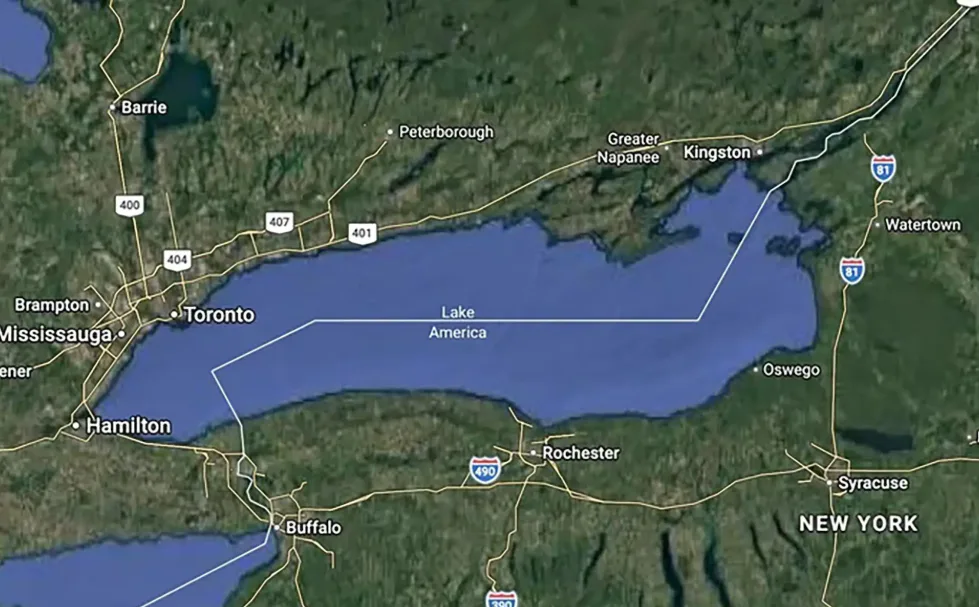
Ontario Premier Doug Ford had no doubt how to respond: a lake is called what it's called, for hundreds of years, and the name won't change because of one signature in the Oval Office. The problem is that for millions of Google Maps users in the US, it already has changed — on a smartphone screen, Lake Ontario is now labeled as "Lake America."
Google explained the decision simply: the company has adhered for many years to a policy of displaying names that appear in official government sources. When the US Federal Geographic Names System is updated by a presidential order, the map follows it automatically — without a separate political decision by the corporation itself. Formally, this is not a capitulation to Trump, but rather the execution of its own algorithm. But the result is the same: in the US — "Lake America," in Canada — "Lake Ontario," in the rest of the world — both names simultaneously.
Why now
Trump signed the renaming order on August 27 — against the backdrop of escalating trade conflict between Washington and Ottawa. This is not the first similar step: previously, using the same scheme, Google already changed the name of the Gulf of Mexico to "American Gulf" for US users following an analogous order. The renaming of the Great Lakes continues this line of symbolic expansion — where it's hard to pressure with tariffs or sanctions, you can pressure with cartography.
The logic is simple: a name on a map is a daily, imperceptible reminder of who the space belongs to. For a domestic audience in the US, it's a gesture of strength toward a neighbor with whom a trade dispute is currently ongoing. For Canada — this is no longer a dispute over tariffs on steel or timber, but a direct question of sovereignty over its own territory, since Ontario is a border lake, one of five Great Lakes of North America.
Canada responds with refusal
The official position of the Canadian side is to not recognize the renaming in any form. Ford insists that the lake retains its historical name, and Canada's Prime Minister Mark Carney has publicly rejected Trump's attempt to rename the body of water. Google Maps for Canadian users continues to show "Lake Ontario" without changes, and the company presents this as applying the same policy — simply based on Canadian official sources.
Notably, Apple Maps as of Sunday has not recorded any changes and continued to call the body of water Lake Ontario for all users, including American ones. That is, even among major tech companies, there is no unanimous answer to the question of whether a presidential order is sufficient grounds for changing a name on a world map.
The lake has borne its name for hundreds of years and will continue to be called Ontario.
What this actually changes
Physically — nothing: the water, shores, and border between the US and Canada remain where they were. What changes is something else — a precedent by which digital infrastructure (maps, navigators, government registries) begins to exist in two parallel versions of reality depending on the user's country. If this practice becomes established, the next step could be a broader list of geographic objects on borders or in disputed waters, renamed unilaterally.
The question for the coming months is simple: will Washington limit itself to symbolic gestures on the map, or will the renaming become another tool of pressure in trade negotiations with Ottawa — and will any major cartographic platform agree to recognize the new name globally, rather than just for American IP addresses.