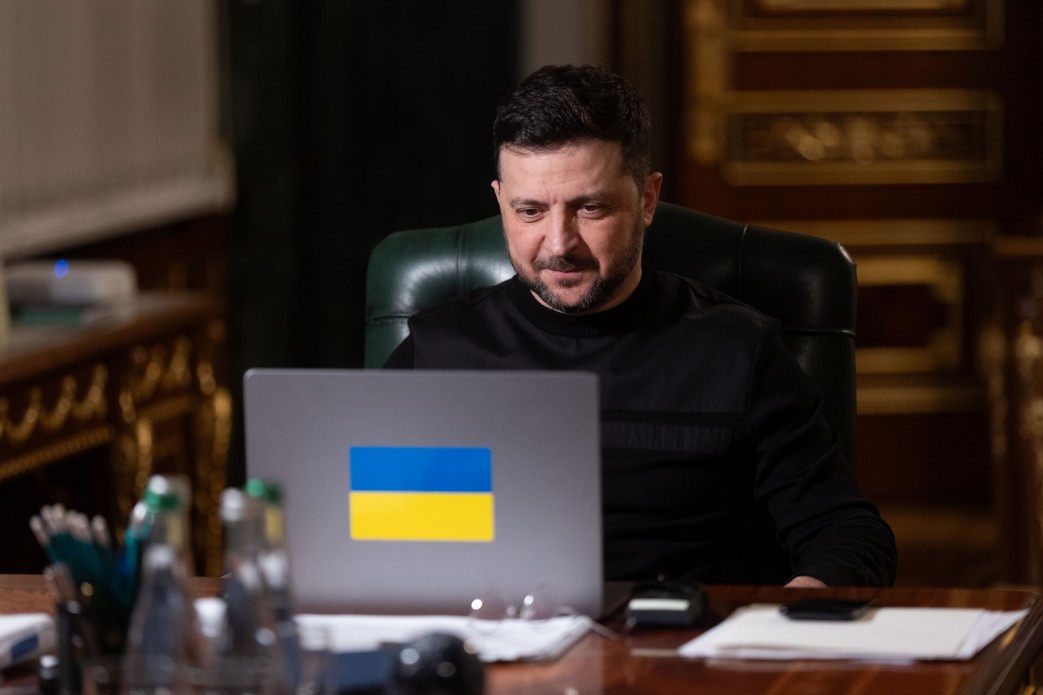
Zelensky's position: negotiations as a de facto concession
President Volodymyr Zelensky's interview with the Japanese agency Kyodo News, an excerpt of which was published by the Office of the President, contains a clear frame: for Ukraine the very fact of dialogue with the aggressor country is already a significant compromise. This is not a declaration of capitulation — it is a working position that both opens the way to negotiations and sets red lines.
"That is why our compromise already is that we are talking with the aggressor about compromises. 'We stand where we stand' — this is a big compromise. They have seized nearly 20% of our territory. And we are ready to talk about peace now on the basis of the principle 'we stand where we stand.' This is a big compromise"
— Volodymyr Zelensky, president of Ukraine (interview with Kyodo News; excerpt published by the Office of the President)
Why this matters
First, this is about reframing the criterion of compromise. If negotiations take place on the principle "we stand where we stand," this effectively lays the groundwork for fixing the front lines — and therefore for the political-legal agreement of future borders. For society this is a key question: whether to aim to preserve statehood now, or to wait for the complete liberation of territories in the future.
Second, it is a signal to partners: Ukraine is ready for dialogue, but not at the expense of its sovereignty. This position is pragmatic — it simultaneously preserves international legitimacy and allows testing the opponent's readiness for real concessions.
International context and surrounding voices
Zelensky noted that a number of mediators — in particular states of the Middle East and Asia — already recognize Russia as the aggressor. This is an important diplomatic resource: if mediators maintain this framing, negotiations will carry a different legal and political weight than a dialogue that begins with the aggressor's demands.
Meanwhile in the chronology: on 13 February 2026 Sybiha emphasized that Ukraine seeks an end to the war and is participating in the negotiation process despite divergent positions. Earlier, on 14 December 2025, Zelensky spoke about the role of pressure from the United States as a factor that could force Russia to make concessions. These dates underscore: the readiness to talk is accompanied by a diplomatic strategy and expectations of partners.
What this means for each of us
For citizens this concerns three interests: security (fewer active hostilities in the event of a ceasefire), sovereignty (protection of the state's rights over territory) and recovery (the ability to plan reconstruction and the return of people). At the same time, the risk of legitimizing someone else's annexation is real — which is why the conditions of any negotiations must be transparent and backed by international guarantees.
Conclusion
Zelensky's position is a pragmatic maneuver: to talk, but not to give up sovereignty. What follows will depend on whether partners translate the readiness to dialogue into clear guarantees and control mechanisms. The remaining question is whether the international community can provide such guarantees faster than the aggressor's behavior alters the starting conditions of the negotiations.





