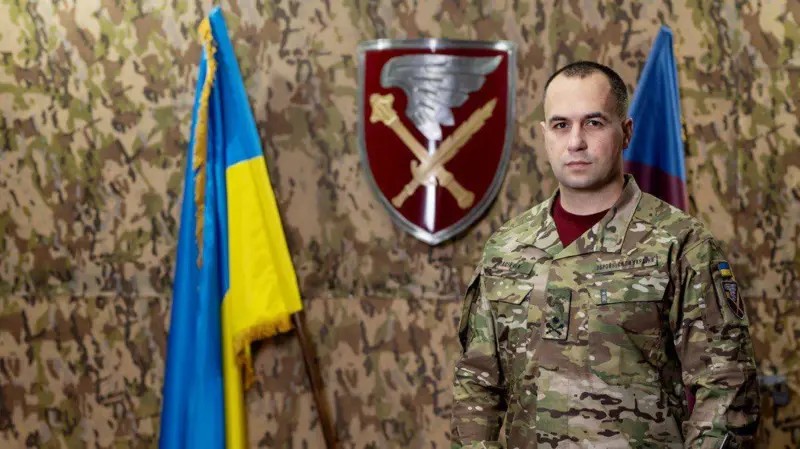
What the commander said
In an interview with the BBC, Brigadier General Yevhen Lasiichuk, commander of the 7th Rapid Reaction Corps of the Air Assault Forces, pointed to the possible exhaustion of Russian units in the Pokrovsk‑Myrnohrad agglomeration by spring. In his assessment, this could lead to a slowdown in the pace of advance if the Kremlin does not commit additional reserves.
“I think that by spring the enemy will be exhausted and will somewhat slow the pace of its advance, its offensive. But that, again, is if no further reserve is committed, for example, the naval infantry. We know that it is currently undergoing coordination and being brought up to strength. I’m not sure they will use it on this particular axis, but it’s possible.”
— Yevhen Lasiichuk, commander of the 7th Rapid Reaction Corps, Air Assault Forces
Resources and risks
Lasiichuk emphasized that the enemy has an advantage in manpower and equipment, but the Armed Forces of Ukraine have built a solid defense in this sector. Due to exhausting battles, the Russians are already forced to commit reserves; the commander also noted that he has data on the casualty ratios specifically in Pokrovsk and Myrnohrad.
At the same time, the Air Assault Forces commander reported that Ukraine currently cannot restore full control over Pokrovsk — a factor that affects operational decisions and the allocation of forces.
Context
Lasiichuk’s assessment aligns with that of some analysts: enemy exhaustion is a realistic scenario if additional mobilization resources are not employed. For contrast: on January 22 former US special representative Kit Kellogg expressed the hope that peace could arrive by August 24 — a political forecast that does not resolve the question of battlefield resources.
Analysts note that the key risk remains the introduction of mobile reserves (in particular the naval infantry) — in which case the balance of forces could change rapidly.
What this means
A scenario of a gradual slowdown in the offensive gives the Armed Forces of Ukraine a window to consolidate positions, regroup and resupply. But this window is conditional: if the adversary finds additional resources, the tempo of fighting may resume. Therefore, the planning task is to ensure sufficient supplies, ammunition and personnel rotations to consolidate the favorable tempo.
An interim question for partners and the front commander: what resources does Ukraine need right now to turn this potential decline in enemy activity into a stable advantage?





