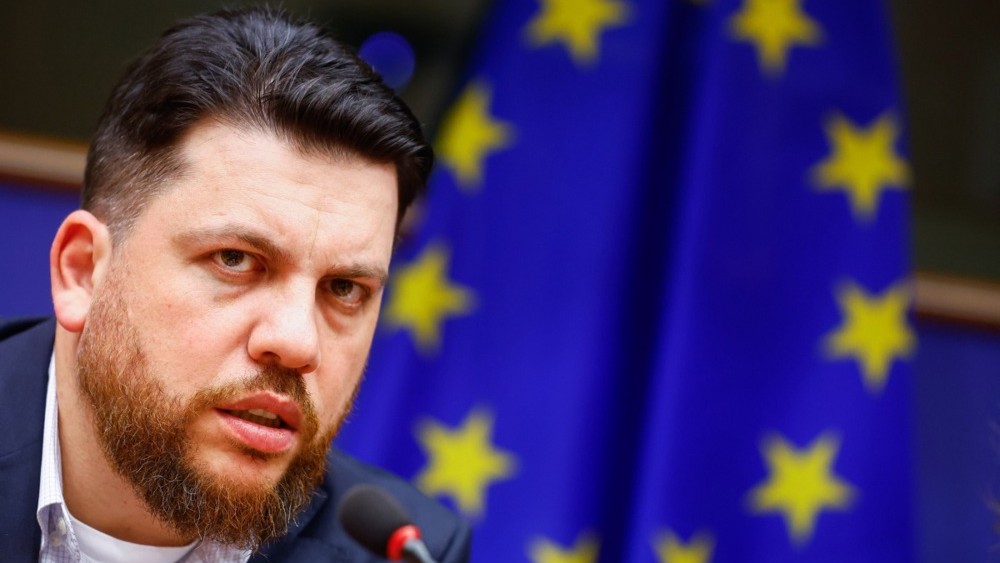
What happened
The Migration Department of Lithuania has turned to the State Security Department regarding Russian citizen Leonid Volkov, who lives in the country. Delfi reported: after receiving a response from the security service, the question of canceling Volkov's temporary status may arise.
"For once, denazification really happened. The Nazi croaked, who by his very existence was a gift to Kremlin propaganda..."
— Leonid Volkov, screenshot of correspondence (published by Anna Tiron)
Details of correspondence and context
Screenshots of the correspondence, published by the political representative of the Russian Volunteer Corps Anna Tiron, contain expressions of joy over the alleged death of RVC commander Denis Kapustin and wishes for the imprisonment of several Ukrainian officials. The correspondence is dated December 29 and was the reason for the migration service's inquiry.
Two days earlier the RVC announced Kapustin's death, but on January 1 Ukrainian military intelligence reported that the death had been staged, and that the funds Russia had supposedly allocated for the liquidation were redirected to help defenders. Reuters previously described Kapustin's ties to radical circles in Russia and refuted the simplistic labels often used to describe such figures.
Why this matters for Ukraine and the EU
This story is not only about private messages: it touches on the balance between law-enforcement and migration mechanisms in the EU. If a host country discovers that a resident calls for or rejoices in violence and has ties to military units, that calls into question both security and the political reputation of the host.
The real question — can European institutions promptly filter out those who pose a risk without undermining asylum mechanisms for genuine refugees. For Ukraine this is also a test: how partners respond to threats associated with actors who directly or indirectly affect our security interests.
What sources say
According to Delfi, the Migration Department initiated an official request to the security service. Ukrainian military intelligence stated that Kapustin's death was staged and reported the redistribution of funds that were supposedly directed to his liquidation.
Reuters provides additional context regarding Kapustin's prior ties to radical groups and emphasizes that the profiles of individual commanders are often more complex than the simplified labels used in the media.
Conclusion
The decision of Lithuanian authorities will show how quickly the EU can combine migration policy with national security concerns. For Ukraine it is important that partners act consistently: declarations of support for security must be backed up by concrete actions. Whether the Volkov case will set a precedent for tougher screening of residents with suspicious ties is a question awaiting an answer.





