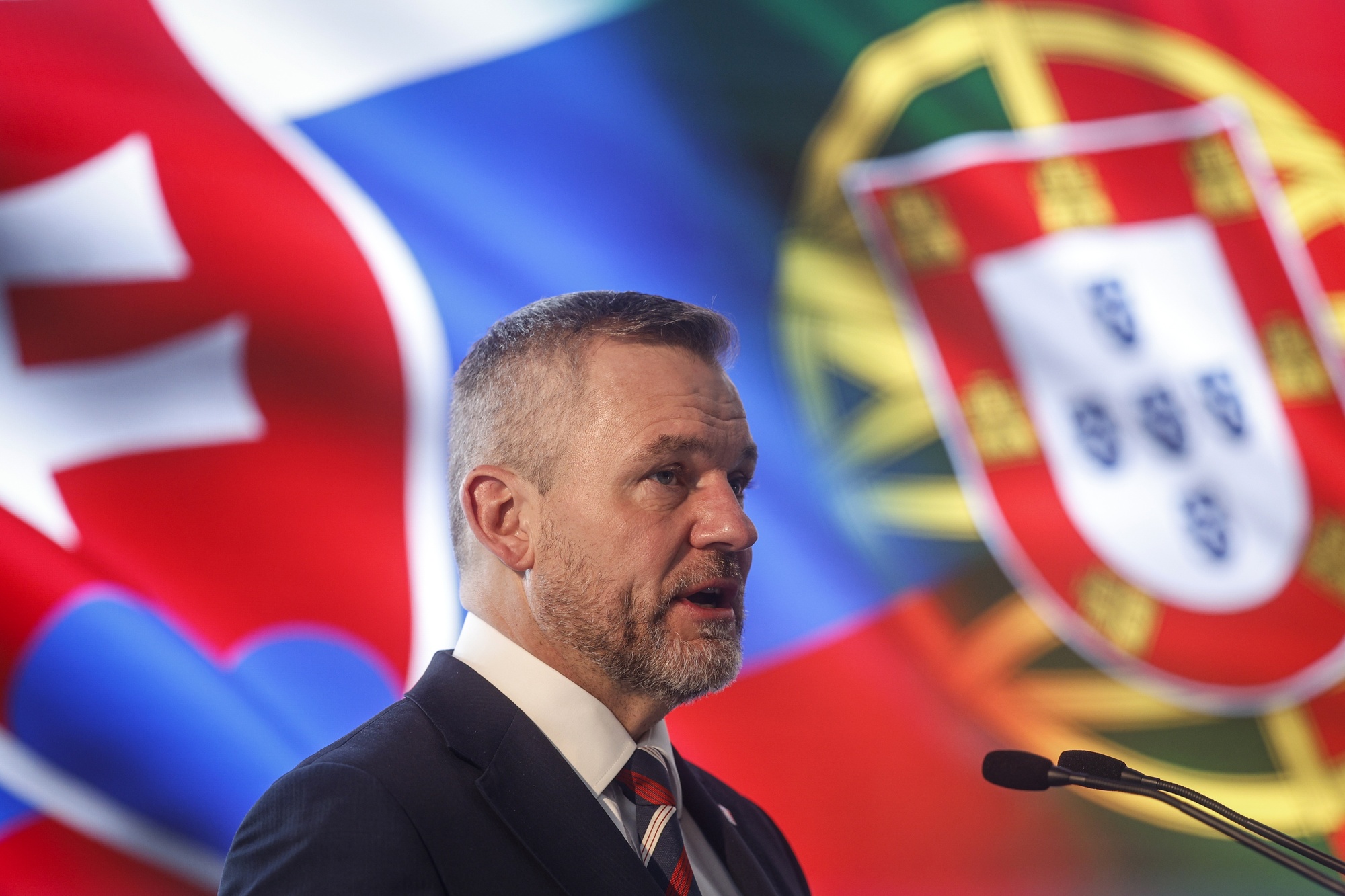
Pellegrini's stance
In a post on Facebook, Slovak president Peter Pellegrini called the previous government's decision to transfer MiG-29 fighters to Ukraine a mistake — but rejected the notion that they can be written off as "a pile of scrap."
"I still consider it a mistake that Slovakia got rid of its MiGs, which at that time had no replacement. No other country has acted in such a way that, by sacrificing its own armaments, it would remain completely dependent on the assistance of its neighbors."
— Peter Pellegrini, President of Slovakia
Pellegrini emphasized that during his premiership (2018–2020) he insisted on preserving the combat readiness of the MiG-29s until they were replaced by F‑16s. He also noted that he personally flew MiG-29s and considers them fit to fly to Ukraine.
Context and chronology
The facts are: on 23 March 2023 Slovakia handed over the first four MiG-29s; as of 17 April 2023 all 13 MiG-29s that Slovakia was ready to transfer had arrived in Ukraine. On 10 December 2025 the prosecutor's office officially determined that the transfer showed no signs of criminal activity.
Currently, in the domestic political discourse the event is being used for accusations between governments: the incumbent cabinet led by Robert Fico has repeatedly criticized its predecessors for providing military aid to Ukraine.
"The prosecutor's office has entered the political struggle on the side of the opposition"
— Robert Fico, Prime Minister of Slovakia
Why this matters for Ukraine
The transfer of MiG-29s is not just a symbol of solidarity. For Ukraine it was a concrete increase in operational air capabilities that was felt at the tactical level. For Europe it is a test of states' willingness to risk their own equipment for the sake of collective security.
Pellegrini's position raises two important questions: the balance between national sovereignty and collective responsibility, and the transparency of decisions regarding defense resources. If a country gives away weapons, society must understand whether there was a replacement and how this will affect the ability to defend airspace.
Summary
This story is about more than a political dispute in Bratislava. It is about how states decide on compromises between their own security and supporting a partner at war. Now the questions are twofold: will Slovak society receive the full picture of events — and how will Bratislava's decision affect future coordination of Western aid to Ukraine.





