Intro
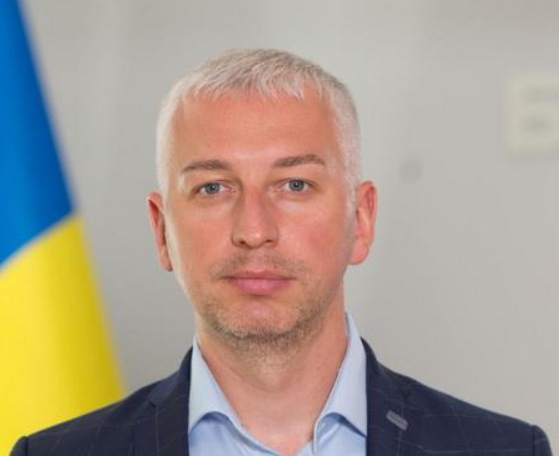
Journalists at hromadske found that during 2024 the family of the former head of the Bureau of Economic Security, now deputy head of the Khmelnytskyi Regional Prosecutor’s Office, Maksym Kuterha, purchased property with a market value that may reach about $325,000 — an amount difficult to reconcile with the family’s official income. For citizens this is not just an interesting detail — it is a question of public trust in those who have the authority to punish corruption.
What was declared and what was purchased
According to the investigation:
In July 2024 the official’s wife acquired a plot of land of 6.5 sotky (about 650 m²) in the premium cottage community Piemont eco Village, roughly a 15‑minute drive from Kyiv. The official price of the land is about 239,000 UAH (less than $6,000), but a residential house of the “Etna” type of about 170 sq. m has already been built on the plot; journalists estimate its market value at over $300,000. Formally the house is still listed as an unfinished construction object.
The declaration also lists a 2019 Porsche registered to the wife; the value is hidden in the declaration. The owner has currently put the car up for sale for $64,000.
Official family income — the numbers
- Maksym Kuterha’s salary: about 1.2 million UAH;
- Wife’s income from entrepreneurial activity: approximately 1.67 million UAH;
- Proceeds from sale of real estate: 2.7 million UAH.
Journalists calculated that total receipts for the year still fall short of the market value of the acquired property, when taking into account typical costs of the house and the car.
Context and possible explanations
Experts interviewed by the journalists point to several possible scenarios: gifts or loans from relatives, hidden income, sale of previously acquired property, or undeclared transactions. None of these options has yet been confirmed by official documents — therefore the key is a transparent explanation from the official and checks by controlling bodies.
The investigation also notes professional ties: Kuterha worked in the Ministry of Internal Affairs, the police and the General Prosecutor’s Office, joined the BEB in 2022, and was later appointed deputy prosecutor of Khmelnytskyi region. Journalists point to possible links with a circle of lawyers associated with Deputy Head of the Office of the President Oleg Tatarov — an important context that requires verification.
Family social background
According to the investigation, the wife’s mother worked for several years as a head pharmacist and acquired at least three real estate objects in Kyiv region and Kyiv. The wife’s father previously held managerial positions at a Kharkiv aviation enterprise, was involved in NABU cases, and during the full‑scale invasion took a post in the occupation administration of Zaporizhzhia region and joined “United Russia.” The Komunarskyi District Court of Zaporizhzhia found him guilty of collaboration and sentenced him to eight years in prison with confiscation of property.
"The official’s family in 2024 acquired property whose market value significantly exceeds the family’s declared income"
— hromadske, investigation
"The wife has long not been in contact with her father, and the official himself claims he is not acquainted with him"
— Press Service of the Khmelnytskyi Regional Prosecutor’s Office
Parallel media findings
Aside from the Kuterha case, a recent investigation by Slidstvo.Info uncovered a semi‑legal school at a monastery in Kyiv where children are taught from Soviet textbooks and shown Russian films. This is a separate warning about weaknesses in the control system — but in both cases the key is the public’s demand for transparency and accountability.
What next and why it matters
This story is not about elite purchases per se, but about a principle: people who work in law enforcement must be exemplars of financial transparency. Even plausible explanations do not remove the public need for an independent check: an audit by the NACP (National Agency on Corruption Prevention) or other competent bodies should obtain the documents and publish their conclusions.
While awaiting official results of checks, the core question for every citizen remains simple: can we rely on institutions that themselves need clarity about the origin of their assets? The answer affects not only moral authority but also the effectiveness of the fight against corruption during the war.
Sources
Investigation: hromadske; additional materials: Slidstvo.Info; court rulings — Komunarskyi District Court of Zaporizhzhia.





