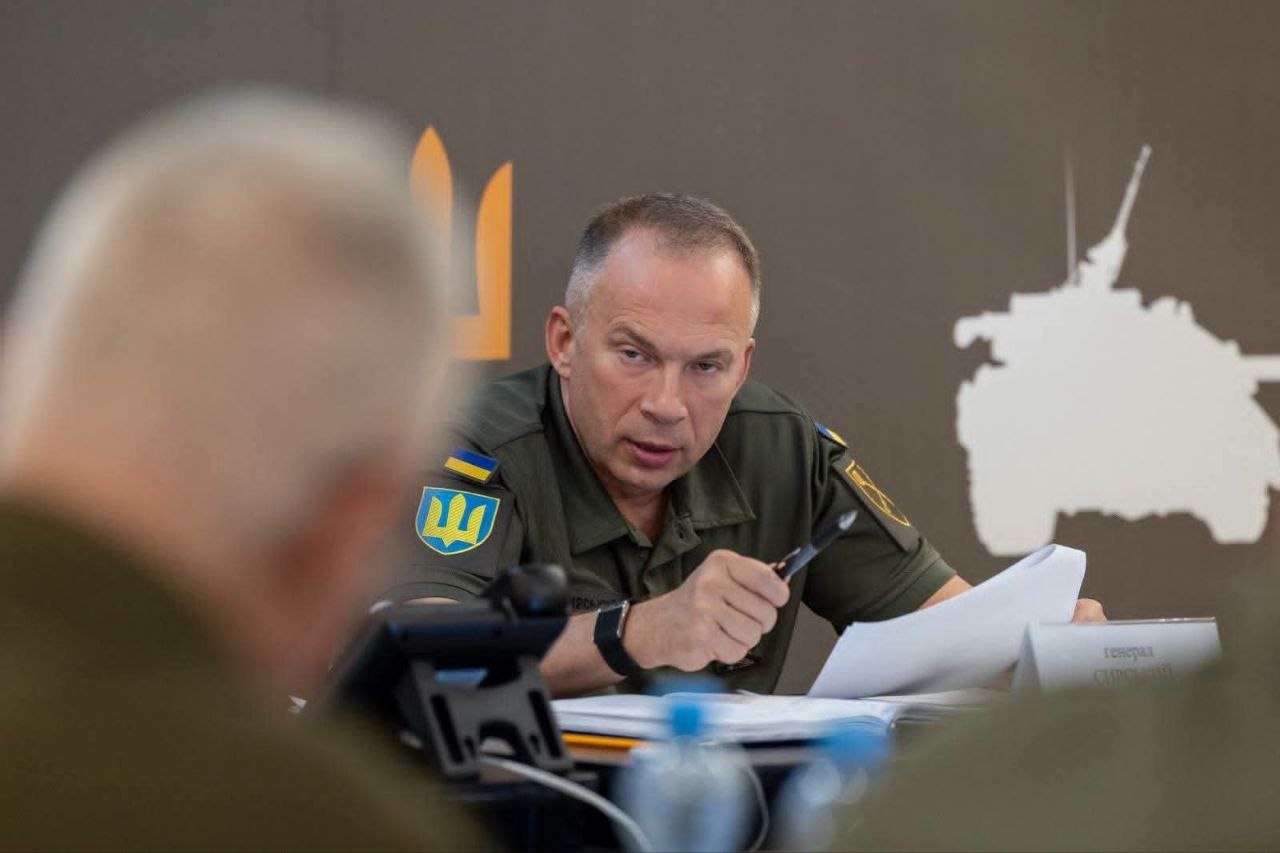
Commander-in-Chief of the Armed Forces of Ukraine Oleksandr Syrskyi summed up the results of the first half of 2026: the pace of advancement of Russian invaders decreased more than twofold, and the number of active offensive directions—from 13 to six or seven. But behind these figures lies a concrete geometry of defeat.
What the map shows
According to calculations by the American Institute for the Study of War (ISW), over six months of intensive assaults—from December 2025 to May 2026—Russian forces advanced 40.64 km². Over the same period a year earlier, this figure exceeded 515 km². In other words, this year's result is less than 8% of last year's.
At the same time, ISW notes that over these same six months, Russia lost 281.1 km² of previously controlled territory. May 2026 became the first month since October 2023 when the monthly balance for Russia turned negative—the aggressor lost more than it captured, confirmed analysts from DeepState.
Why the slowdown happened now
ISW names several factors simultaneously: Ukrainian ground counterattacks, strikes at medium range deep into the rear, and also Russia's blocking of Starlink terminals in Ukraine in February 2026—a measure that, despite its anti-Ukrainian intent, disrupted the coordination of the occupants themselves in signal overlap zones. Separately mentioned is the Kremlin's restriction of Telegram, which complicated operational communication between units.
"It attempted to launch a large-scale offensive but failed to achieve its objectives, despite advantages in equipment and personnel."
Oleksandr Syrskyi, Commander-in-Chief of the Armed Forces of Ukraine
Parity is not a turning point
On July 10, Syrskyi clarified his wording: Ukraine and Russia "have essentially approached parity" in terms of the pace of advancement, but a turning point in the war is "still far away." This is an important correction—parity means that both sides are stalled, not that one of them is transitioning to offense.
In political circles in Ukraine and the West, autumn is increasingly mentioned as a benchmark for negotiations or a ceasefire. If Russia's pace of advancement remains negative for another two or three months in a row, Moscow loses the argument "we are advancing—why stop?" But if Russia regroups and resumes activity in the summer on at least four or five directions simultaneously—the figures from the first half of the year will become merely a pause, not a trend.