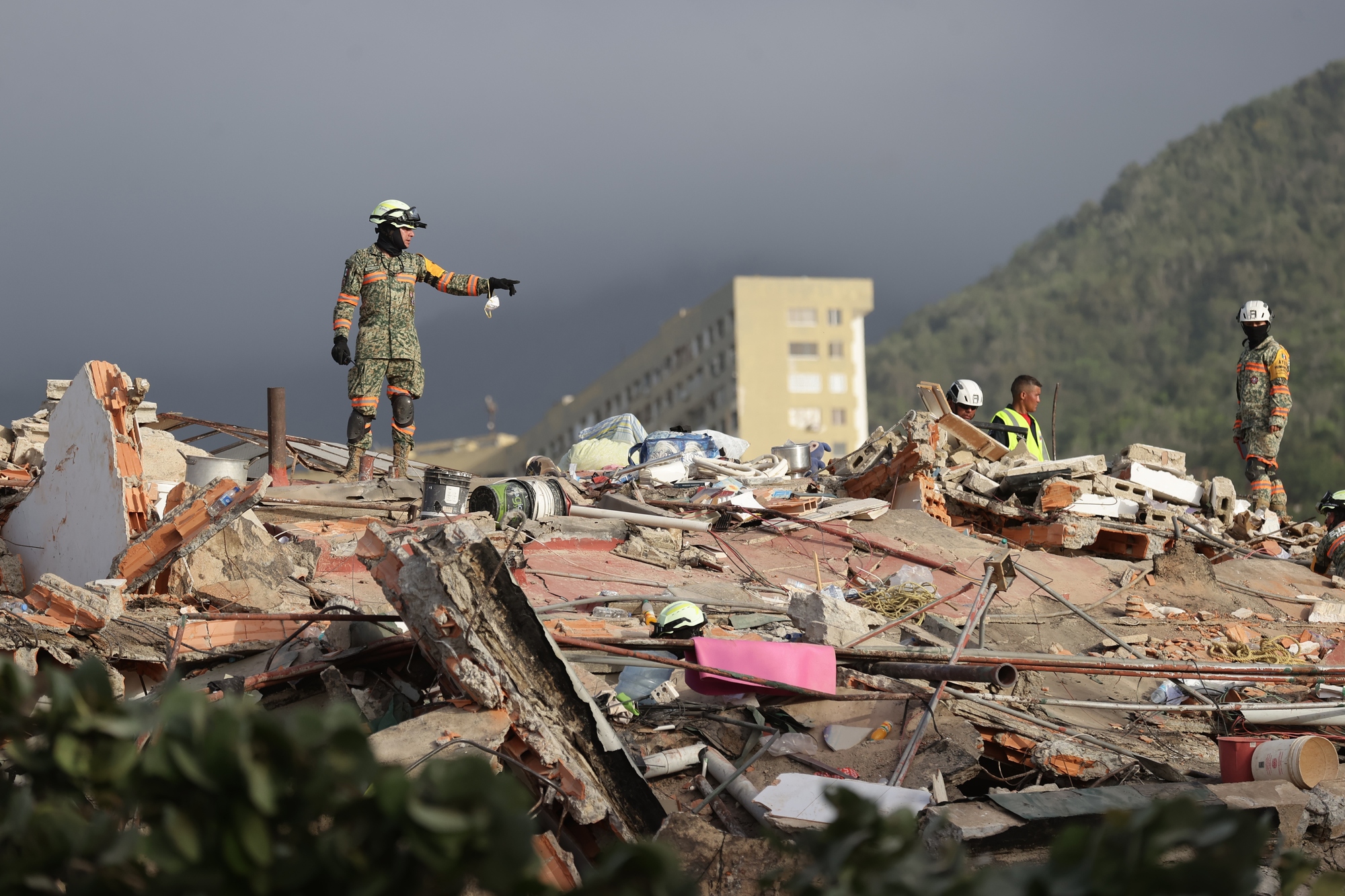
On June 24, 2026, at 18:04 local time, Venezuela was struck by two earthquakes 39 seconds apart — with magnitudes of 7.2 and 7.5. The epicenter was the city of San Felipe in Yaracuy state, approximately 160 kilometers west of Caracas. According to Wikipedia, this was the strongest earthquake in Venezuela since 1900. At least 920 people died, over 4,500 were injured, and over 50,000 are considered missing, although the government has not officially confirmed this figure.
La Guaira: A city that no longer exists in its former shape
The port city of La Guaira, 16 kilometers from central Caracas, suffered the greatest losses. Over 250 residential buildings collapsed. Simón Bolívar International Airport — the country's only major aviation hub — was severely damaged, with all flights cancelled. Telecommunications in the city were cut off immediately after the tremors.
In Caracas's Altamira district, a 22-story building collapsed completely. Another 30 structures in the neighborhood sustained critical damage. The buildings housing the French embassy and the headquarters of the Venezuelan Red Cross were also destroyed.
The state was late — neighbors came with shovels
This is where an unexpected turn in this catastrophe emerged. According to Wikipedia, citing eyewitness accounts, almost 24 hours after the earthquake, residents of La Guaira were clearing rubble by hand — due to a severe shortage of heavy equipment and minimal government presence in the first hours.
"In such a place you just stand there in shock. You don't even want to take photographs"
— volunteer Sebastián Arias, NPR
Arias described how he moved between neighborhoods: in some places there were too many volunteers, in others — no one and no tools at all. Meanwhile, a volunteer website called "Desaparecidos Terremoto Venezuela" — a database of missing persons created by civilians, not state structures — emerged and was actively distributed by the opposition.
Media blackout during rescue operations
A separate dimension of the crisis was informational. As documented by the organization VE sin Filtro, over 200 websites were blocked in Venezuela, including news outlets, social networks, and VPN services. The UN publicly called for "fully restoring access to social networks and all media," noting that timely access to information is critical for protecting lives.
Partial unblocking of X (Twitter) occurred only after the earthquake — under pressure from international criticism.
$6.7 billion in damages — against the backdrop of a broken economy
UNDP estimated losses at $6.7 billion. But the context makes this figure even heavier: as NPR notes, Venezuela entered the catastrophe already broken — hospitals without equipment and medicines, regular power outages, chronic budget deficits. Even before the earthquake, according to IRC data, almost 8 million people within the country needed humanitarian assistance.
The international response proved swift: the United States sent rescue teams from Virginia and California, Mexico sent medical personnel and military personnel, and Canada announced $5 million in emergency aid. Chile, El Salvador, and Argentina deployed specialists with experience in seismic disasters.
- Deaths: at least 920
- Injured: over 4,500
- Missing persons (unofficial): over 50,000
- Houses destroyed in La Guaira alone: over 250
- Damage estimate (UNDP): $6.7 billion
USGS warns: the PAGER system predicts that the actual death toll could exceed 100,000 — if unconfirmed missing persons and areas inaccessible to rescuers are taken into account.
The key question for the coming weeks: will Venezuela be able to accept large-scale international aid — technically and politically — if the airport is damaged, the internet is partially blocked, and the new government lacks experience coordinating with international organizations in a disaster of this magnitude?







