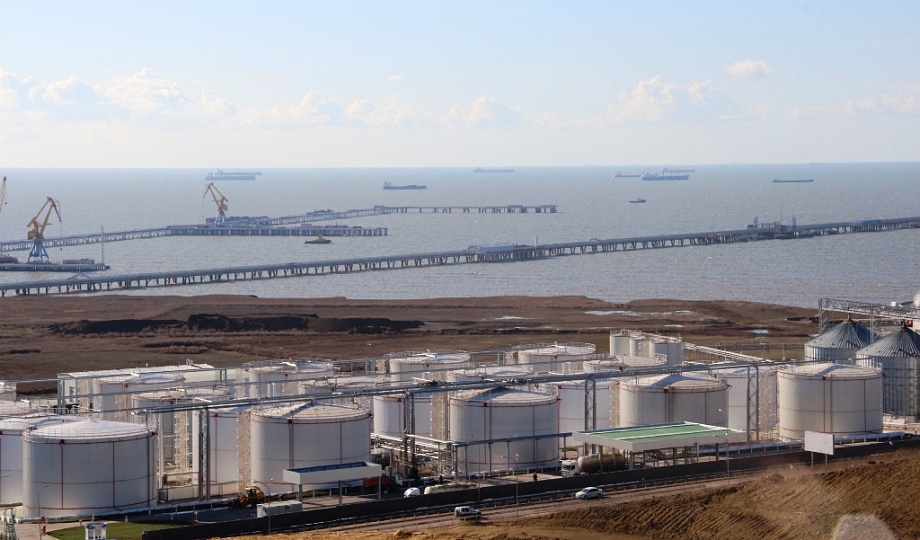
What happened
The General Staff of the Armed Forces of Ukraine reported a strike on the maritime oil terminal "Tamanneftegaz" near the settlement of Volna in Russia's Krasnodar Krai. A fire has been recorded on the site; the extent of the damage is being clarified.
"A fire has been recorded on the site. The extent of the damage is being clarified."
— General Staff of the Armed Forces of Ukraine
Context and tactics
The distance from the terminal to the front line exceeds 260 km, underscoring Ukrainian forces' ability to operate at considerable depth and affect the enemy's rear supply chains. This is not the first strike on this facility: similar attacks were recorded on January 22 and on December 22 and 31.
At the same time, the General Staff confirmed other hits: in Crimea — a Pantsir‑S1 air-defense missile-and-gun system was struck near Kacha; in Donetsk region — a strike on a repair unit of one of the artillery brigades; in Zaporizhzhia Oblast — a hit on a concentration area of personnel near Lyubymivka.
Consequences and what’s next
The strike on the oil terminal has several practical effects: first, it increases pressure on Russian energy logistics; second, it raises costs and risks for rear infrastructure facilities; third, it creates an informational and moral effect that can influence the adversary's resource allocation.
Military analysts note the systematic nature of such operations: in February there were recorded strikes on facilities in Volgograd Oblast (an oil refinery on February 11, an arsenal on February 12), which together with today's strike point to a strategy of sustained pressure on Russia's supply chains.
Summary: officially — a fire and damage assessment underway; strategically — evidence of an expanded strike radius and a higher cost for holding Russia's rear positions. Whether this will force the Kremlin to reassess protection of critical infrastructure beyond the front is a question that will be influenced by subsequent actions and international reaction.





