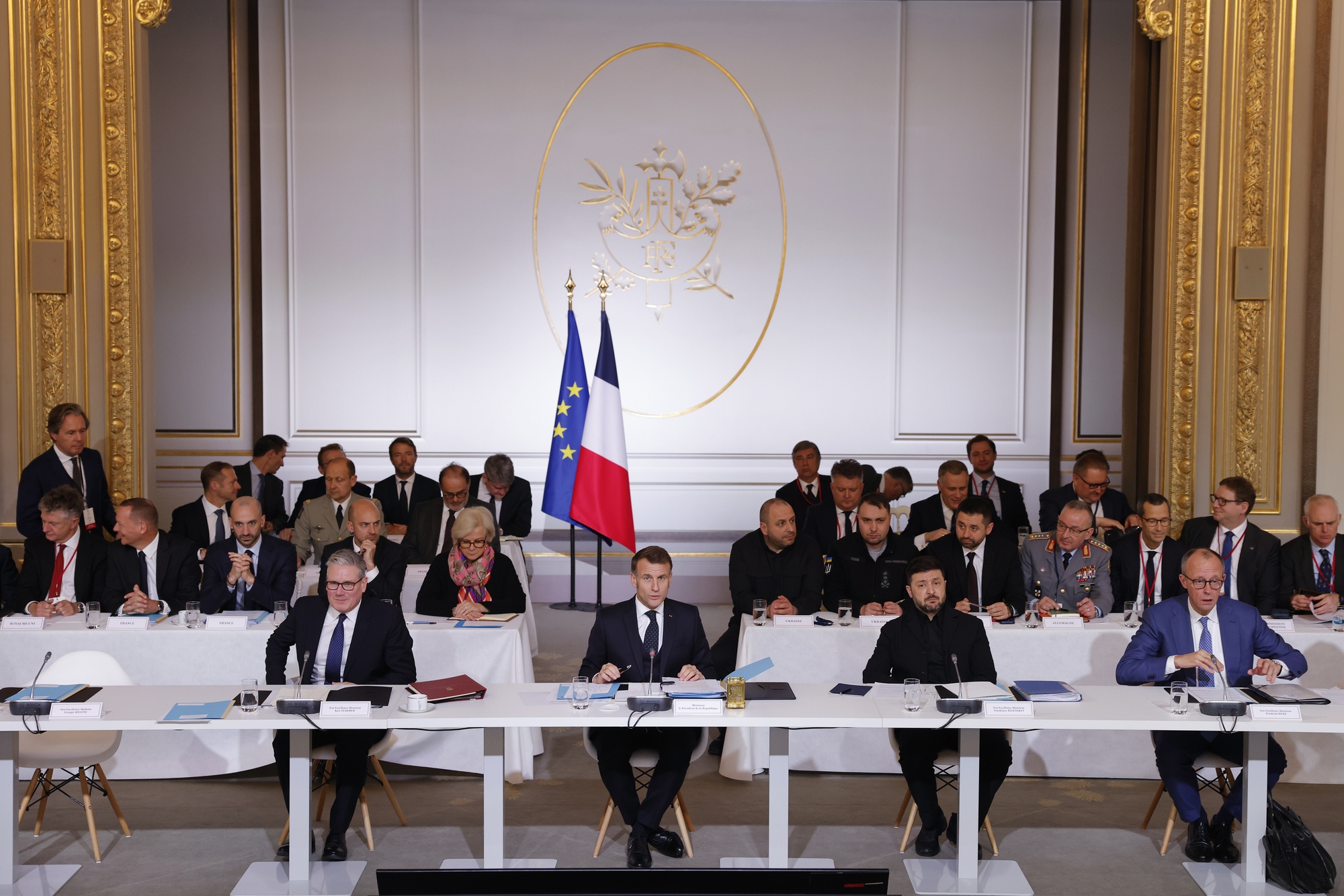
What happened
On January 6 in Paris, President Volodymyr Zelensky, French President Emmanuel Macron and UK Prime Minister Keir Starmer signed a declaration of intent regarding the future deployment of multinational forces in Ukraine. The event was documented by several sources: a Suspilne correspondent, a video of the ceremony released by Clash Report, and reports from international agencies about the meeting’s agenda.
What’s in the document (and what’s missing)
According to the president’s official statements, the militaries of the three countries have already been working through issues of force placement, their numbers and specific types of weapons. At the same time, the text of the declaration is currently absent from the Office of the President’s website, so the full list of commitments and timelines has not yet been publicly confirmed.
"We already have such necessary details. We understand which country is ready for what — from all the countries of the 'coalition of the willing'. I want to thank every leader, every state that truly wants to be part of a peaceful solution"
— Volodymyr Zelensky, President of Ukraine
Sources and public signal
The event has a dual character: on the one hand it is a political message — to show the cohesion of key partners around Ukraine’s security; on the other, an initial operational phase when militaries agree on technical parameters. That the presence of foreign troops was on the agenda was reported by Reuters, a video of the signing was released by Clash Report, and the presence of a Suspilne correspondent confirms the Ukrainian context of the event.
NOW: Zelensky, Macron and Starmer sign declaration of intent on future multinational force deployment in Ukraine. pic.twitter.com/E57z2yRp6B
— Clash Report (Twitter)
Why this matters
First, the declaration is a political confirmation that some Western partners are ready to move beyond declarations toward practical decisions. Second, work on placement, numbers and types of weapons means this is not a one-off symbolic step but the preparation of operational models that require logistics, command and legal coordination.
What’s next
The next step is publication of the text of the declaration or relevant agreements that will detail commitments and timelines. Without this, the signal remains a political statement with potential but without legal form. Analysts will watch whether the intentions turn into concrete contingents, training or supplies, and the conditions under which foreign forces could be present after a ceasefire.
While attention to the headlines is high, it is important to follow two things: the publication of the text of the declaration and the official technical arrangements between the militaries of the three countries. Those will determine whether this document becomes the start of a real change in the balance of forces or remains a diplomatic move with symbolic meaning.





