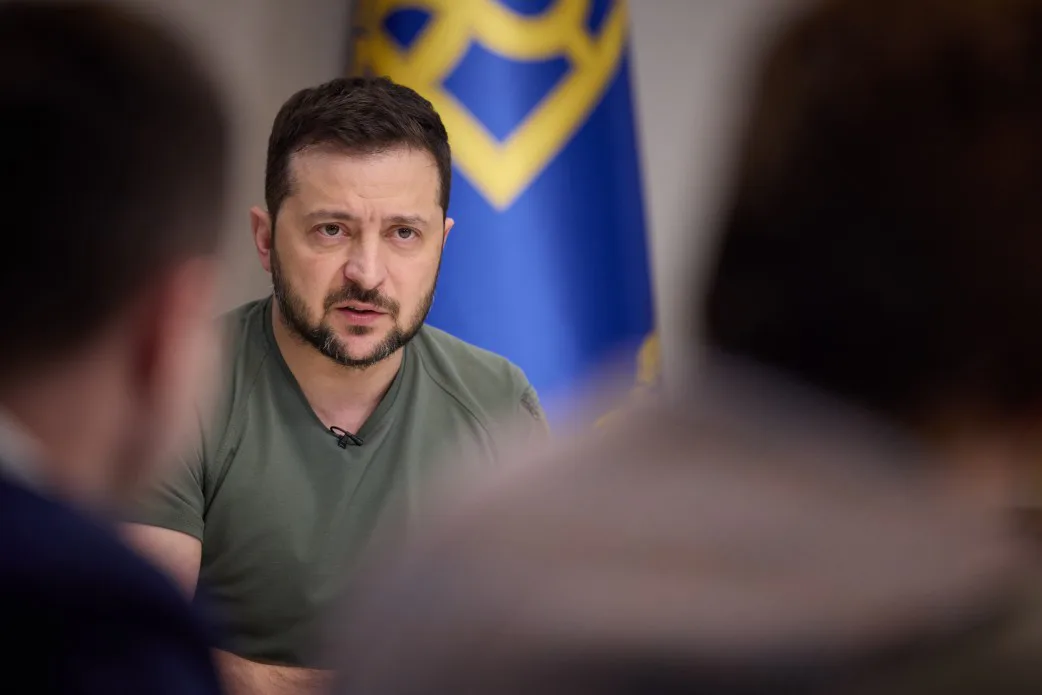
Volodymyr Zelensky held another meeting of the Supreme Commander's Staff. Formally, the agenda looks routine: financing the Defense Forces for the autumn-winter period, weapons shortages, intelligence reports. But the very fact of raising these issues — right now, in this particular format — says more than any words in the president's statement.
The key issue was financing needed for Ukraine's Defense and Security Forces for the autumn-winter period. This is not an abstract phrase for social media. This is an acknowledgment that budget planning for the coming months remains incomplete, and the season when Russia traditionally intensifies strikes against energy infrastructure and logistics has already begun.
Why now
Autumn is a window when decisions about financing can still be implemented before frost and darkness become the Kremlin's main tool for pressuring the civilian population. Year after year, the same scenario repeats: Russia strikes power generation and substations, while Ukraine tries to keep up with repairs, protection, and domestic weapons production before peak load on the grid.
This time, the emphasis is not only on defense against attacks, but also on offensive capabilities. The president identified key shortages and additional needs for developing the most innovative and technological types of weapons, accelerating the production of strike means and new types of protective weapons, including reactive interceptors. Reactive interceptors are expensive and niche technology, and the fact that they made it onto the priority list means: Kyiv is preparing not just to defend itself, but to build a system capable of shooting down missiles and drones more cheaply than the cost of the attack.
Intelligence matters were a separate block. Intelligence provided updated information about Russia's plans, and Ukraine is preparing countermeasures and asymmetric responses. The word "asymmetric" is key here: it means that direct symmetric confrontation — missile for missile, aircraft for aircraft — is disadvantageous for Ukraine due to resource disparity, and the bet is on non-standard solutions that are cheaper to create than the Russian forces have to defend against them.
Who benefits
Politically, a Staff meeting is always a signal to several audiences at once. The domestic audience is shown that state leadership is systematically working on defense, not reacting to attacks after the fact. External partners, on whom financing and weapons supplies depend, are demonstrated a concrete list of needs — this is an argument for the next round of aid negotiations, where it's more convincing to show "identified shortages" than to abstractly ask for "more weapons."
There is also a benefit for military command: public fixing of priorities by the president increases the chances that money for specific directions — interceptors, strike means — will actually reach the relevant programs rather than being absorbed into the general defense budget.
A separate story is the anti-corruption component. Secretary of the National Security and Defense Council Ihor Klymenko reported on the implementation of Staff and NSDC decisions and areas requiring additional attention, and special services reported on work against collaborators in temporarily occupied territories, including Sevastopol. The statement mentions targeted operations against collaborators participating in Russian strikes against Ukraine and Ukrainians, and that collaborators' responsibility is inevitable. This is a signal: parallel to the search for weapons, work continues against those helping the enemy from within.
What opponents will say
The public statement contains no figures — neither financing amounts, nor numbers of equipment units, nor timelines. This traditionally becomes the target of criticism: the format of "held a Staff meeting, discussed, determined" repeats from meeting to meeting, and it's impossible to verify decision implementation from outside because details are closed due to secrecy. Opponents within the country and abroad regularly point out that such statements resemble demonstrations of activity rather than reports of results.
On the other hand, publicity here is deliberately limited: details about weapons shortages or countermeasure plans against Russia simply cannot be disclosed without risk to operational security. This creates constant tension between the requirement for transparency and the requirement for secrecy — and neither side of this dispute is entirely right.
What next
The real test for this Staff meeting is not the social media statement, but the first weeks of the heating season. If the financing discussed actually reaches specific programs quickly, and reactive interceptors and asymmetric countermeasures appear not only in rhetoric — this will be visible in the results of the first massive strikes on energy infrastructure. If priorities remain on paper, this will become equally apparent — by how long power outages last this time.