In high diplomacy — the question of priorities
President Volodymyr Zelenskyy on March 14 directly linked the restoration of transit of Russian oil via the “Druzhba” pipeline to an effective easing of sanctions on Russia. This is not rhetoric — it is an attempt to put on the line two things that matter most to Ukraine: access to weapons and European financing.
What exactly the president said
"And then you have a combined decision with America today... If this is blackmail and such a condition, what can I do? I cannot leave the army without weapons."
— Volodymyr Zelenskyy, President of Ukraine
In the interview he also stressed that the repairs are a technical step, but the primary question is different: are partners ready to again buy and transit Russian oil. According to him, it is this political decision that holds the key dilemma.
Why this matters for the reader
At first glance the volume that went through “Druzhba” is small: according to Reuters, in the last quarter of 2025 only about 1% of EU oil imports came from the Russian Federation. But it is not just about cubic meters. Restoring transit means a political normalization of supplies, which blurs the effect of sanctions and reduces pressure on Moscow — and therefore affects partners' willingness to supply Ukraine with weapons or to agree to loans.
Partners' position and the geopolitical context
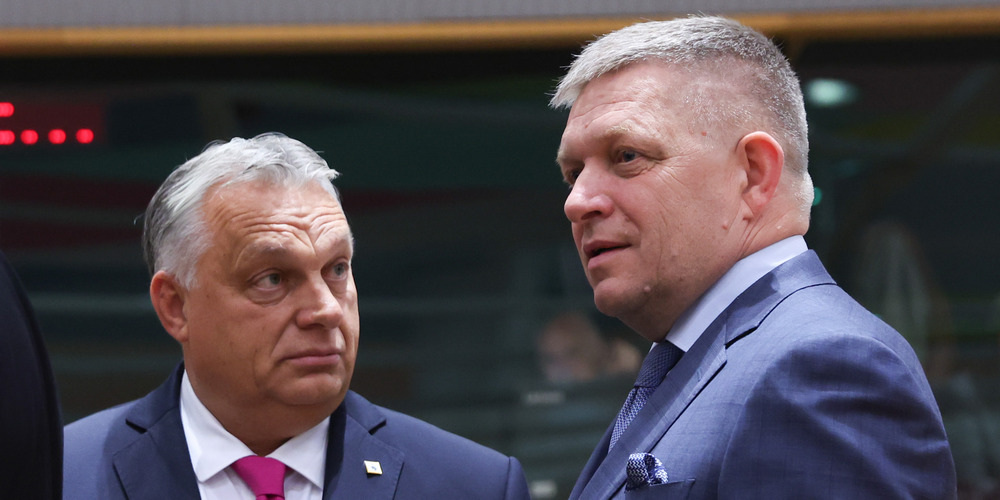
Some governments — primarily Hungary and Slovakia — are openly demanding the resumption of supplies: Budapest has already linked this to blocking part of the EU loan to Ukraine. The US temporarily issued a 30‑day license to buy Russian oil (March 12), which, by estimates, could give the Russian Federation about $10 billion — a fact that Zelenskyy himself pointed to.
At the same time, EU diplomats told Politico that there are mechanisms to ensure Ukraine would still receive the loan even if Hungary or Slovakia formally blocked it. A vote in Hungary on April 12 could also change the picture — and that is why this case should be followed as a political lever, not only as an energy story.
What Ukraine loses if it concedes
The main risk is replacing direct pressure from sanctions with indirect economic and political concessions. If partners restore transit without clear guarantees, the sanctions regime will weaken, and Kyiv will lose instruments to influence Russian revenues and behavior. For our defense this means a real risk of delays in funding and a reduced willingness to supply critical equipment, which the president directly links to such decisions.
Social proof and expert opinion
Analysts point out: the energy rent from transit is not only about money, but about a market signal and political normalization. LIGA.net has already explained which scenarios are possible in the event of a political conflict between Kyiv and Budapest, and Reuters records a real decrease in the share of Russian oil in the EU thanks to sanctions on maritime supplies.
Conclusion
The question of “Druzhba” is a test for European unity: are partners ready to separate technical repairs from the political decision to buy Russian oil? For Ukraine the answer has practical consequences — from the availability of ammunition to the timing of loan disbursements. The coming weeks will show whether declarations will turn into concrete guarantees, or whether the political price for transit will become a critical loss for Kyiv.





